
An exclusive extract from Essay Thirteen in Journeywork, a creative life
We went to the town square, in front of a large supermarket, and called an audience to gather round us by putting a chalk or rope circle on the ground and setting up our kit: broken garden furniture, a recycled home-brew beer barrel, plastic milk crates, a long stick with a banana dangling from it as a boom mike, the cardboard inner tube of a roll of lino as a chimney stack, rag and bone costumes from charity shops and our children’s dressing-up boxes.
We worked in the long tradition of ‘the wise fool’, mummery, clowns, bowdlerised commedia dell’arte and pantomime. We set up at the same time on a series of Saturday afternoons with the plain purpose of entertaining a collection of our fellow townspeople into debate on a matter of public and civic importance…..
Some people grow discomfited when an art practice, even one perceived as lightweight, such as street-clowning, brushes so close to public affairs. I never felt that. I affirmed at all times that my creations were art, not politics, ink not blood, beauty and order not chaos and profit. In the final analysis, the creativity of Toxic Theatre was a stirring and a heartening of our fellow townspeople, as we faced a great civic challenge.
‘Won’t the incinerator bring jobs? And God knows, we need jobs.’
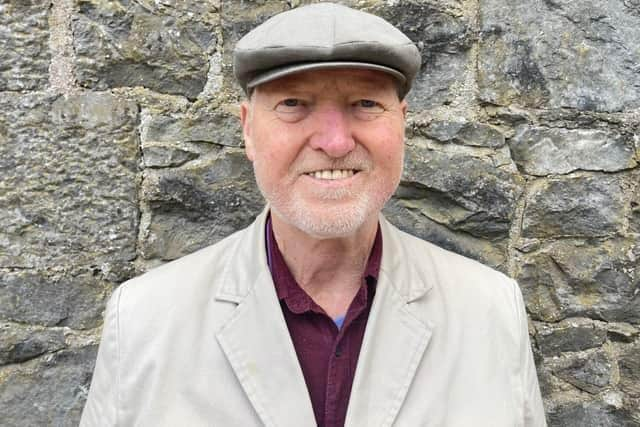

I stand on a milk crate. I speak in favour of the incinerator. James, standing on another milk crate, speaks against it. Jan dangles the banana boom mike over us in turn, activating the convention that we speak when we are ‘on mic’. An audience member shouts out, ‘You were against it last week, Dave’.
Jan swings the mike over her. People laugh. The collusion between audience and performers in the town square is activated. Everyone is an actor, those inside the circle, those outside the circle. Even the observers, a step back from the performance, are in on the act.
Jan swings the banana boom mike back and forward. James and I debate. Women and men laugh, call out, make assertions, shout condemnations, encouragements and ripostes. We improvise, keeping the debate going with unscripted, focussed lines, clinging closely to the arguments gripping the city.
A man points a finger at me and declares that I am wrong and that no one is in favour of the incinerator. I answer that there has to be someone somewhere. He interjects promptly saying that there couldn’t be. I challenge him: ‘That’s all very well saying that from down there. But if you were where I am you wouldn’t say that.’
He comes out of the crowd and makes for me. I step off my crate, just as he arrives and takes my place. Jan holds the banana mike over him.
The man speaks passionately against the incinerator…..
James, still on the other milk crate, continues arguing against the incinerator, encouraging the man. The crowd claps, then cheers at the crescendo the man offers when he chants,
‘No to incineration! No to incineration now!’
He steps down. I climb up immediately, an actor replacing someone acting, in a fusing of imaginative work and lived reality, melding together as performance.
‘That’s all very well,’ I say, ‘but we have to think about the future.’
A woman and her young granddaughter stand beside the man. He lifts the child and raises her into the air.
‘She’s the future,’ he says. ‘She’s the future. Think about her.’
The crowd cheers. The man puts the child down. She smiles. Her grandmother tucks her closer to her side. The child might be the future but the grandmother knows that the future is always fraught.
A finale is achieved, but not an ending. The show comes to a natural close. We come back the following Saturday with another stunt. The debate about incineration continues. How do we deal with overconsumption and the waste it produces?