
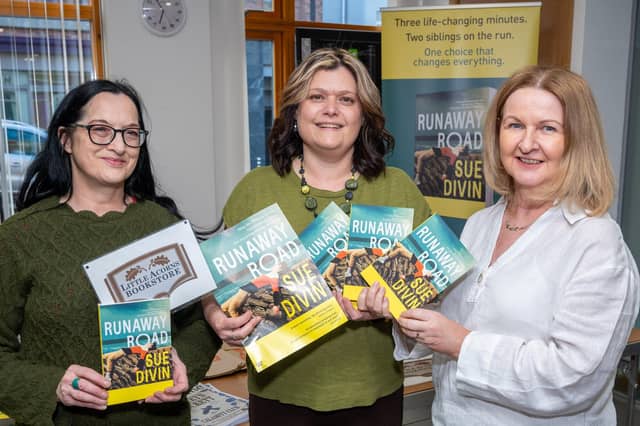

Set in 2023 in Derry and Donegal, the novel, published this month by Macmillan, makes use of stunning landmarks such as the Peace Bridge, An Grianán Fort and Fort Dunree along Inishowen’s Wild Atlantic Way.
“Part of the initial inspiration,” said Sue, "came from the historic connection that slave-trader turned abolitionist, John Newton, has to that coastline. After a near-death experience in a sea-storm, his ship came ashore near Buncrana. Brown heritage signs signal the area as the ‘Amazing Grace Coastline’. That history sparked my thinking around second chances or, as Evie (9) in the novel puts it: cutting people some slack.
"Runaway Road is definitely not a direct parallel with that dark era of history, but it picks up a core redemptive question - does society today give people the space, the ‘grace’, to learn from their mistakes and change?”
At the heart of the novel is the sibling bond between Ezra (16) and Evie (9). Ezra is no stranger to crossing the line, but this time it’s serious – and someone might be dead. To escape justice, he’ll have to cross another line: the border. But that means leaving behind the only thing that really matters. His little sister, Evie.
Evie sees it differently. When she was three, Ezra took her into care, into safety - and to the bookshop that became her first memory. Ezra understands her. Why shouldn’t she go on the run with him now?
Ezra and Evie are used to feeling invisible. Now they have to become invisible for real.
As well as long coastal walks, the novel took its author into researching aspects of the Youth Justice and Care systems in Northern Ireland. Her characters also represent a range of diversities.
"Evie was a delight to write,” said Sue. “She is a wee powerhouse. A positive portrayal of the observation, quirky intelligence and side-ways view of situations which can be part of ASD / neurodiversity. I’ve experience of that within my own family and everywhere I went with my notebook to scout out the route for Runaway Road, Evie simply wouldn’t shut up. She brings lightness and humour to balance some of the heavier themes in the drama.”
Northern Ireland’s increasing ethnic diversity and the disability of macular degeneration are also represented in the narrative, as well as perspectives on the border itself and future questions around identity inclusion.
"The epigraph from John Newton’s Amazing Grace, I once was lost, but now am found, was blind but now I see, weaves through Runaway Road in many different ways.
"It’s a great read for adults and teenagers,” says Sue who, with support from the Arts Council of Northern Ireland’s SIAP fund, will be donating some free copies to local schools, communities and libraries as well as delivering workshops and engaging with festivals and bookshops.
"It’s a real page-turner with a fast-paced plot. I’d recommend it for book groups as well as individuals.”
The book is widely available in most independent and mainstream bookstores as well as all the usual places online.
Further information is available on: www.suedivin.com
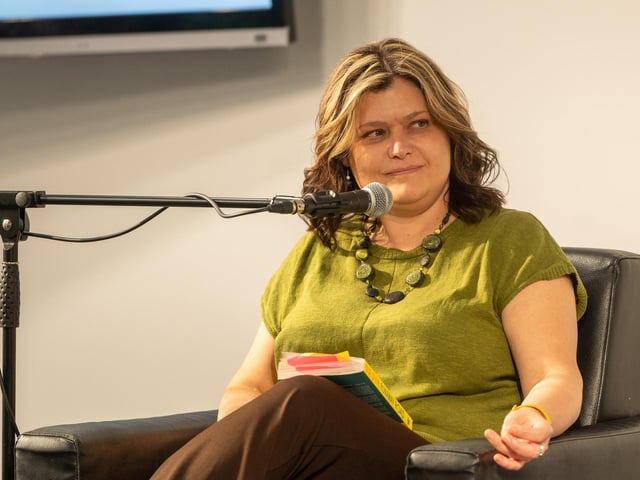
13. Armagh-born, Derry-based author, Sue Divin who has launched her third novel, Runaway Road at the Holywell Trust. Picture Martin McKeown. 09.05.25
Armagh-born, Derry-based author, Sue Divin who has launched her third novel, Runaway Road at the Holywell Trust. Picture Martin McKeown. 09.05.25 Photo: Martin McKeown