
Michael Gallagher urges Stormont intervention to avert a situation where Derry becomes ‘city in decline’
Economist Michael Gallagher has urged Stormont to intervene to avert a situation where Derry becomes a ‘city in decline’ by the middle of this century.
He issued the warning to the Stormont Economy Committee during a briefing on SDLP MLA Sinéad McLaughlin’s Regional Balance Bill.
The Derry City and Strabane District Council senior economist told the committee a major intervention is needed to promote growth in the North West, pointing to an alarming demographic trajectory for the city and district in the medium term.
“For almost 25 years - 2001 to 2025 - the Derry City and Strabane District Council population grew on average by barely 0.25 per cent per year compared to a NI rate of double that. We are reaping the whirlwind of that.
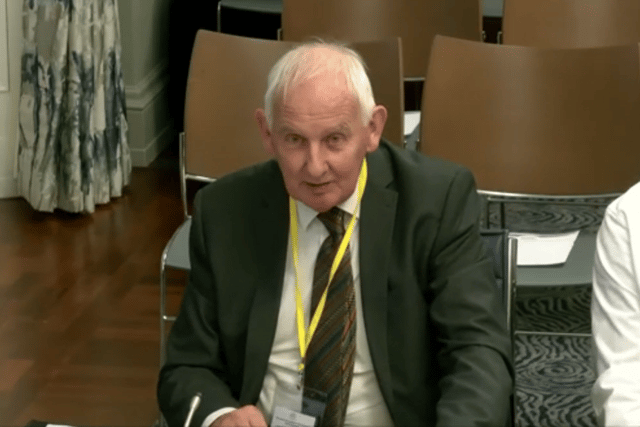

"Consequently and worryingly the DC&SDC population continues to decline from 8.5 per cent of NI in 2001 to 7.9 per cent today. That's worrying in itself.
"We look at what NISRA said then in the LGD working-age projections for 2047: a challenging scenario with a projected 13 per cent fall in the DC&SDC population by 2047 - a city in decline.
"That's with the City Deal and everything else. I reinforce the point: we need to do more and we need to do better,” he said.
Mr. Gallagher was part of a delegation that travelled to Stormont to provide evidence on the proposed bill.
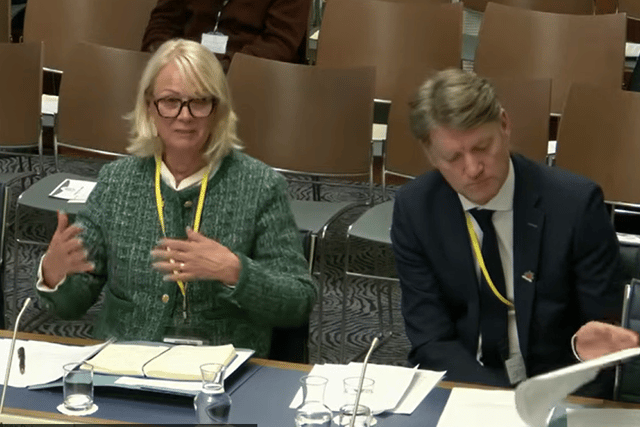
He was joined by Alfie Dallas, council lead finance officer, Anna Doherty, Chief Executive of the Chamber of Commerce, and Chamber board member Andrew Fleming.
Statistics as a whole, he warned, 'paint a very bleak picture of the area and why we need an intervention'.
He cited research by Professor Christopher Lloyd of Queen’s University in 2024 that examined 382 local authorities in the UK and found ‘over 45 per cent of Derry City and Strabane District Council areas lie within the 10 per cent most deprived’.
"I think what is shocking is that it ranks us worst in the UK out of 382,” he said.
Prof. Lloyd found Derry and Strabane languishing on many indicators.
"In education we are the worst out of 382 – this is according to Prof. Lloyd. In health we are third worst in the whole of the UK. In employment we are 13th worst,” said Mr. Gallagher.
He told the committee the local employment rate sits at 65 per cent, lagging both the North as a whole (70 per cent) and the UK (75 per cent).
"We are 10 percentage points below. There are probably another 1,000 or 1,500 people who should be in employment if we could bring them closer to the workforce,” he suggested.
Derry and Strabane has made progress by halving the number of people on the claimant count but more needs to be done, he said.
“We have the highest unemployment rate in NI again at 4.1 per cent. That's 46 per cent higher than the NI average. That's a loss of a lot of resources for a community and region.
“Given our poor levels of educational attainment and employment it is not surprising that our income levels are constrained.
"The gross disposable household income per capita of £20,000 is the lowest in NI and less than 78 per cent of the Lisburn figure,” he said.
This is having a knock on effect for the community, society and economy.
“Gross Value Added (GVA) per job Invest NI productivity data in 2022 was £50,000 compared to £58,000 in NI. We are 86 per cent of the average.
“We look at all these key indicators and we are at the bottom where you want to be at the top and at the top where you want to be at the bottom. That's why there is a real need for a key intervention,” said Mr. Gallagher.
The link between deprivation and health was driven home when the committee was reminded male life expectancy is 78.8 in the North as a whole while in Derry and Strabane’s most deprived areas it is 72.5, a six year deficit.
"You are likely to die six years earlier in a deprived area of DC&SDC,” he said.
Recent research by Dr. Eoin Magennis from Ulster University was also cited.
Dr. Magennis found ‘Derry is improving in terms of employment and income but failing to keep up with other districts’.
“We are doing a lot but we aren't doing enough and the fact that other areas are accelerating away, they are leaving us behind,” Mr. Gallagher said.
The council economist said Derry has great schools doing great work but many pupils leave for university and don’t return.
Intervention is required, he insisted, ‘if DC&SDC is to prosper and not simply become a dormitory town for Belfast and rural areas and little more than theme parks for working and living communities’.
Mr. Gallagher said the Regional Balance Bill can provide a framework to address these issues and told the committee reform would require a ‘whole system approach’ with the A5, increased rail frequency, investment in workforce skills and expansion of the Magee College campus of Ulster University key priorities.
The bill must, he said, ensure accurate data, accountability and transparency when it comes to measurable outcomes that it proposes for Executive departments.
Chamber of Commerce CEO Anna Doherty noted that regional balance ‘should matter to residents on the Strand Road in Derry as much as to the Shore Road in North Belfast’.
"Regional balance is not about a zero sum game, it is about giving everyone an opportunity to grow economically,” she told the committee.
Mrs. Doherty welcomed recent interventions by the Department for the Economy including its Sub-Regional Economic Plan, Local Economic Partnerships (LEPs) and Invest NI’s recently unveiled regional office at Ebrington Plaza
“For businesses public investment should provide the skills, infrastructure and premises they need to grow. The framework should recognise where those conditions are missing and where investment could open up opportunities,” she told the committee.