
Casey flags digital-only services among ageist obstacles to be tackled
Siobhan Casey says the exclusion of older people through digital-only service provision must be addressed through proposed new anti-discrimination legislation aimed at tackling ageist prejudice.
The Derry-born Commissioner for Older People pointed to mandatory online banking services as one example of how older citizens can be disadvantaged.
“People can't get printed statements. They are struggling to move online but they are being told to ‘get your grandchild to help you’,” she said.
Mrs. Casey warned policy makers: “For people who can't get online there is an element of exclusion there in terms of what they can access and what they cannot.”
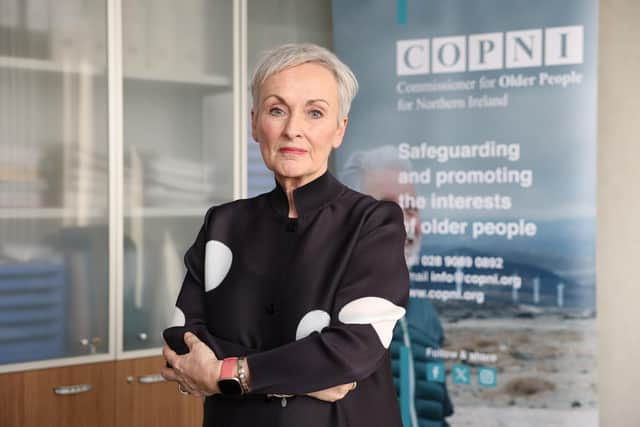

She made the remarks at the Stormont Executive Office committee where she highlighted how older people are ‘being shut out of services every day’.
"When you look at ageism sometimes you look at your own indirect ageism yourself because, I was thinking, it is going to come to a stage where everybody is going to be online. [But] that is not going to be the case because there are always going to be people living with cognitive conditions or moving into cognitive conditions that could have been online at one stage.
“We reckon there is always going to be 20 per cent of people who are not going to be online,” said the commissioner.
Mrs. Casey was providing evidence to the TEO committee on a proposed new Age Discrimination (Goods, Facilities and Services) Bill that is supposed to tackle ageism and age discrimination.

She pointed out that the North is the only part of the Ireland and the UK without protection against age discrimination.
Whilst this has been illegal in the workplace here since 2006 ‘once a person steps outside the workplace into a hospital or bank, shop or online, that protection falls away’, she explained.
The issue was addressed in the Republic of Ireland through the Equal Status Act 2000 and in Britain by way of the 2010 Equality Act but not in the North.
Mrs. Casey reminded the committee that next year the North will have more people over 65 than under 16.
"Reform has been under the table since at least 2015 and the need has not gone away. Instead it is growing,” she said.
The bill, she added, represents 'dignity, fairness and redress'
"It means health concerns will not be dismissed as just your age, access will not be lost when services move online and age-based refusals or pricing can be challenged.
"These are practical protections and not abstract principles.
"Being refused a product or being priced out of it without explanation leaves people unable to understand or challenge the decision.
"The benefits extend beyond older people as well. The bill would set clear expectations for providers and it will challenge ageist attitudes.
"All of us know here that exclusion diminishes health. It diminished independence. It diminishes people's contribution as workers, carers, volunteers, customers and neighbours. It is our society that bears the cost of this.
"So fair access allows older people to keep contributing,” she said.
Without the legislation older people here will continue to have weaker rights than in other jurisdictions, they will continue to be treated unfairly and ageist assumptions will remain, she said.