
Ex-Derry captain Kevin McCloy talks about surviving cardiovascular disease as part of BHF ‘Keep Us Beating’ campaign
Former senior Derry football captain Kevin McCloy has spoken candidly of how cardiovascular disease forced him into early retirement as part of a British Heart Foundation awareness campaign.
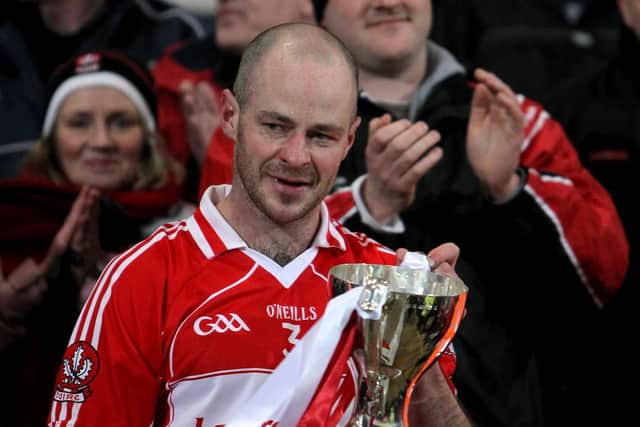
The Derry GAA All Star suffered eight cardiac arrests after collapsing on the pitch in 2014.
The Lavey-native has spoken about his experience of cardiovascular disease as part of British Heart Foundation’s ‘Keep Us Beating’ campaign.
Kevin was playing in a county Championship match 12 years ago for his club Lavey against Magherafelt at Owenbeg when he fell to the ground just 10 minutes into the game.

It was at this moment that the then 35-year-old suffered his first cardiac arrest.
Kevin had to be put into a medically induced coma for several days but his life was saved thanks to actions of doctors on the scene in Owenbeg and a nearby defibrillator.
While he was in hospital for surgery, Kevin had another cardiac arrest on the operating table and doctors inserted an ICD (implantable cardioverter defibrillator) in Kevin’s chest.
Once he returned home, Kevin’s life changed dramatically and he was forced to retire from his beloved Gaelic football, and was, in fact, advised that he couldn’t continue with any intensive activity.
Twelve months after his first cardiac arrest, Kevin’s health deteriorated again and his heart function dropped to the extent where his cardiologist began discussions around considering him for a heart transplant.
However after further investigations, in 2018, Kevin was diagnosed with cardiac sarcoidosis which is an inflammatory disease affecting the heart muscle.
Kevin will never forget the day his life was turned upside down and indeed his heart actually stopped working for seven minutes.
“I was a Gaelic footballer playing at the highest level, Derry county level for 12 years, and for my club, Lavey for 18 years,” says Kevin.
“It was 2014, I was 35 and playing in a Championship match, a very important game.
“Ten minutes in without any prior symptoms, I collapsed on the pitch. The next thing I remember is when I woke from an induced coma in Altnagelvin Hospital several days later.
“There were two or three doctors at the match who were spectators and the event ambulance who came to my aid. They realised I’d gone into cardiac arrest and the doctors started CPR and used a defibrillator to attempt to restart my heart.
“I’m told that my heart stopped for seven minutes in total, before the defibrillator restarted it and helped to save my life. After three days I was taken out of the induced coma to check if I had brain injuries from the cardiac arrest and I was so fortunate that due to the quick CPR and defibrillation by the spectators and ambulance staff, my life was saved.
“I was then transferred to Belfast Royal Victoria Hospital, to undergo surgery but I had another cardiac arrest on operating table. They had to implant an ICD in my chest to help manage the life-threatening rhythms I was having.
“I left hospital three or four days afterwards and my life changed forever.”
Kevin admits he struggled to come to terms with what had happened to him and how he’d gone from being a fit, elite sportsperson to a dad unsure if he even had the energy to play with his children.
“It was a difficult time as while my family and I were so thankful that I’d been given another chance at life, I had to get used to a new normal,” concedes Kevin.
“After playing an intense sport, I was extremely passionate about at the highest level, I was told not to exercise.
“I couldn’t yet return to work, and I didn’t even know if it was safe for me to take kids out by myself. My life was turned on its head.
“Within six months, with the support of my family and doctor, I got my confidence back and started exercising again, running 8-9 minute miles.
“However a year later my heart function had deteriorated and my cardiologist said I had heart failure.”
A heart transplant was now a serious option for Kevin, but he felt this was a drastic measure and needed to be convinced.
“I was sent for tests to see if I was ready to go to Freeman Hospital in Newcastle and be eligible for a heart transplant – that was such a hard pill to swallow,” states Kevin.
“I was only 37 years old at the time with four young kids under the age of six and couldn’t accept that this was the only option so I opted to get a second opinion with further testing.
“This took a significant amount of time to do all the tests required and in 2018, I was diagnosed with cardiac sarcoidosis which is an inflammatory disease.
“The left chamber of my heart was badly scarred from the condition, only working about 25% of its capacity and scarring between the two chambers meant they weren’t working in sequence.
“That led to a fairly intensive treatment of steroids and I had to spend a week in hospital, during which time I had three further cardiac arrests.
“It was a terrifying experience for me and my family as I didn’t know what the future held.
“The doctors had to change the medication and then once I settled down, I was put on immunosuppressants. They don’t know the cause, they say a lot of it can come from stress but that the sarcoidosis was attacking one of the chambers of my heart unknowingly and possibly for a long period of time.
“Since my diagnosis and treatment after about two years, things began to settle down although I have experienced several episodes with the ICD shocking me due to a dangerously high heart rate known as Ventricular Fibrillation.
“Once I get a shock it leaves me completely floored for weeks, physically and psychologically and my family life is affected.”
Kevin has now been retired from top level sport for 12 years but still finds it difficult to accept that cardiovascular disease brought an end to his sports career and brought so much change to his home life.
He still retains an immense passion for Gaelic football and Kevin is now able to channel his focus into coaching.
He adds: “I was 35 when I had my first cardiac arrest and as I was still playing high level sports, I had no other option but to retire.
“There was a massive void from giving up what was a way of life for me since I was a child and I found it hard to fill that void.
“With any sports person playing at the highest level, you need adrenaline and that’s what led me to coaching. While it is not by any means a replacement for playing, it still offers me a competitive outlet and over time I’ve learnt to accept a new normal.
“As well as sport, it also impacted my home life. I was always very active at home, always on the go fixing and improving things around the house but I’ve now had to employ people to do those physical jobs that it was only natural for me to do. It’s a big adjustment, mentally.
“People look at me and think I’m a picture of health but they don’t see the impact of cardiovascular disease.
“I had two young kids at 35 when I had my first cardiac arrest and I now have four under 14. I enjoy family life but I’m not fit to do all the things I would like to do with the kids, going for a bike ride or playing soccer – I have to stand in goals. Every time my ICD goes off it takes me a long time to get over it.
“The future could mean a heart transplant. However, I’ve got used to my new normal and I’m managing to stay healthy with carefully managing my medication and ICD.
“I’m so thankful for all of the support I’ve received. From the spectators at the match who saved my life after my cardiac arrest to The Cormac Trust who had provided the club defibrillator that was used to restart by heart.
“Twelve years on from my cardiac arrest, I now have six monthly check-ups.
“I’m also now at the stage where I’m very aware of my own body and any unusual symptoms and know when to get medical help.
“My wife is fantastic in helping me keep a close eye on all of my medications and providing daily support.”
Kevin, having experienced so much, fully supports the British Heart Foundation and the pioneering research they conduct.
He admits: “I would hope with my particular diagnosis, that there is more funding for research into cardiac sarcoidosis and what causes it to try to find a cure for it.
“To repair my heart would seem like an impossible task. That’s why the research work that British Heart Foundation does is of vital importance.
"The difference even in my treatment options from the time of my cardiac arrest and diagnosis to now has been incredible, and that’s only 12 years.
“With more funding for research into cardiovascular disease and increased awareness of its impact, I’m hopeful for the future that better treatments and quite possibly cures can be found.”
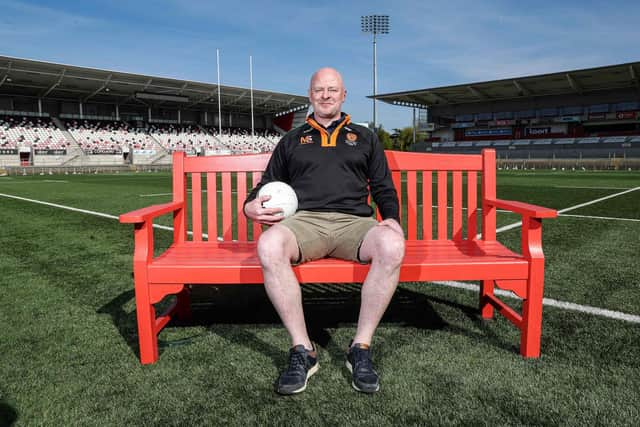
Kevin has shared his story as part of BHF’s ‘Keep Us Beating’ campaign.
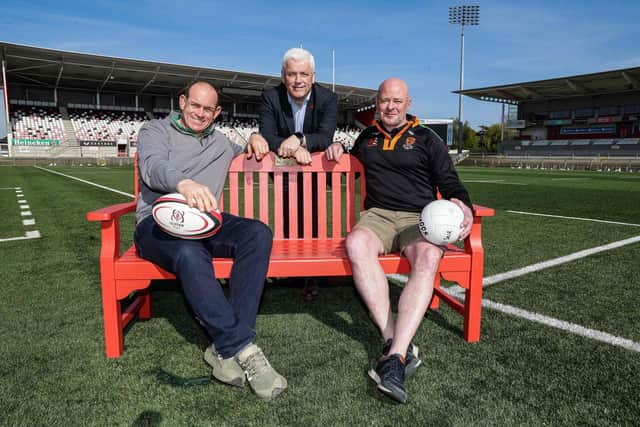
To mark 65 years since BHF began, the charity has unveiled 65 red benches across the UK in tribute to those living with cardiovascular disease, including heart attacks.
Behind every bench is a powerful real-life story of someone living with a cardiovascular condition – and thanks to research, they can survive to enjoy life with their loved ones.
Fearghal McKinney, Head of BHF NI said: “By sharing the stories of people who live with cardiovascular disease on our iconic red benches in Northern Ireland, we hope to start more conversations that change dangerous misconceptions.
"Research will help us save and improve more lives, but the only way we can fund the scientific breakthroughs of tomorrow is thanks to the public’s generous donations.”
Every day, around 12 people in Northern Ireland die from cardiovascular disease. Donate now to keep Northern Ireland beating - visit bhf.org.uk/what-we-do/in-your-area/northern-ireland/keep-northern-ireland-beating