
‘Bellaghy Boy’ reclassed as ‘Ballymacombs More Woman’ following fresh research into Derry bog body
Researchers have confirmed ancient human remains discovered in Bellaghy that were initially thought to be a male, are, in fact, most likely those of a decapitated female aged between 17 and 22 years old.
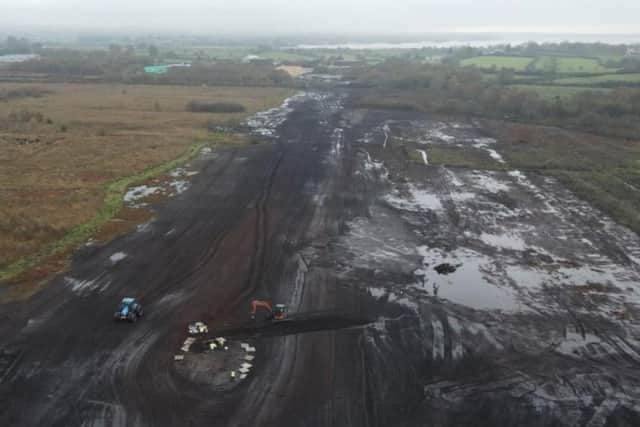
‘Bellaghy Boy’ has thus been renamed ‘Ballymacombs More Woman’ after the area of bogland where her remains were discovered in October 2023.
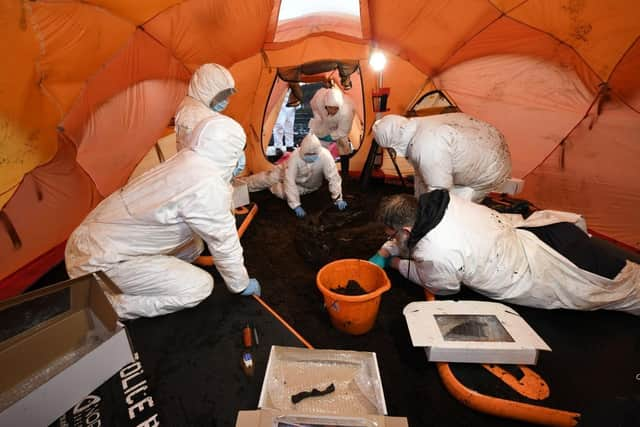
A year-long study led by National Museums Ireland and involving collaboration with Queen’s University, Trinity College Dublin, University College Dublin, the University of Copenhagen, the University of Glasgow, the University of Bradford, and the PSNI, has shed fresh light on the remains.
Dating to approximately 343 to 1BC, the remains are over 2,000 years old, and from the prehistoric period known as the Iron Age.
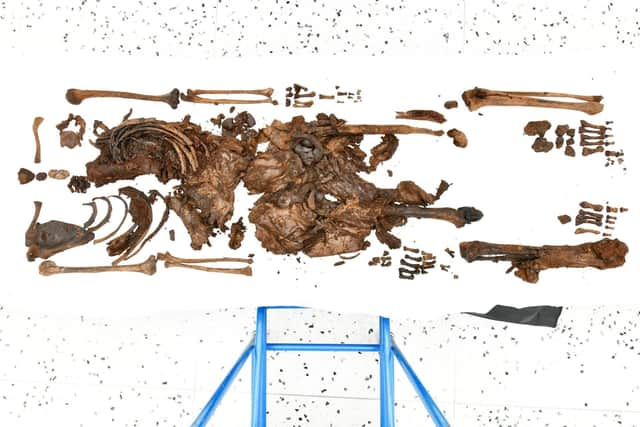

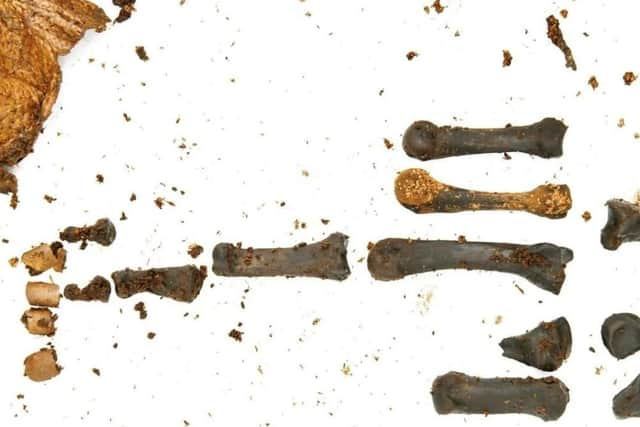
Osteoarchaeological analysis, the researchers have confirmed, has now revealed the body to be female, a discovery made all the more significant as the majority of bog preserved individuals that have been found from this period are male.
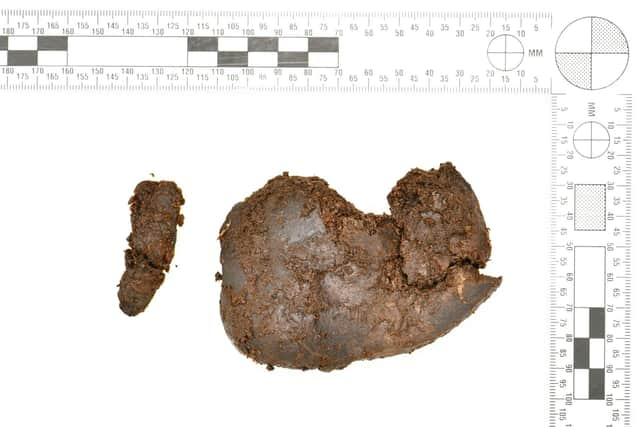
Part of a woven item made of plant material was also recovered from below the knees and is thought to be part of an associated artefact.
The woman was around 5 foot 6 inches (1.7m). It is believed that she may have been the victim of a ritual sacrifice during the Iron Age period.
Professor Eileen Murphy from the School of Natural and Built Environment at Queen's carried out the osteological assessment which provided a biological profile for the individual and ascertained the cause of their death.
She explained: “As is the case for so many Iron Age bog bodies, the young woman suffered a highly violent death which involved the flow of blood from her throat followed by decapitation.
"The head was taken away, but the body was left where it fell only to be discovered by machine workers some 2000 years later. Further scientific analysis, including the conclusion of an aDNA analysis, will no doubt yield more fascinating findings.”
Professor Gill Plunkett, also from the School of Natural and Built Environment, examined the peat at the burial location to investigate what it could reveal about the local environment at the time of the burial.
She said: “Peat is composed of partly decomposed bog plant remains. We have studied what plants are preserved within the peat, including a sample of peat stuck to the woven item that was under the body. We can tell that the body was placed onto a mossy surface, and not into a pool as other bog bodies were.
“Unfortunately, the peat above the body was removed by peat harvesting, so we don’t know if the woman’s remains were covered or not, but she can’t have lain exposed for very long or her remains would not have been preserved.”
Niamh Baker, Curator of Archaeology at National Museums NI, said: “Ballymacombs More Woman is certainly one of the most important archaeological discoveries on the island of Ireland.
“This important discovery gives us a glimpse into the lives of the people of our ancient past and offers insights into how they lived, interacted with their environment, and developed their cultures.
“As the organisation with statutory responsibility for acquiring, curating and conserving nationally significant archaeological finds in Northern Ireland, we immediately understood how a thorough research process would be required to ensure that this discovery was managed professionally and ethically to unlock her valuable story.”
Ballymacombs More Woman was discovered just hundreds of metres from were the late Seamus Heaney grew up.
The Nobel laureate was intrigued by bog bodies and wrote ‘The Tollund Man’ about one that was recovered in Jutland in Denmark, in 1950.
"Some day I will go to Aarhus, To see his peat-brown head, The mild pods of his eye-lids, His pointed skin cap. In the flat country near by, Where they dug him out...I will stand for a long time,” wrote the Bellaghy-native.
Ballymacombs More Woman is not the first such discovery in the North West.
Several bog bodies were recovered from the County Derry peat in the 19th century but none have survived.
Discoveries were made at Ballygudden, Terrydremont, Ballygroll, Camnish and Flanders, all in north County Derry.
The ‘Ballygudden Woman and child’ were discovered in 1831 south of the village of Muff, which would later be renamed Eglinton in the 1850s.
In 1832, a year after the discovery at Ballygudden, the body of a woman was found in the bog at Terrydremont South near Drumsurn.
Little is known of the ‘Ballygroll child’ that was unearthed in the Slaghtmanus area in 1835.
A year later, in 1836, on the banks of the River Roe near Dungiven, ‘Camnish Woman’ was discovered.
At Drumard near Maghera in the south of the county, a bog skeleton was buried on the site where it was found, also in 1836.
And years earlier, again near Dungiven, ‘a decapitated murder victim found in Flanders bog in 1804 (Co. Derry) associated with a suite of “deadly weapons” caused “great sensation throughout the neighbourhood and many persons came to the spot to inspect the body and garment”,’ according to Melanie Giles’ 2020 book ‘Bog Bodies: Face to Face with the Past’.
“After some deliberation the body and garment were re-interred near the spot where it was found,” Giles wrote.
The remains and artefact have now been transferred from the State Pathology Laboratory to National Museums NI where they are currently being closely monitored by the conservation team before a final phase of preservation treatment.