
55% hike in WHSCT X-ray outsourcing amid rising demand and radiology shortages
There was a 55 per cent rise increase in the number of X-rays and scans outsourced to the private sector for radiology reporting in the Western Trust last year, it’s emerged.
The health authority told the ‘Journal’ that the increase came amid rising demand and a continuing shortfall in the number of ‘in house’ radiologists employed by the Trust.
Interviews for prospective new consultant radiologists are to take place next month, the ‘Journal’ can reveal, while the Trust also plans to boost its X-ray reporting numbers over the next two years to address the issue.
It confirmed that the NHS-backed private teleradiology company Medica Limited provides ‘a Radiology Reporting Resource to cover “reporting only” for a proportion of Trust Imaging service demand’.
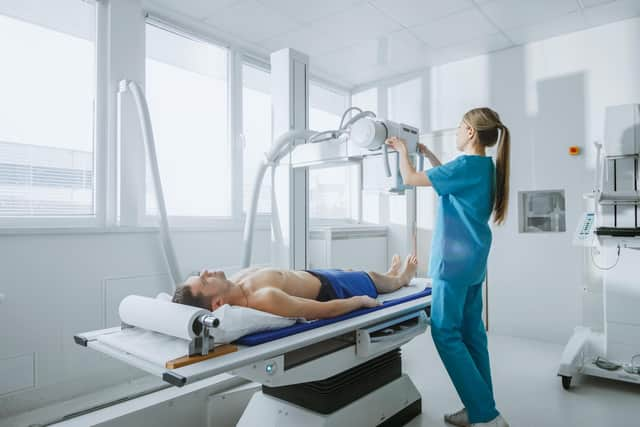

Figures released under a Freedom of Information request show that in 2023, 27,323 images were sent to Medica from Altnagelvin. This rose by 14,930 to 42253 in 2024, a 55 per cent increase.
The largest percentage increase in scans outsourced from Altnagelvin was in plain film X-ray reporting (from 22,864 in 2023 to 35,748 in 2024; +12,884 (56 per cent); followed by overnight emergency images (from 1791 in 2023 to 2709 in 2024; +918 (51 per cent); routine elective Magnetic Resonance Imaging (MRI)-Computerised tomography (CT) (from 2590 in 2023 to 3700 in 2024; +1110 (43 per cent); and day time emergency images (from 78 in 2023 to 96 in 2024; +18 (23 per cent).
A spokesperson for the Western Trust confirmed that all images reported on by Medica were carried out by Western Trust staff using Western Trust equipment.
However, they acknowledged that rising demand and staff shortfalls were an issue locally, regionally and across the water.

"Outsourcing of Radiology Reporting has been a feature of UK wide Imaging services for more than a decade, due to the significant pressures on UK imaging.
"This pressure has been compounded by increasing demand year on year, and national shortages of Reporting Radiologists and Radiographers.
“The recent Royal College of Radiologist Census report highlighted the national concerns with a 30 per cent shortfall in Consultant Radiologists, and predictions that this will rise to 40 per cent by 2028. In this regard, the WHSCT is no different than the rest of the UK.
"Whilst the service strives to deliver a timely service for all its patients, this mismatch in ability of the team to deliver Imaging exams and the shortfall in reporting capacity is met by outsourcing. This means that patients receive their imaging examination despite the shortage of reporting capacity within the Trust,” the spokesperson said.
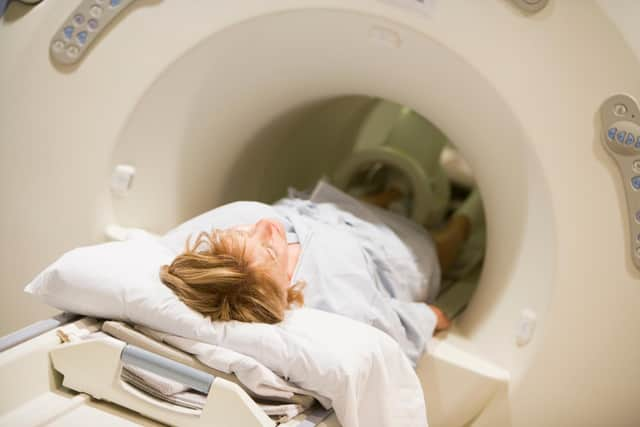
They explained that all CT and MRI reports in the WHSCT are carried out by Consultant Radiologists.
"At present the Trust has a vacancies for Consultants across all sites. The Trust has recently advertised for Consultant Radiologists for all three sites and interviews are due to be held in May.
"Whilst the training numbers for Consultant Radiologist has increased over the last seven years, the current scheme numbers are not sufficient to close the regional gap between demand and supply.
"The proposed Imaging Academy for Northern Ireland will be crucial to improve reporting capacity and advanced Practice for Radiographers across the region,” they added.
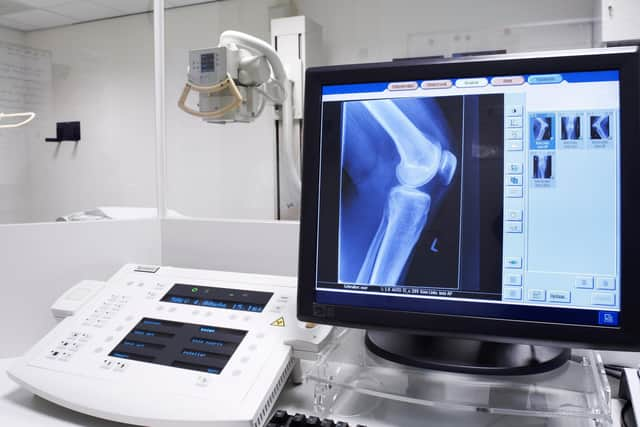
Figures show that across the Altnagelvin and South West Acute Hospital sites the total number of scans outsourced for reporting in the Western Trust rose by 21,768 from 38,452 in 2023 to 60,220 in 2024 – a 57 per cent increase on the volumes across both hospital sites.
The Fermanagh-based health campaign group, Save Our Acute Services (SOAS), has urged the Western Trust and the Health Minister Mike Nesbitt, to bring radiology reporting back ‘in house’.
The Western Trust told the ‘Journal’ that fully commissioned radiology services and equipment are being fully utilised at SWAH. In terms of the capture of images, MRI scanning moved to a seven day service in Enniskillen last year accommodating more patients with reduced waiting times.
As well as next month’s radiology recruitment process the Trust also intends increasing the number of plain film X-ray reporters it employs over the next two years.
A spokesperson said: “A proportion of plain film reporting in the WHSCT is carried out by suitably trained Reporting Radiographers who have additional post graduate qualifications in Image reporting.
"The Trust plans to increase its numbers of plain film reporters in the next 12 to 24 months. At present this Reporting radiographer team provides Trust wide cover for musculoskeletal reporting within their scope of practice.”
But the demand for X-rays, CT and MRI scans to be captured and reported on is expected to continue to rise in the years ahead, the Trust said.
“The increase in outsourcing for both sites has been driven by primarily by increasing demand. Trust Imaging is performing in excess of Service Budget Agreement.
"CT Scanning in particular has seen a 10 per cent increase in demand year on year, further pressurising ‘in house’ reporting capacity.
"Pressure to improve access for the Emergency Department and inpatient scanning means more CT scanning is now carried out outside of Monday to Friday 9am-5pm, especially on the acute hospital sites.
"This is critical to improving patient flow, and outsourcing of reporting enables the service to continue to provide this opportunity for patients to be scanned.
“The recommendation to develop a specialist regional network of reporting was included in the 2018 Imaging review, and implementation of this model remains and aspiration for N. I. Modernising Radiology Clinical Network,” the spokesperson concluded.