
Is measles back again to haunt us? - Medical Matters with Derry GP Dr Tom Black
I remember the MMR vaccine (measles, mumps and rubella) being introduced in 1988 when I was a trainee GP in Bellaghy and it was a thing of wonder for doctors and patients as these diseases were greatly feared by the public, especially because of the serious risks from this very infectious virus measles. The vaccine worked really well and as a result we have seen very few cases of measles for the last few decades and most young GPs will never have seen a case of measles.
However, as a famous football manager once said, success leads to complacency and complacency leads to failure. As a result, young mothers who don’t remember how dangerous measles can be, and no doubt influenced by social media anti-vaccine hysteria, have decided in increasing numbers not to get their children vaccinated for this and other diseases. A population needs more than 95% of children vaccinated to create “herd immunity“ so that infections don’t spread in schools and creches. This protects the 5% of children who didn’t get vaccinated. Unfortunately vaccination rates have dropped below 90%, and in some cases below 85% and infections can now spread like wildfire through communities causing illness and complications.
The UK has lost its status of being free from measles, with only 84.3% of five-year-olds receiving two doses of the MMR vaccine and a recent outbreak in Northeast London resulted in some GP practices having to admit 20% of the children affected by measles to hospital. This outbreak was caused by the local vaccination rate of only 64%.
The problem with measles it is that it is extremely infectious and you can literally catch it from an empty room that an infected person has recently been in. The symptoms of measles are a rash, cough, runny nose, conjunctivitis and white spots inside the mouth. The rare serious complications that people worry about with measles are pneumonia, meningitis, blindness and seizures.

Because measles is so infectious it is the canary in the mine that tells us worse is coming, and indeed we have seen a recent outbreak of meningitis in Kent.
There is now concern that we will start to see diseases such as the diphtheria, polio and tetanus which haven’t been seen in the UK for generations, but which will present again if vaccination rates continue to fall.
As a working GP this is really disappointing because we have worked very hard in the NHS to provide our most vulnerable patients, the young and elderly with safe vaccines that prevent serious illness.
This is the third time in my career that I’ve had to deal with anti vaccination movements; previously with antipertussis and then anti MMR sentiment, but they settled and the vaccination rates went back up over 95% again.
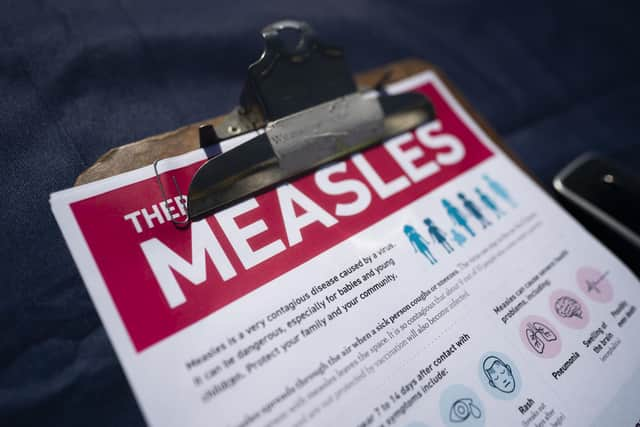
Childhood vaccinations are the most important thing you can do for your child. Failing to attend for vaccinations that are safe and free is inexcusable and dangerous not just for the unvaccinated child but also for ill, vulnerable children with impaired immune systems.
I have no doubt that vaccination rates will go back up over the 95% rate again but I would hope that this would will be as a result of sensible thought and persuasion and not because children come to harm in the meantime.