
Is the NHS finished? - Medical Matters with Derry GP Dr Tom Black
The NHS started in 1948 to provide a free health service, universal in its scope and funded by taxation. It cost £248 million in its first year in 1948 which shocked the politicians of the day as the budget was for only £100 million but they discovered that the public loved free health services. It now costs nearly £200 billion which isn’t enough and the government clearly isn’t in a position to spend more.
The UK is unusual in that the majority of healthcare funding is through taxation whereas other countries have additional funding through private healthcare and social insurance. The present model in the United Kingdom has resulted in an underfunded, understaffed, overwhelmed service with huge waiting lists that can be seen from the moon.
The solution is obvious to those who understand how the NHS works but clearly politicians are refusing to tell the public the bad news and instead focus on rearranging the deckchairs with reorganisations and false promises, increasing stress on the remaining staff.
We need to either redefine what the NHS provides or find alternative funding streams to pay for what the public want, and ideally we would do both these things.

Any housewife will tell the politicians that if you don’t have enough money to buy everything you want then you should focus on purchasing what is most important, what you need most as opposed to what you want.
If we were in a town hall meeting the public would agree that those are paediatrics, geriatrics, cancer, maternity and emergencies. People would also highlight GP access and free prescriptions as key elements of the health service they value.
So if we focus only on these areas, would we have enough funding? I don’t think so as people are living longer with more diseases and this is very expensive. We would also need to increase funding from government taxation, but recent history would tell us that this isn’t going to happen in Westminster or Stormont.
We will therefore need to create a hybrid funding model where middle class patients pay for access to the NHS and more deprived patients continue to get services free.
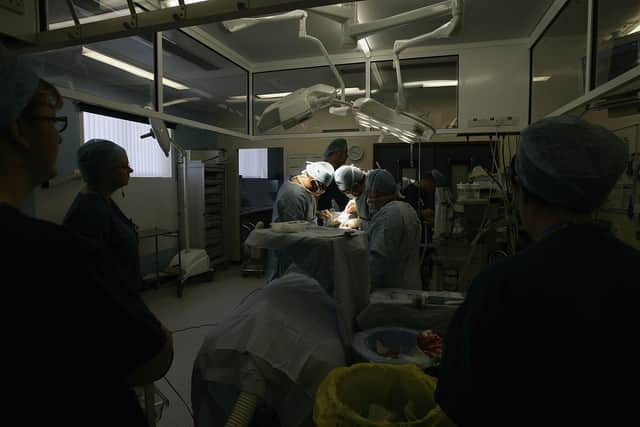
We already have a very good example of this in the Republic of Ireland where patients who can afford to pay their way for GP appointments and other services. This brings more funding into the system and the more vulnerable and deprived populations get a better service than in Northern Ireland. Waiting lists are much shorter and life expectancy is much longer. As a result, many doctors, nurses and other healthcare workers have left the NHS in Northern Ireland and are working in the south where they tell me, “It’s twice the pay for half the work.“
If we don’t make these changes waiting lists here will get worse and life expectancy for patients will deteriorate. The middle classes will go to Private GP and Hospital Services and bypass the queues while the vulnerable and deprived will be severely disadvantaged.
How have we reached this point? The answer to that is that Stormont has failed, and then stuck its head in the sand. Our best hope in the medium term is an all island health service because otherwise things are just going to get worse.