
One in four waiting longer than 12 hours at Derry A&E new data reveals
New statistics released by the Department of Health show that one in four people attending the Accident & Emergency Department at Altnagelvin Hospital waited 12 hours or more to be assessed and treated post-triage.
New data shows that all four hour and 12 hour waiting time targets at Altnagelvin and every other hospital in the north were missed for the month of June 2025.
In that month, there were 4,660 attendances at the Emergency Department at Altnagelvin Hospital – around 155 a day. In May there were 4,822 attendances and in April 5,078 attendees arriving at the A&E.
The four hour target for A&E departments in the north and in Britain is for emergency care patients to be seen, treated and either admitted or discharged within four hours of their arrival. The UK has set a national target is 95% patients to be seen within the four hours, although this varies from site to site here. In Altnagelvin, less than a quarter of that UK target was achieved at 22.4%, which was also below the average for the north.
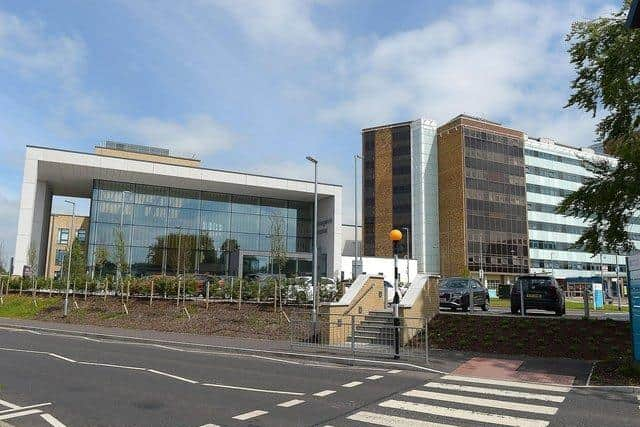

The 12 hour target aims to ensure that no patient waits longer than 12 hours to be seen, treated and either admitted or discharged. No hospital site anywhere in the north met either target. Indeed in Derry’s A&E in June, 1,196 attendees – around a quarter of all attendances for the month - waited 12 hours or longer, broadly mirroring the same scenarios at most other Emergency Departments in the north.
Altnagelvin also recorded the longest median wait time between arrival and triage at 24 minutes compared to a Northern Ireland average of 14 minutes in June.
The bleak assessment of the situation facing staff and patients in the A&E locally in Derry is by no means exceptional, and official data and graphics for the whole of the north show the worsening trends replicated everywhere, painting a stark picture of the scale of a crisis that shows no sign of abating.
Overall across the north 15,885 calls were received by PhoneFirst, which assesses a patient’s needs prior to arrival at an ED, in June. A total of 9,040 (56.9%) of these resulted in a referral to an ED.
Meanwhile 6.5% of all ED attendances left before their treatment was complete.