
One mother said to me, 'I am not afraid of dying, but I am afraid of dying first'
The Northern Ireland Assembly has backed a motion demanding new legal protections for young people with special educational needs beyond the age of 19 to prevent them and their families facing a ‘cliff edge’ as services fall away.
The Assembly has now endorsed an Opposition Motion, tabled by SDLP East Derry MLA Cara Hunter, stressing the importance of ensuring that all young people with special educational needs (SEN) are supported to reach their full potential beyond the age of 19;.
The Assembly also formally acknowledged that, every year, families here ‘face a devastating cliff edge when their child leaves a special school, with support falling away and too many young people left without the care, structure and dignity that they need to live a full life’.
Current provision for post-19 SEN support in Northern Ireland lags significantly behind that available in other jurisdictions, MLAS were told, while the motion also formally expressed the Assembly’s support for Caleb’s Cause NI for their work in bringing the issue of post-19 provision onto the political agenda.
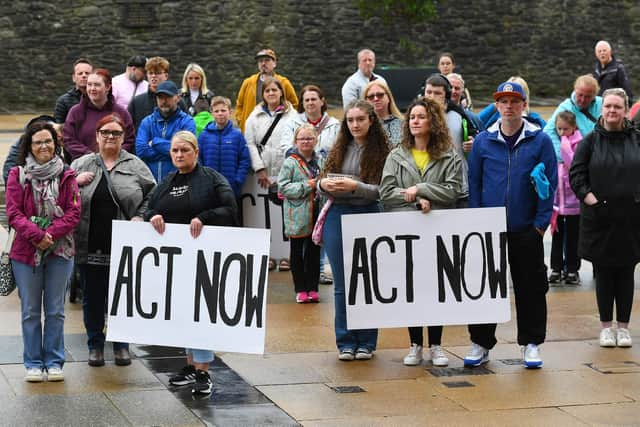

Following an amendment, it further called on the Minister of Health to lead on this issue and to develop legislation ahead of the next Assembly mandate to ensure that the provision of services for all post-19 adults with SEN are supported in all aspects of their lives, and on the same Minister to work proactively with the Minister for the Economy and the Minister of Education to develop legislative proposals that help to facilitate effective transition planning for young people post 19. Cara Hunter said she was was proposing the motion on behalf of families across the North ‘who are watching the clock tick down to their child's 19th birthday with a profound fear that no parent should ever have to carry’.
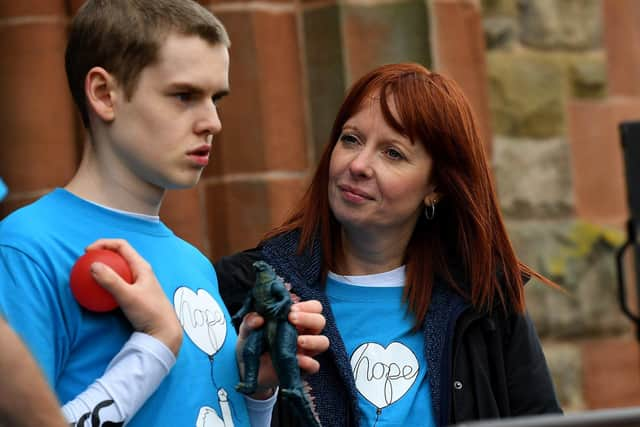
"For their children, turning 19 means falling off a cliff edge: no groups, no games, no fun, no help getting into employment and no socialising. The school gates close; the therapists stop calling; and, often, transport stops arriving. Routines change forever as the structure that has held their child together since the age of three simply disappears. Families call it a ‘cliff edge’, and the truth is that they are absolutely spot on.” Praising Alma White, founder of Caleb’s Cause and the other families who have led the campaign for change, Cara Hunter added: “I have sat in many rooms across my constituency with mothers in their 40s, 50s and 60s who are exhausted, frightened and grieving the loss of the system that has always been there to support their child. One mother said to me, ‘I am not afraid of dying, but I am afraid of dying first’. That speaks to the experience of many mothers and fathers of children with special educational needs. They are terrified because they know that, when their child grows up, an adequate support system will not be there.
"That is really concerning, given that there are now over 70,000 children in the North with special educational needs, which is almost one in four pupils.”
Sinn Féin North Antrim MLA Philip McGuigan, who proposed the amendment, concurred: “Parents should not have to lie awake at night wondering what will happen to their son or daughter when they are no longer there to provide care.”
East Antrim DUP MLA Cheryl Brownlee said the reality of post-19 Special Educational Needs “means parents leaving work because there is nowhere suitable for their child to go; families being pushed to breaking point, emotionally, physically and financially; and young people sitting at home, isolated and losing confidence, routine and opportunities”.
"Worst of all,” she added, “it means potential being wasted. Those young people have value. They have abilities, talent and personalities. They have a future, and they matter just as much as anybody here.”
South Belfast Alliance Party MLA Kate Nicholl said that since becoming an MLA, she has been ‘horrified’ to learn how much those parents have to fight every day. “They want to know that their children will have a future when they are gone. At the moment, they do not have that from us. We are failing them... It is terrifying for them.”
UUP Leader Jon Burrows, party colleague of Health Minister Mike Nesbitt, said that addressing the issue of special educational needs end-to-end was ‘one of the greatest challenges of our time’.

“I fully accept and make no apologies or try to take us away from our responsibility. The Health Department needs to grapple with and develop solutions to support people after the age of 19.”
"I speak to a number of parents, and I hear that not only do they want support for the young people, because it is right, but many of those parents want to work and are being held back. Therefore, it will be good for our economy; it is good for the young people.”
Upper Bann DUP MLA Diane Dodds criticised previous responses from the Department of Health that there was not enough time to develop legislation before the next Assembly election.
"It is something that we should revisit time and time again until we get to a situation where Health accepts that responsibility and does something about it."
People Before Profit West Belfast MLA Gerry Carroll was among the many MLAs who paid tribute to Alma White and the other campaigners, some of whom were watching on from the public gallery in the Assembly chamber on Monday evening.
“Imagine,” he said, “if we said to people with a physical disability or someone on personal independence payment (PIP) or disability living allowance (DLA) that, when they reach an arbitrary age, their services, support and financial payment would stop. We would say that that is completely unacceptable and should not be the case, but somehow it is deemed to be the acceptable state of play for children and young people with SEN when they reach the age of 19.”
“Parents and carers pick up the slack and look after their children or family members because the state and the Executive have failed, not just this year but, as people have said, for decades and refuse to step in to provide those services. Most of that work usually falls on the shoulders of women.”
During the debate, Minister for the Economy Dr Caoimhe Archibald laid forth measures her department has been implementing towards “working to ensure that young people with special educational needs can access the pathway and support that they need”.
The Minister however stressed that there were limits to what DfE could provide, and that other Departments would be instrumental in developing appropriate pathways to ensure a much wider range of supports and services would be available.
"It is clear that the lead responsibility for supporting our young people with complex needs sits with the Department of Health, but I am happy to update Members on the work that I have undertaken in my Department,” the Minister said.
Since September DfE officials have been working with the Education and Training Inspectorateon a whole-sector evaluation of the SEN-related arrangements across the further education colleges, with a report being finalise, while the Ministers Skills Fund has been used to support Ulster University to develop and commence the delivery of new training for FE staff, while physical enhancements on some college sites include sensory pods and specialised learning support hubs.
A DfE led cross-departmental bid for funding to improve pathways and transitions for young people as they move on from school and into adulthood has been submitted. Data sharing across stakeholders and departments and key stakeholders to better serve young people during transitions between services and organisations is also being explored, while a scoping study is under way to examine the economic and labour market implications of the rising number of young people with SEN.
Among other measures, DfE has also launched a new software tool to better support autistic learners in exploring pathways, planning transitions and accessing careers guidance which will be rolled out across all post-primary schools and wider learning and skills settings.
“However,” Minister Archibald said, “as I indicated in my June statement, my Department's actions alone will not meet the needs and aspirations of all school-leavers with SEN. While many young people with SEN aim to progress to skills- and training-based pathways after school, a very substantial number of school-leavers will never access provision funded by my Department. That is why the amendment to the motion is so important. Many young people with disabilities want and need to progress to Health-funded pathways, which are often day opportunities or day care. They feel that those options are the most suitable destinations to support them and meet their needs.
“Meeting the support needs and expectations of those young people and their families requires progress to be made by many Departments, but it is fair to say that those young people with complex needs, many of whom have been supported throughout their childhood by children's disability teams in health and social care settings, are looking to the Department of Health for support. They do not understand why the transition into adulthood changes their support and care when the nature of their disability has not changed. The families involved want a plan for their young people.
“Last September, at the Executive, all Ministers committed to providing regular updates to the Executive on progress being made to support school-leavers with SEN. I want to see the Executive work together to give school-leavers with special educational needs a legal right to an appropriate pathway, whether in an education-based or health-based setting. I remain willing to be part of Executive discussions on legislation in that area, but legislation must be matched by funded implementation plans, delivery capacity and clear accountability.
Foyle SDLP MLA Mark H Durkan said: "Over the past 20 years, there has been a staggering 134% increase in pupils with a statement of special educational needs. However, there is no overall statutory lead or contact after a young person finishes school; they are left in a void. That is totally unacceptable,” he said.