
Charles Macklin (McLaughlin/MacLochlainn): The Donegal theatre radical and playwright who revolutionised Covent Garden in the 1700s
Three hundred and twenty six years ago this week Cathal MacLochlainn (Charles McLaughlin) is believed to have been born in the townland of Gortinaren outside Culdaff.
He went on, of course, as Charles Macklin to achieve fame as one of the most famous stage actors of the 18th century in Covent Garden.
His was an extraordinary life in which he pioneered a new naturalistic acting style that would greatly influence generations of thespians.
He is reputed to have revolutionised how ‘Shylock’, the moneylender from Shakespeare’s ‘The Merchant of Venice’ was played.
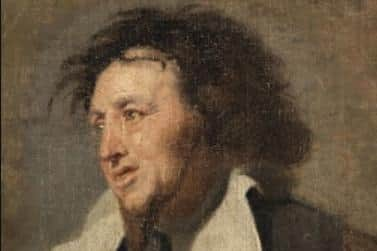

He was a playwright as well as an actor and authored several works such as ‘Love a la Mode’ (1759), ‘The Married Libertine’ (1761), and ‘The Man of the World’ (1781).
He notoriously killed a fellow actor when he stabbed him through the eye with a cane in a fit of pique during rehearsals at the Theatre Royal in Drury Lane.
According to William Worthen Appleton’s 1960 biography ‘Charles Macklin; an actor’s life’, Macklin told James Boswell about his Inishowen roots when he was in his 80s.
"His name was McLaughlin and if he could have proved himself to be the identical Charles McLaughlin, the son of his father, he should have had an estate in Ireland, but having left the North of Ireland very young, he could not establish himself to be his father’s son," he told him.

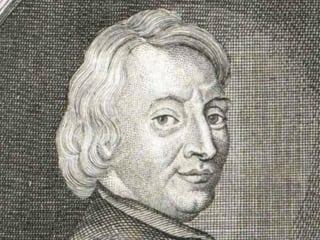
Notwithstanding this sketchy autobiographical vignette it has since been established that Macklin was born in North Inishowen.
"Irish scholars now concur that Macklin was born in the parish of Culdaff in County Donegal. Most recently the townland of Gortinaren has been pinpointed as his birthplace," writes Appleton.
"A childhood passed among the rugged inhabitants of the northern top of Ireland would justify allusions to him as a bogtrotter," continues the Harvard professor, in a passage that is fairly dripping with an anti-Irish sentiment that is hopefully now a relic of 1950s New England.

"It would substantiate accounts of his early poverty and illiteracy. Not least of all, a childhood passed in the brisk air of that harsh landscape, with its heaths and barren mountains, might in part account for his iron constitution," he writes.
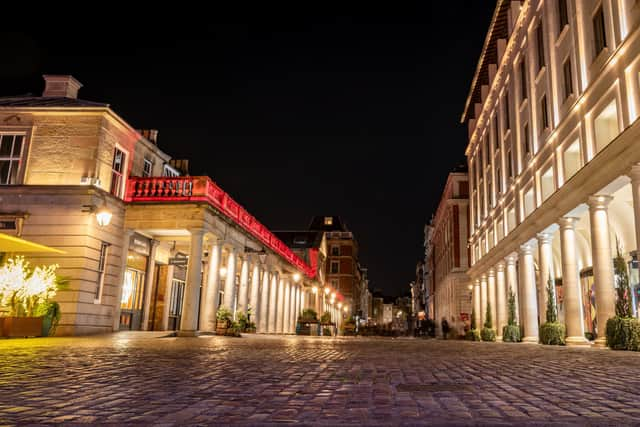
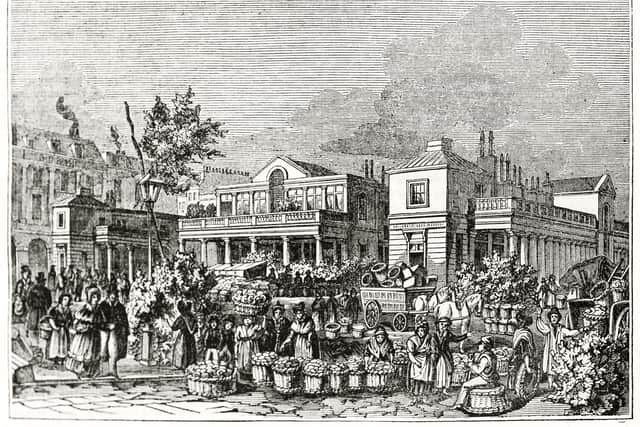
By the 1730s Macklin was making a living in Covent Garden having moved to London via Dublin and Portsmouth at some point in the 1720s.
However, it was far from plain sailing and Macklin became entangled in a quite incredible and tragic incident that led to the death of fellow actor, Thomas Hallam in 1735.
According to Appleton Macklin and Hallam got involved in a row over a wig with fatal results during rehearsals for Fabian’s ‘Trick for Trick’.
Tempers flared and: "Macklin started up and lunged at him. Seizing the cane which he is to carry in his part, he thrust it violently into the other’s face. A moment later Hallam staggered backward, the blood streaming down his face. The point of the stick had penetrated his left eye. The subsequent confusion is best described by Macklin: ‘Good God’, said I. ‘What have I done?’ and I threw the stick into the chimney. He [Hallam] sat down and said to Mr. Arne’s son (who was dressed in woman’s cloathes). ‘Whip up your cloathes you little b***h and urine in my eye.’ But he could not so I did. I begged of the persons who were present to take the deceased to the bagnio; but Mrs. Moor said she had a room where he should be taken care of.’"
Tragically, Hallam died and Macklin was indicted for wilful murder. He was convicted of manslaughter but thanks to a ‘compassionate jury’ he sentenced only to be branded on the hand and discharged.
With his long term partner Ann Grace Purvor, another Irish actor, Macklin had one daughter, Maria Macklin, who followed in her parents’ footsteps.
He was fiercely protective of his daughter and according to ‘A Biographical Dictionary of Actors, Actresses, Musicians, Dancers, Managers & Other Stage Personnel in London, 1660-1800’ by Highfill, Philip H et al, an incident involving an indecent proposal from an unnamed ‘baronet’ brought out the same violent temper that displayed itself during the Hallam incident.
"A story was told by his biographer Cooke that a baronet called at Macklin's house while he was at breakfast and offered to settle large sums upon both whom and Maria if she would consent to be the baronet's mistress. "The enraged Macklin, knife upraised, chased the dastard downstairs. The episode was commemorated in a satirical print, 'Mr. Macklin and the Amorous Baronet'," the biography states.
Following the death of his partner Ann he began a long term affair with his servant Elizabeth Jones, who he married in 1778.
Despite the Hallam outrage Macklin went on to forge a reputation as one of the greatest actors of the 1700s. He is credited with bringing a new realism to the portrayal of ‘Shylock’ a character who up until Macklin’s time had been generally played as a stock clown.
"His performance as ‘Shylock’ proved the cornerstone of his career, ranking with Garrick’s ‘Richard III’, Quin’s ‘Falstaff’ and Kemble’s ‘Coriolanus’ as one of the triumphs of eighteenth-century acting.
"For almost 50 years he played the role. Indeed most of his best parts were, in some degree, variations on it."
Macklin is buried in St. Paul’s Church in London and as Appleton writes: "St. Paul’s is a fitting church for Macklin to lie in, the actor’s church, in the heart of the district in which he lived for most of his life.
"His world had centred around the Covent Garden Piazza. He would have been pleased to know that he would subsequently take his place among that illustrious company of actors who have given their names to the streets of London - Betterton, Kemble and Garrick."
Cathal MacLochlainn (Charles McLaughlin) aka Charles Macklin is believed to have been born 325 years ago this month on September 26, 1699.