
Michael Canavan described as ‘inspiration’ after civil rights and university campaigner dies aged 102
The late civil rights veteran Michael Canavan has been described as an ‘inspiration’ following his death at the age of 102.
SDLP MP Colum Eastwood said: “By any measure Michael Canavan’s was a life well lived. He packed so much into his long life, from being involved in the civil rights movement, taking part in the Duke Street Civil Rights March, and the University for Derry campaign. He also worked closely with John Hume, in the credit union movement, as his election agent and in the founding of the SDLP.
“Michael was an important voice during difficult times as the SDLP’s security spokesperson during the early days of the Troubles and was elected to the old Stormont representing his native Derry. Even when he stepped away from electoral politics, Michael continued to be involved in a wide variety of community and civic organisations and right up until his later years he remained a passionate advocate for the development of this city and region.
“Our thoughts today are with Michael’s family, friends and all who knew him. I hope they can take comfort from the huge contribution he made throughout his life and the lasting legacy he leaves behind.”
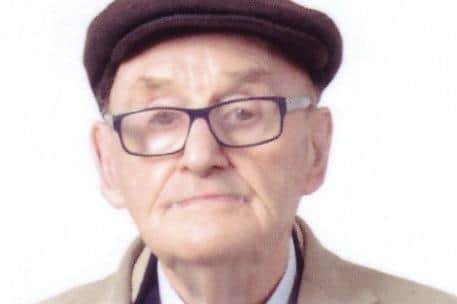

Mr. Canavan was the last survivor of the the 1960s University for Derry Committee.
Conal McFeely of the Derry University Group said he had always remained a 'stalwart' campaigner for an independent Derry university.
"He was an inspiration to all of us, recognising from the outset the vital importance of a university to both our community and our economy. Ar dheis Dé go raibh sé,” said Mr. McFeely.
Mr. Canavan was a founder member of the cross-community UDC alongside John Hume.
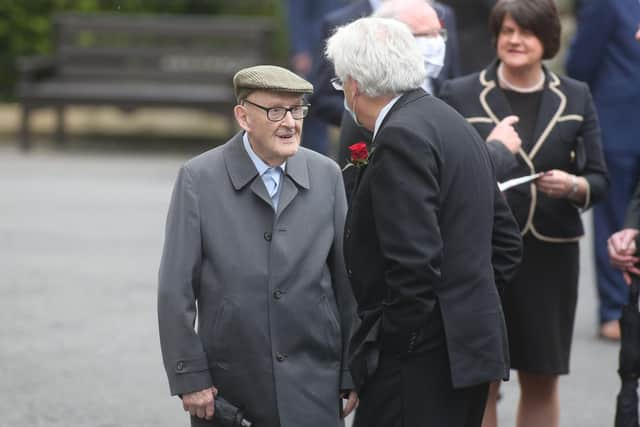
The committee was formed in January 1965 to campaign for a university for Derry and to oppose the anticipated recommendation by John Lockwood – which came in February of that year – that a second university be located in Coleraine.
The Derry University Group noted that he was also a co-founder of the Derry Credit Union and that after Henry Benson recommended the closure of both the Northern Counties Committee (NCC) and Great Northern Railway (GNR) lines to Derry, Mr. Canavan ‘wrote to industrialists all over the world asking them to consider investing in the North West’.
After the Northern Ireland Civil Rights Association (NICRA) civil rights march was batoned off the street by the Royal Ulster Constabulary at Duke Street on October 5, 1968, the Derry’s Citizens Action Committee was formed in the City Hotel with Mr. Canavan acting as Secretary.
At a public meeting in the Guildhall on November 19, 1968, Mr. Canavan said: “If the Citizens’ Action Committee was born on October 9, it was surely conceived on October 5, the offspring on one side of the indomitable spirit of the people of Derry and on the other of their suffering on that memorable day.
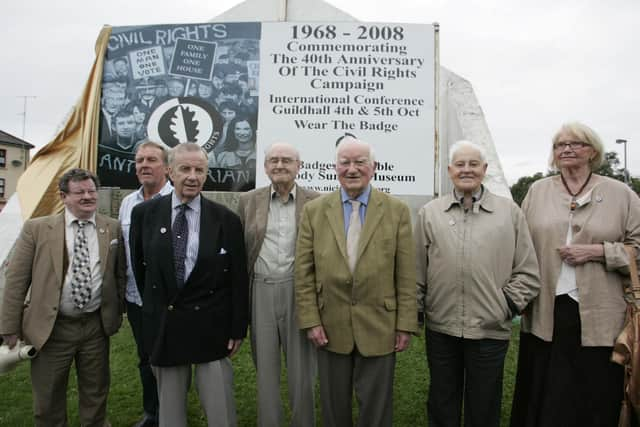
"For on that day a group of no more than 500 strong set out to march in Duke Street for Civil Rights. The government of Northern Ireland had them surrounded in the streets of their own city, beaten to the ground with truncheons and humiliated with water cannon. But when those batons rose, they fell not only upon the voteless, homeless, jobless few, but upon the minds and hearts of every thinking person in this city."
He acted as an election agent for John Hume in his inaugural election to the old Stormont in February 1969 when the then independent defeated the Nationalist leader Eddie McAteer and was returned as MP for Foyle.
Mr. Canavan was a key player within the Derry Citizens’ Defence Association during the Battle of the Bogside in August 1969.
Reflecting on those days years later, he said: “The DCDA, which met every two hours during the period of active defence, now met every day. Many observers predicted disaster because of the diverse affiliations of its membership but, in truth, all decisions were democratically arrived at and implemented under the wise and experienced chairmanship of Seán Keenan.
“The virtual autonomy of the Bogside lasted from August 12 until October 12. The objective of the DCDA, after restoring order and maintaining peace, was to maintain authority over the Free Derry area which, in the end, comprised 880 acres and 25,000 souls within which only the writ of the DCDA ran until the British Home Secretary, Jim Callaghan, returned to the Bogside with the package of substantial reforms which he had promised on his first visit.”
He was a founder member the Social Democratic and Labour Party (SDLP) in August 1970.
Chair of the Derry Citizens Central Committee at the time Bloody Sunday when 13 innocent anti-internment protesters were murdered by British paratroopers in the Bogside on January 30, 1972, he told the ‘Journal’: “It was a massacre. The troops opened fire as Miss Devlin [Bernadette, MP for Mid Ulster and civil rights activist] picked up the microphone to address the huge crowd at the Free Derry corner.”
He was elected as SDLP representative to the short-lived Northern Ireland Assembly in 1973.
As an Assemblyman he visited Long Kesh shortly after it was burned in October 1974.
"Though three weeks have elapsed since the burning accommodation and sanitation are rudimentary and overcrowded everywhere and conditions in compounds 18 and 21 can only be described as sub-human.
"Their shelters, made from the wreckage of the original huts, are only waist high and prisoners have to crawl to get inside it. Once inside, they cannot stand up straight. In view of the instant availability of prefabricated buildings, these conditions are intolerable,” he observed.
His late brother Ivor Canavan joined the Alliance Party shortly after it was formed in 1970 and served as Mayor of Derry in 1975-76.
Mr. Canavan was predeceased by his late wife Eileen and daughter Clodagh.
He is mourned by his children Siobhan, Rory, Kevin, Conor, Miceal and Padraig.
A private cremation is due to take place at Lily Hill Crematorium in Letterkenny on Monday, October 12.