
OUR SPACE 53: Politics & Religion in 1630
“Were the Williamite wars and the Siege of Derry more about politics or about religion?” was asked recently at a public meeting. The answer? In the 1600s it was impossible to separate them.
Politics and religion have intermingled for millennia - the Crusades; innocent Muslims criticised for violent jihad; innocent Jews for Israeli Government actions; and our competing nationalisms in Northern Ireland labelled as if they were a war about Christian theology.
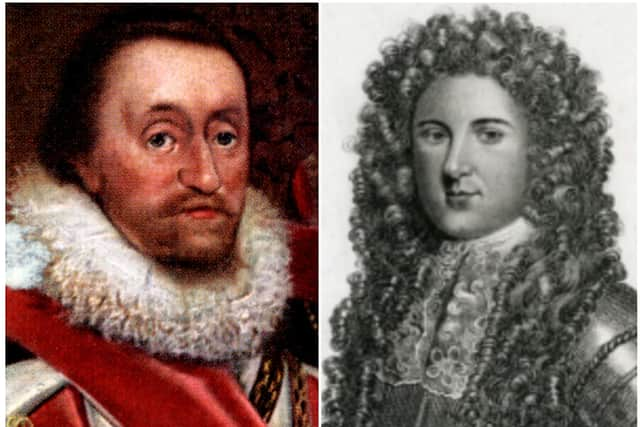
Protestantism was certainly a major component of the Plantation of Ulster - but not at all the full picture. James 1 had been tolerant of Catholics in Scotland - so long as they were loyal. Likewise in Ulster.
James Hamilton, who had many Catholic relatives, was created Earl of Abercorn in 1606, and was ‘induced’ by King James to be a leader in the Plantation. His brother Sir Claude Hamilton encouraged Catholic Scots to join him.

On Monday 4 January 1630, Thomas Plunkett ‘a man recently reclaimed from Popery’ swore before Bishop Downham, Anglican Bishop of Derry, that the Catholic Vicar-General Tirlagh O’Kelly was often entertained by Claude Hamilton who ‘lodged him when the Bishop of Derry and the Provost of Strabane thought to arrest him’.
Bishop George Downham was very puritan/ Presbyterian in his theology; and very anti-Rome. He wrote that “Claude Hamilton, Master of Abercorn, would be a hopeful young gentleman were he not poisoned with Popery, but maintains Papists so much that there will be a revolt in Strabane if any more of the Scotch Papists come there”.
“A Narrow Sea: The Irish-Scottish Connection in 120 Episodes” by Jonathan Bardon, Gill Books: 2018.