
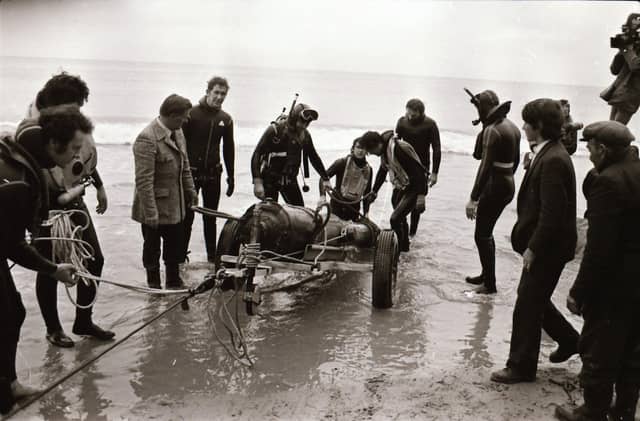

The media and residents from the area were among those gathered at Kinnego Bay in Inishowen as a massive bronze siege cannon from La Trinindad Valencera ship was brought ashore 50 years ago in November 1975.
The 14-pounder cannon weighed 2.5 tonnes and bore the arms of Philip II and his by then deceased wife, Queen Mary Tudor, Mary I of England, known to history as Bloody Mary. Mary was Henry VIII’s eldest daughter and only child by Catherine of Aragon.
After Catholic Mary’s death, her Protestant half-sister Elizabeth I ascended the throne. Henry VIII had earlier changed the religion of England from Catholic to Protestant so he could divorce Mary’s Spanish mother and marry his mistress, Elizabeth’s mother Anne Boleyn. However when Elizabeth was a child, her mother was beheaded by their father on trumped up charges of adultery.
During her reign, Mary had restored the Catholic faith for a time, before Elizabeth succeeded her.
Religious differences between Catholic Spain and Protestant England played a significant role in the widowed Philip II’s decision to declare war on his sister-in-law’s kingdom, but it was fuelled also by English economic interference in Spanish affairs and political rivalries.
The 1100-tonne Trinidad Valencera had been the fourth largest vessel in the ill-fated Spanish Armada fleet and sank off Ireland in 1588.
While around 300 soldiers and sailors from onboard the vessel were rescued and brought ashore, they did not survive for long. On September 20, 1588 – just eight days after their ship went down – they were massacred somewhere between Elagh Castle in the Greater Galliagh area, on the outskirts of Derry, and a few miles down the road at Burt, by soldiers of a chieftain who had at that time pledged allegiance to Elizabeth.
The remnants of the once huge Elagh Castle can still be seen on a low hill just opposite the The Cosh bar on the other side on the Buncrana Road.
Restoration work on key artefacts from the Tower Museum’s famous Armada Shipwreck collection is currently under way ahead of their voyage across the river to the new Derry North Atlantic (DNA) maritime museum at Ebrington, which is expected to open next year.
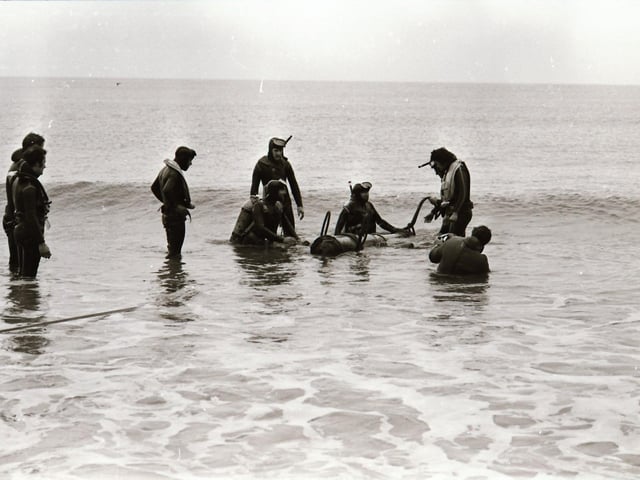
9. Derry Journal November 1975 6 La Trinidad Valencera (34).jpg
November 1975: Derry Sub Aqua Club members recover a cannon from La Trinidad Valencera four years on from discovering the 1588 Spanish Armada wreck off Kinnego Bay in Inishowen, Donegal. Photo: Derry Journal
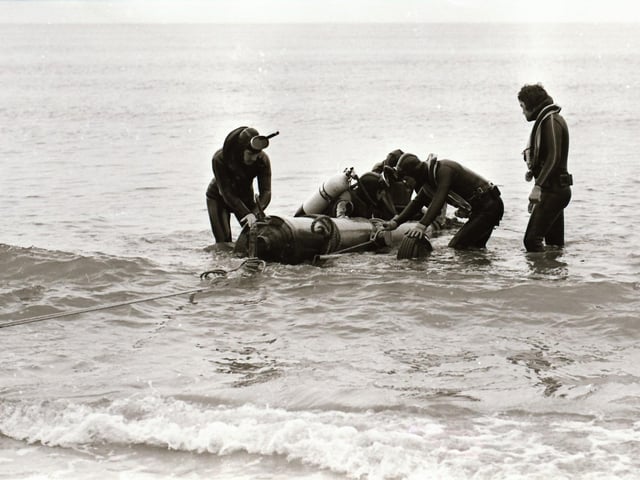
10. Derry Journal November 1975 6 La Trinidad Valencera (3).jpg
November 1975: Derry Sub Aqua Club members recover a cannon from La Trinidad Valencera four years on from discovering the 1588 Spanish Armada wreck off Kinnego Bay in Inishowen, Donegal. Photo: Derry Journal
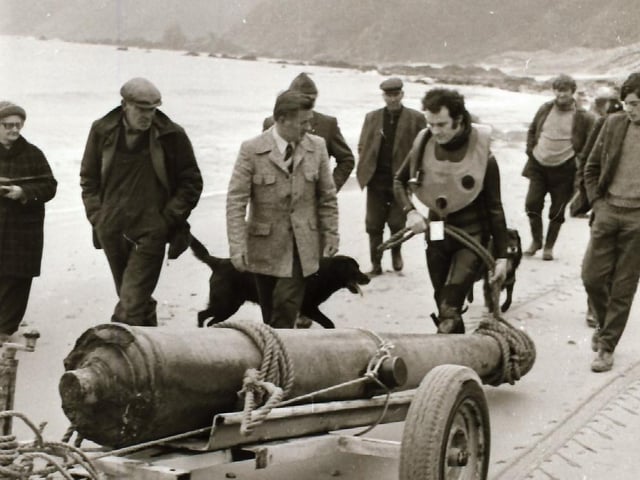
11. Derry Journal November 1975 6 La Trinidad Valencera (40).jpg
November 1975: Derry Sub Aqua Club members recover a cannon from La Trinidad Valencera four years on from discovering the 1588 Spanish Armada wreck off Kinnego Bay in Inishowen, Donegal. Photo: Derry Journal
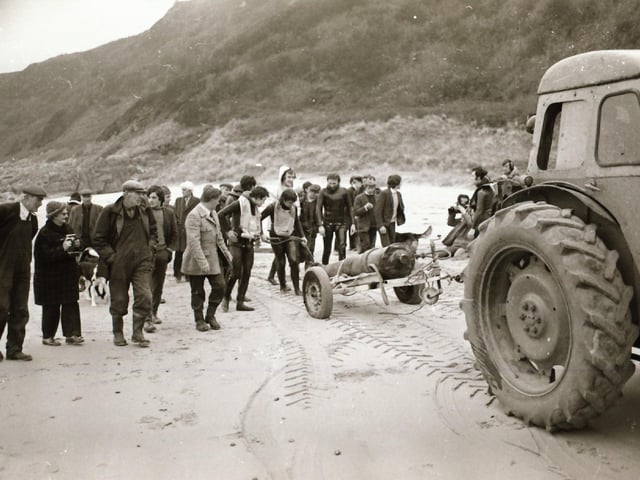
12. Derry Journal November 1975 6 La Trinidad Valencera (11).jpg
November 1975: Derry Sub Aqua Club members recover a cannon from La Trinidad Valencera four years on from discovering the 1588 Spanish Armada wreck off Kinnego Bay in Inishowen, Donegal. Photo: Derry Journal