
Making a 7 flower salad with edible blooms fresh from the garden - Gardening with Brendan
It says something about how removed from the natural world around us we have become that so few of us know much about the plants, trees, flowers and herbs that our ancestors but had built up so much knowledge about - which are poisonous, which were used in balms and old cures and which were edible.
I include myself in that, and would struggle to name more than a few of the different native trees and shrubs that line the roadsides and pathways we travel along without the help of a plant identifier app. Bar the dock leaf, thistle, dandelion, buttercup and daisy, I wouldn't be able to tell you much, if anything, about the weeds or wildflowers that pop up in the garden from time to time.
And so it came a bit of a surprise when I started out planting seeds earlier in the year and was doing a bit of research to learn that some of varieties of flowers were edible.
I want to include a note of caution here: You'd have to be very certain that the specific variety of the flower or plant you grow or pick can be eaten safely before they are tossed into a salad or used to liven up a dinner plate or cocktail. For example some California poppies are edible, other varieties of poppy most certainly are not. Some flowers and plants are poisonous, even lethal. Before I did a bit of research, for example, I'd no idea the delphiniums and larkspur seeds I was sowing would produce seedlings and plants that are poisonous to humans and pets (I have none, thankfully) and should be handled with gloves. So some plants are just downright dangerous.
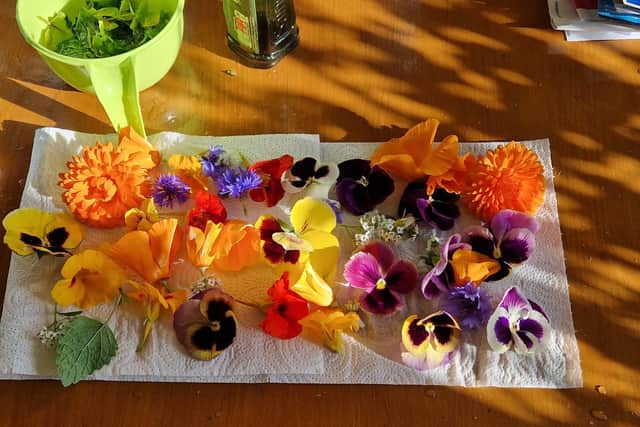

But having done quite a bit of research I decided to give creating a flower salad from scratch a go with blooms I now know are edible along with some ripe berries I've been growing.
Let's face it, salads are far from exciting. In fact, healthy eating in general can be kind of boring if you don't have the know how to spice up a recipe, and there's a reason why there's no salad bar takeaways, at least in our neck of the woods. So anything you can do to liven up such a meal a bit is worth a shot. I'm banking on the flowers adding a visual appeal, an unusual splash of colour amid the dull greens, while freshly picked fruit should add a bit of sweetness and depth of flavour. I'm also going to use some fresh herbs I’m growing and crush them up for a dressing to drizzle over the top of it.
So it's time to get picking and plucking and I'll be washing everything thoroughly in a lightly salted water bath before I add it in. Another note of caution here: if you have allergies to pollen etc, this may cause a reaction so you'd best not try this at home.
First off, I should say that I am certainly no MasterChef and have very limited knowledge when it comes to food. I know very little about what goes well with what, or anything much about herbs and spices when it comes to the kitchen so I wouldn't go jotting this recipe down even if it is only a salad. But I do like giving things a go.
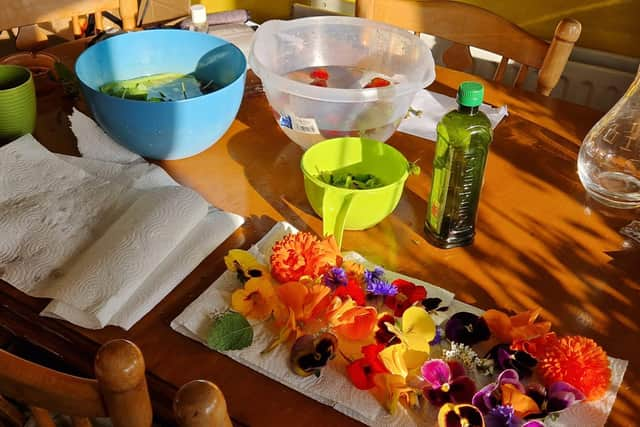
So what did I use?
Salad base
For the salad leaf base is I'm using a mixture of nasturtium leaves and watercress, with a couple of bitter calendula leaves, all grown from seed, as a substitute for lettuce. I've only planted some mixed lettuce seeds over recent days so it will be a while before there is any of a use that can be used of they germinate.
Flowers & Fruit

In terms of fruit, I have no tomatoes that are ripe as yet, but I do have some strawberries and gooseberries in the garden that are good to go so I'll toss those in.
The flowers I'm adding are red and gold nasturtium, bright orange calendula, daisy-like German chamomile, multi-coloured Swiss pansies, yellow California poppies, little white sweet alyssum and blue cornflowers.
I am also growing edible lavender, oxeye daisies, hollyhock and giant sunflowers but they have not come into bloom as yet so I'll find uses for them later on.
Dressing:
For the dressing I'm using a little bit of olive oil mixed with some of the herbs out in the garden - a bit of crushed mint, marjoram, which is related oregano but has a milder, sweeter taste, and lemon balm, an easy to grow herb which has a stringent, citrus flavour remarkably similar to lemongrass and lemon.
Verdict:
Well it looks amazing, and it actually tastes not bad at all. The watercress- normally seen as a tiny garnish has grown to a medium sized plant and the leaves are grassy and a bit herbal tasting. The calendula leaves meanwhile are a bit bitter. The nasturtium flowers have a peppery taste to them and the sweet alyssum have a mild honeyed clover like taste. The chamomile has a medicinal quality while the others are mild and some have different textures and all are adding a nice splash of colour .
The dressing itself is mild enough but I can imagine the herbs, the mint in particular as it is very strong, would be a bit overpowering if left to infuse in the oil for long enough.
The fruit really counterbalances the tart leaves and flowers and I'm glad I added it.
So overall, while its hard to get excited about a salad, this one not only looks great, but tastes quite interesting too. And best of all the ingredients were all right there on the doorstep. Would I east this again? Absolutely, but only once the multipack of crisps runs out!