
Denmark moves to ban “frankenchickens" still sold in UK supermarkets and cafes



90% of the chicken meat eaten in Britain still comes from birds bred to reach slaughter weight in just 35 days.
Denmark’s animal welfare minister moves to outlaw the use of fast-growing “frankenchickens” after eight political parties made unprecedented announcements this week to work towards ending the use of the controversial breeds.
This would make Denmark the first country in the world to outlaw the breeds which frequently suffer from painful welfare problems, following ten years of campaigning from Anima International.
But the UK overwhelmingly uses fast-growing chickens, with 90% of the chicken meat eaten in Britain still coming from birds bred to reach slaughter weight in 35 days.
UK animal welfare charity Anima has criticised high street brands like Pret A Manger for breaking previously made commitments to ban the use of fast-growing breeds in their food by 2026. One-hundred-thousand people recently pledged to boycott the chain following its u-turn.
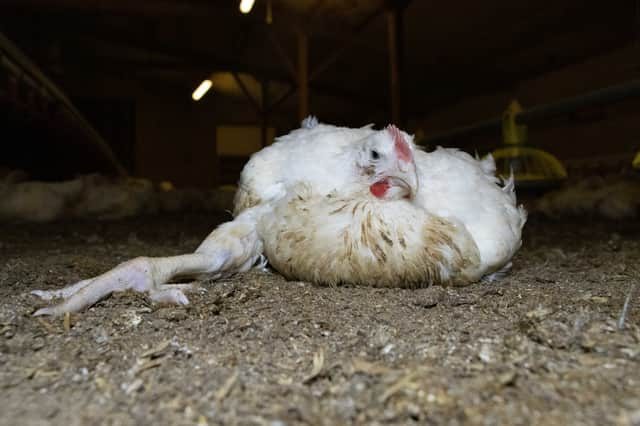
“Frankenchickens endure extreme suffering on a daily basis, and Denmark is showing the world what's possible when decision makers take that seriously. In the UK we are far behind, with frankenchickens still lining the shelves of our major supermarkets and even premium high street brands such as Pret A Manger,” said Anima CEO Connor Jackson.
A number of European countries have made significant strides in ending theuse of fast-growing chickens, which are selectively bred to grow 5x faster than natural. These birds grow so quickly that many suffer painful leg disorders, struggle to walk and are at higher risk of heart failure.
In the UK, Waitrose phased out fast-growing chickens in 2025, and M&S phased them out of its own-brand fresh category in 2024. But 9 in 10 of the chickens eaten in the UK still come from fast-growing breeds.
A number of UK companies, including Pret and KFC, previously committed to banning the breeds by 2026, but have now backtracked - leading to a public backlash.
Anima, along with several other animal welfare charities including the RSPCA, recently wrote to Defra urging the Government to use its existing powers to ban fast-growing chickens from schools and hospitals. Labour previously committed to promoting a transition away from fast-growing broiler chicken breeds in its 2025 Animal Welfare Strategy.