
Cancer Centre will treat 75 patients daily
The North West Cancer Centre will see 75 cancer patients receiving treatment every day by the time it becomes fully operational, health professionals have said.
A phased introduction of radiotherapy treatment for different cancers will see prostate cancer patients being followed by breast cancer patients in the coming months.
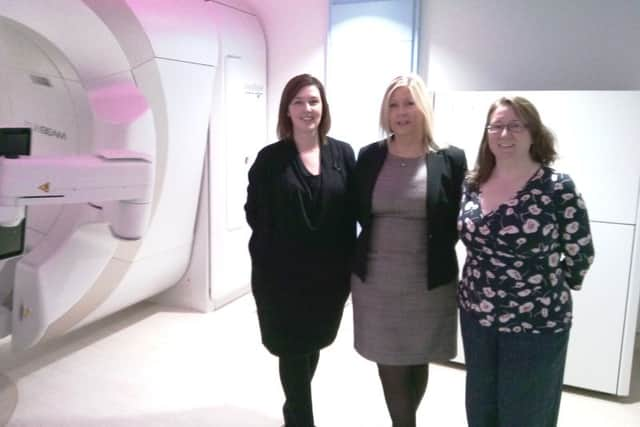

Speaking at the new centre, Fiona Beattie, Assistant Director of Cancer Services, said the other treatments to be phased in will include colorectal, lung, head and neck and palliative cases.
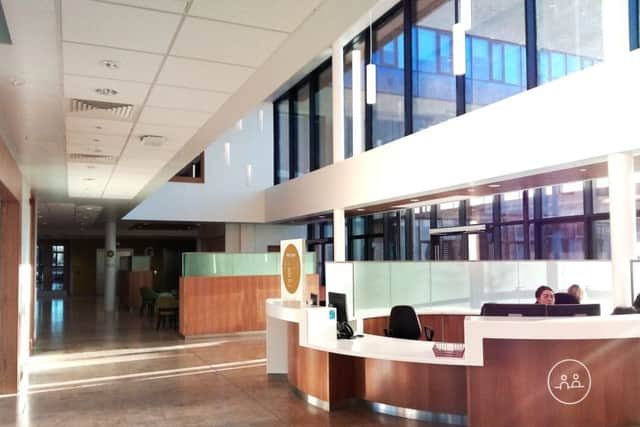
The North West Cancer Centre houses state of the art diagnostic and treatment facilities, with its own reception area and cafe area overlooking landscaped outdoor spaces, with much of the building glass-fronted to maximise natural light. There is also a new ward with 27 single and en-suite bedrooms for patients who are required to stay overnight. The glass-fronted rooms have additional bed accommodation for those wishing to stay overnight with their loved ones.
The first prostate cancer patients will be treated next week and will come from the north, with the first patients from Donegal to begin treatment over the coming weeks.
By mid-2017, around 75 patients a day will be treated on three modern machines.
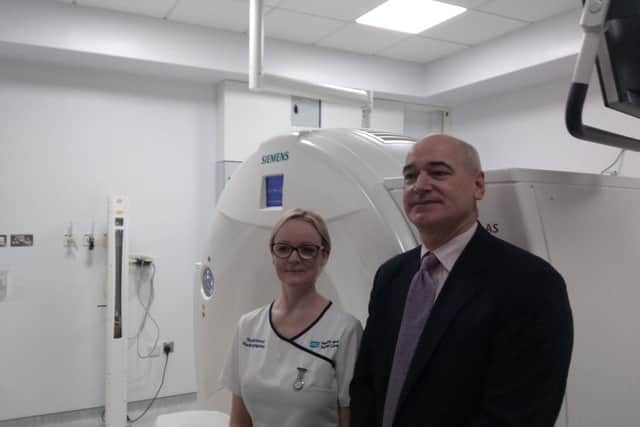
David Stewart, Lead Clinical Oncologist at the Centre, said Western Trust staff and their partners had put in a lot of hard work “to ensure we reached the target, which was to treat patients by the Autumn of 2016.”
Dr. Stewart said that it was widely acknowledged that the Cancer Centre was needed for the north west. He said: “The National Radiotherapy Guidance was that patients shouldn’t travel more than an hour. Our patients were travelling an hour and a half sometimes two hours, Republic of Ireland patients four hours.
“It’s a very difficult treatment and it’s a repetitive treatment, sometimes up to eight weeks. In some cases five days a week, adding that before patients had to “travel up and down to Belfast, to Galway, to Dublin, on top of having cancer, being ill, and all the social consequences of leaving the family behind.
“Now you have a situation where people who live in this city or across the border and in adjacent towns and villages will have this treatment readily accessible.”