
Modernisation of Derry courthouse remains possible but there is no money: Naomi Long
The modernisation and extension of Derry’s historic courthouse in Bishop Street remains possible but there is no money at present, Justice Minister Naomi Long said this week.
The cost of fully modernising the magnificent listed building in the heart of the Walled City has previously been estimated at tens of millions of pounds.
This week in the Stormont Assembly Sinn Féin MLA Ciara Ferguson asked Mrs. Long for an update on the modernisation plans.
The minister replied: “The intention, as part of the overall review, was to significantly refurbish and extend Bishop Street courthouse, which would allow us to provide modern facilities, such as the space to separate witnesses and defendants, on-site without losing the asset.
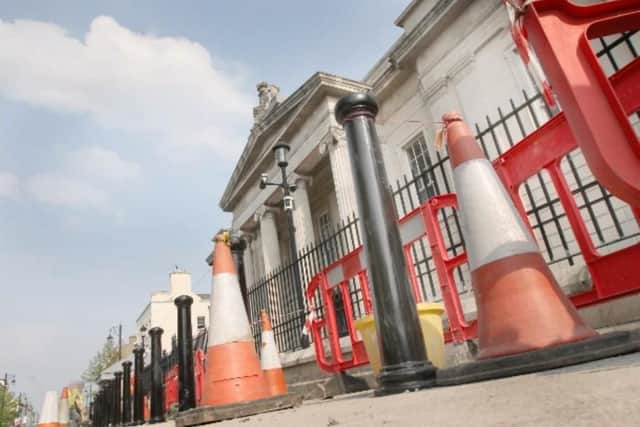

"That is still possible, but my challenge is that there is no capital funding available for that project at this time. In the interim, we continue to do essential maintenance to ensure that the building is kept in good repair for the sake of those who work in it and because it is a pristine piece of architecture. It is an impressive building in a historic location. It is important that our heritage is protected and cared for.”
Two years ago the former head of the NI Courts and Tribunal Service Glyn Capper estimated the cost of the refurbishment in the ‘tens of millions’.
Last year Mrs. Long said enough land had been acquired next to the Bishop Street Courthouse to allow for the provision of a modern new facility.
This week the minister said that on ‘the basis of the plans that I have seen, there is a real opportunity to reinvigorate and bring life back to Bishop Street courthouse in a way that allows it to conduct the modern business of the court service’.
The imposing Grade A listed building was designed by Dublin architect John Bowden who was also the architect responsible for Foyle College, ‘The Pepper Canister’ (St. Stephen’s Church in Mount Street in Dublin) and Antrim Castle.
It was described as ‘one of the finest neo-classical buildings in the north’ when it was completed in 1817, over 200 years ago.