
Murder of Seamus Cusack raised by niece as council opposes British Army jobs fairs
Independent councillor Shauna Cusack spoke of the murder of her uncle Seamus as she backed a motion opposing the participation of the British armed forces at job fairs in Derry.
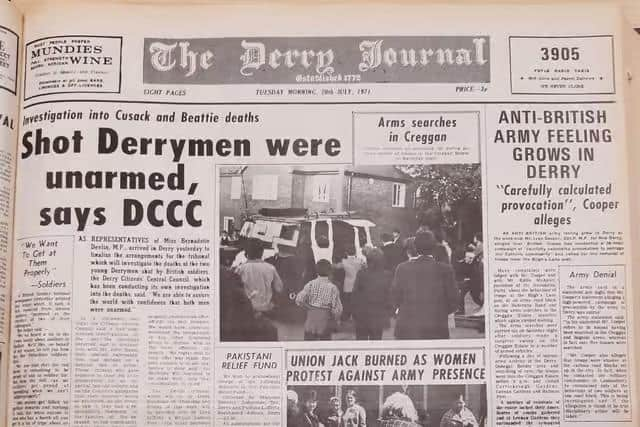
Mr. Cusack (aged 28) was the first person killed by the British Army in Derry during the Troubles.
On July 8, 1971, he was shot in the leg in Abbey Park and died hours later in Letterkenny Hospital.
“He was murdered by the British Army in cold blood in 1971,” Colr. Cusack reminded councillors during the Council’s October meeting.


"He was an innocent man on his way home from work. He was 28 years of age. He was engaged to be married. He was popular. He was handsome and he was struck down in his prime, murdered by the British Army on his way home from work, innocently.”
Colr. Cusack was speaking in support of motion tabled by Sinn Féin Councillor Christopher Jackson that noted that inclusion of the British armed forces at a recent jobs fair organised by the Department of Communities was a barrier to participation.
Providing family testimony she spoke of both her uncle and Desmond Beattie (aged 19) who was shot dead by member of the Royal Anglian Regiment in the Lecky Road later on July 8, 1971. Mr. Beattie was the second person shot dead by the British Army in Derry.
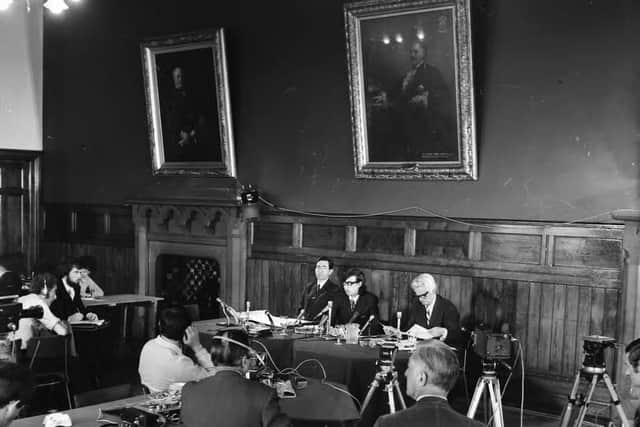
After the killings an independent international inquiry was presided over by Anthony Gifford, Q.C. (Lord Gifford) in the Guildhall, which contradicted British Army claims that they had been armed.
At the Council meeting this week, Colr. Cusack the killings had ‘an incredible impact on the onslaught of the Troubles’.
“A lot of people would say that was a projectile for the Troubles themselves,” she said.
Another uncle, she acknowledged, had joined the RAF in his 20s, had become an engineer and pilot, and ‘had opportunities as a Catholic from Creggan, he would not have had here in any capacity’.
However, she said: “I don't believe that having a jobs fair run by the council in that capacity is a good thing or wise thing to do given our challenged history and given what a lot of us have been though.”
Moving the motion, Colr. Jackson said the legacy of the British armed forces in Derry was ‘one of trauma and hurt and destruction for many people’.
"There are regiments of the British armed forces that have murdered people on our streets. There are members of the British Armed forces that have colluded with loyalist murder gangs right across this island and to have the British Armed forces at a jobs fair has become a barrier to many people who are seeking employment and looking to advance their careers,” he said.
SDLP councillor Rory Farrell said the party did not support ‘any organ of the British military being invited to a jobs fair anywhere’ in Derry.
"In the event that they are present at a jobs fair, there should be no council role whatsoever in facilitating that jobs fair,” he declared.
DUP Alderman Niree McMorris, however, argued that ‘employment fairs should be about opportunity, choice and equal access to careers’.
"Excluding the British Armed forces from participating sends entirely the wrong message and denies local people the chance to hear about a legitimate expected career path.
"The armed forces provide employment, training, apprenticeships, leadership skills, technical qualifications and educational opportunities to thousands of people across these islands,” she told the meeting.
Gary Donnelly said that as a republican he did not need to ‘spell out why Irish people or republicans should be opposed to British armed forces in any aspect of Irish life’.
The Independent councillor also spoke of a recent trip to England where, he said, there was a growing campaign among ‘working-class people about the issue of the British Army going into youth clubs and recruiting young people’.
He said he was recently sent a photograph by campaigners of a colouring-in page of a fighter jet that that had been given to a five year old child at school by a major arms company.
"This is wrong. This should not be happening to young people. They should not be preparing young people to engage in futile wars that if they are lucky to come back from they will be abandoned and thrown on a scrap heap,” said Colr. Donnelly.
UUP Alderman Darren Guy said: “I understand why people in here are against the British military and so on; what happened in the streets here in the city; what happened in people's homes and so on; I get that.”
But he said that a ‘jobs fair is all about choice’.
"It provides a one stop shop where the unemployed, students and those looking for a career change can gain information from those who work with the sector. Like all other vendors the armed forces are a legitimate employer,” he said.
Ald. Guy suggested the motion that called for the council to play no part in any future job fair that includes the British armed forces could be in conflict with the local authority’s equality and inclusion policies.
He asked the council’s senior solicitor Philip Kingston if the motion was in conflict with council’s equality policy.
Mr. Kingston said any motion would generate a paper and all such matters would be considered.
People Before Profit Councillor Shaun Harkin observed: “I think there are three very clear reasons why the British armed forces shouldn't be welcome at any jobs fair in our city and district.
"That is, the role that they've played in this city in terms of killing people, many, many innocent people. The second is our opposition as a council to militarism. And the third is BDS (boycott, divest and sanctions) because of the role the British Army is playing in the genocide being committed against the people of Palestine.”
The motion passed with nationalist councillors in favour and unionists opposed.