
School meal prices to rise by 30p as Education Authority announces £20m cost savings
The cost of a school meal is set to rise by 30 pence in primary and special schools and by 15% in secondary schools across the north, the Education Authority has announced as it confirmed a £20m raft of cuts and measures due to an ‘exceptionally challenging financial position’.
The Education Authority this week said it was being asked to deliver “important services to children and young people with insufficient funding” and has now written to schools about the ‘difficult decisions’ it has taken.
In a statement the EA said: "The projected funding for this year is significantly short of what is needed to maintain current services, let alone address the growing backlog in school maintenance. This shortfall is despite continued efforts to reduce spending and comes at a time when demand for services and operating costs - including school energy bills - continue to rise.
"There is now very limited scope to make further reductions without affecting services to schools and pupils. Around 83% of EA’s budget is spent on staffing - the bulk of it on school staff. Most remaining costs are fixed - like rates and utilities - or committed to statutory, essential services.

The EA said it has already secured around £30m in savings and efficiencies this year through measures such as restrictions on recruitment, staff training and travel. The additional measures agreed by the Board, when fully implemented, will involve around £20m in savings.
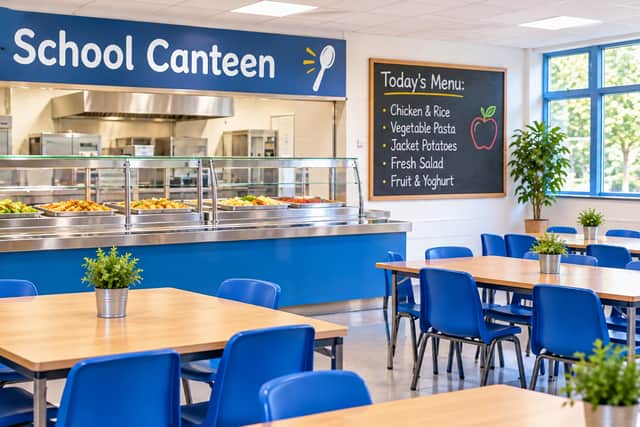
The new measures include increasing the price of paid school meals from the beginning of January 2027 for primary, pre-school and special school pupils by 30p and "traditional baked desserts” at these schools will be replaced with more dairy and fruit-based options to keep costs down. In post-primary schools, where meals are provided on a cafeteria basis, prices will increase by 15% across individual food items. Free school meal provision will not be affected.
From January 2027, paid school meal charges will be: Primary schools: £3.40 per meal; Nursery schools and pre-school settings: £3.30 per meal; Special schools: £3.40 per meal.
Other cost-saving measures include areas such as home-to school transport costs. Currently, parental payments tend to be used when the EA is unable to commission a taxi service – moving forward, for new provision this option will be used instead of commissioning such services. Existing taxi provision will remain in place and will not be affected.

The delegated limit for schools to purchase goods and services without prior EA approval will be significantly reduced and only essential items will be approved. Contingencies funding for some schools such as split-site costs or in-year growth in enrolment will be stopped along with funding previously earmarked for some school programmes.
The EA said that in the ongoing absence of a budget, EA has been allocated an indicative control total - a projected budget - for 2026-27 based on its closing budget for 2025- 26.
"It therefore does not cover inflationary pressures - including rising school energy costs. It also does not cover the full year costs of previous decisions on pay or areas of rising demand across all our services including SEN provision."
Derry & Strabane People Before Profit Councillor Shaun Harkin said raising the cost of school meals was a “political choice” that would impact most the more than 40% of children living in poverty who do not receive free school meals.
"Another hike in the cost of school meals once again punishes working-class households. The consequence will be more hungry children in school.
"This is the second school meal price hike this year. Working-class households and larger families will struggle the most.
“We know parents are skipping meals to make sure their children are fed. Children can't thrive in school if they're hungry and cold.
“Stormont could have acted to implement Universal Free School Meals as demanded by trade unions and supported by People Before Profit. Unsurprisingly, it did nothing,” he said.