
Cattle return to Inisbofin – ‘the island of the white cow’ – in Donegal as part of corncrake conservation project
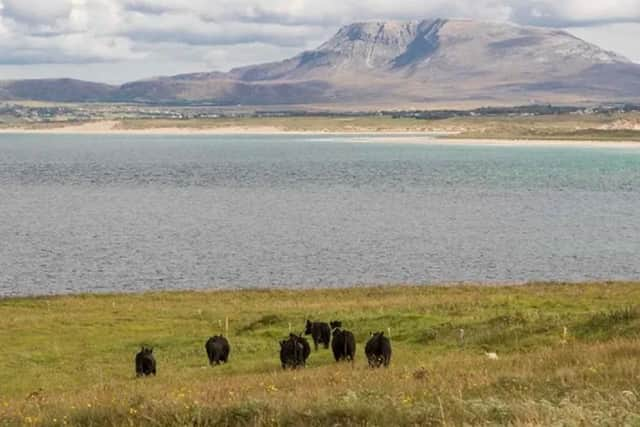
Cattle have returned to Inishbofin for the first time in more than 25 years as part of a project to improve conditions for corncrakes on the island.
Inisbofin (Inis Bó finne), situated off Magheraroarty in Cloughaneely in North West Donegal, is one of Ireland’s most important corncrake breeding areas.
The initiative has come about through the work of the Corncrake LIFE Project, with the support of the National Parks and Wildlife Service and working with a local farmer.
Cattle have not grazed on the island in decades – despite the Inis Bó Finne’s evocative name – ‘the island of the white cow’.

The arrival of the cattle by barge from the mainland marked a busy day for the Donegal island community who also officially unveiled a new mural by artist Dónal Doherty which was sponsored by the NPWS, Corncrake LIFE and Údarás na Gaeltachta.
In attendance were the LIFE team, NPWS staff and members of Coiste Forbartha Inis Bó Finne along with the local community. The mural features the maritime tradition of the community and the elusive corncrake which is so synonymous with the island.
Dr. John Carey, Project Manager with Corncrake LIFE said: “Our team has been working with this wonderful island community for the past five years but today is a very special occasion.
"We have been fortunate to have restored quite a bit of habitat for the birds but the arrival of the cattle is a new vista entirely. From an ecological perspective, the cattle grazing will transform the quality of the grassland here for many species; birds, plants, insects and more.
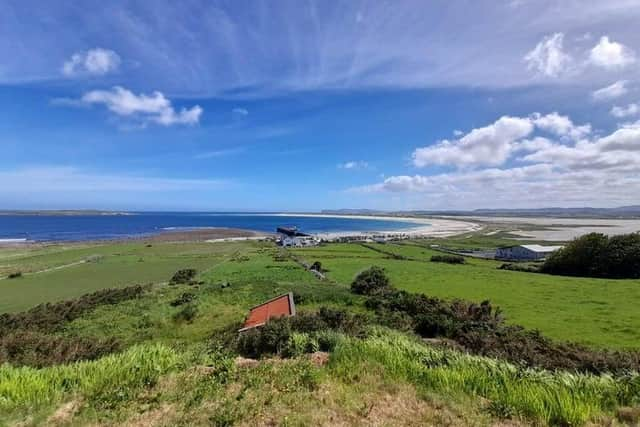
"The local landowners and farmers have been incredibly supportive to this effort. Inis Bó finne is one of the most important places in the country for the Corncrake, it’s a haven for the birds, and for the soul.
"The island of the white cow has cows again – and we are so thrilled to have helped facilitate this and help honour a lost tradition.”
Minister of State for Nature, Heritage and Biodiversity, Christopher O'Sullivan TD said: “This is another wonderful example of local communities leading and supporting the conservation of wildlife.
"The work of the Corncrake LIFE project demonstrates how nature restoration is a synergy between farmers, landowners and the NPWS. Using cattle to restore these grasslands for a threatened species like the corncrake highlights how local knowledge can help solve challenges to nature restoration.
"It also ensures a long-term and sustainable solution to managing land that benefits both farmers and wildlife. We are very grateful to the community on Inis Bó finne for supporting Corncrake LIFE on this initiative.”
The cattle will remain on the island for a period of six to eight weeks until the grassland has been thoroughly grazed and it is hoped that this will be an annual and more widespread practice in the future.
Previously, work on unmanaged grasslands carried out by the LIFE team have shown that conservation grazing by cattle vastly improves habitat condition for corncrakes. The LIFE team will monitor these changes on Inis Bó finne.
Careful consideration has gone into selecting the area for the initiative and ensuring that the sensitive ground nesting birds are not subject to any disturbance.