
Council would be bankrupt if it took action over every derelict property in Derry and Strabane, committee told
Derry City and Strabane District Council would be bankrupt if it took enforcement action for all the derelict properties that were in a terrible state in the city, it has been claimed.
SDLP MLA Daniel McCrossan made the remarks at a recent briefing of the Stormont environment committee.
“Town centres have seen more and more dereliction because the significant cost of rates is putting people out of business, and, ultimately, the buildings then lie derelict...that is happening in rural towns and villages.
"If Derry City and Strabane District Council or Fermanagh and Omagh District Council were to embark on enforcement for its derelict properties that are in a terrible state, doing so would bankrupt the council. In any case, councils do not have the resources to do it all,” Mr. McCrossan told the committee during a briefing on September 25.

The West Tyrone MLA was speaking during a briefing on the new Stormont Dilapidation Bill, which aims to modernise and consolidate powers for councils to address dilapidated, dangerous or neglected buildings and sites.
The committee was told some of the existing legislation dates back to the 19th century and is limited in scope and inconsistently applied.
Mr. McCrossan warned local councils will need resources if they are to properly enforce against dereliction.
"Councils have no money. Fermanagh and Omagh District Council and Derry City and Strabane District Council are in my constituency area, and we are told continually that resources are tight — there is no money — and that, ultimately, costs will fall to ratepayers, which will increase the burden on them during a cost-of-living crisis.
"That is why I am concerned about where the Bill sits. It has good enough intentions, but, when it comes down to it, councils may not duly enforce the legislation because there are not the resources in place for them to do so.”
Susie Cave, from the Stormont Research and Information Service (RaISe), said there were options for charging fees for some council services and that this could be one way of recovering costs.
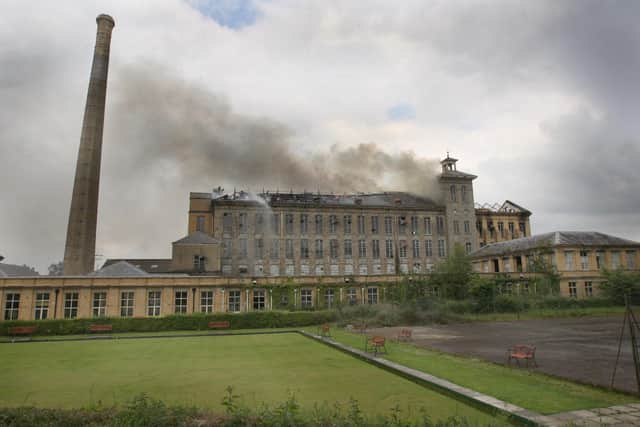
Mr. McCrossan raised the case of Herdman's Mill in Sion Mills. The historic flax spinning mill was founded in 1835 but has been derelict for years.
It has been the site of several arson and vandalism incidents.
"Herdman's Mill in Sion Mills is in a terrible state,” Mr. McCrossan told the committee. “It could have been salvaged, had proper action been taken years ago by the council or by the Department for Communities.”
"Legislation has no teeth for dealing with the problem, so nothing has been done, and the building is falling into a further state of disrepair as a result.
"It has no owner. The director of the company is deceased, so the mill is in a state of limbo. That is an example of how the Bill will resolve nothing if there are no resources made available,” he said.
The mill remained a working concern until 2004, when its closure sadly resulted in the loss of 600 jobs.