
The Last Ferry – Mick Conway recalls lessons learned while working as a miner in Newcastle
The darkness was as sudden as it was complete.
“Go and see what the f**k’s going on.”
Jock never used my name in the months I worked with him but I knew he was talking to me. Jim was the only other one there. I was at the rear of our little gang and I knew what to do as this was not the first time the stygian gloom had descended on us.
We were fifty feet down and a quarter of a mile from any light.

It had taken a while to get used to the particular vocabulary of our work. We were in a ‘heading’ not a tunnel. We were not labourers. We were miners.
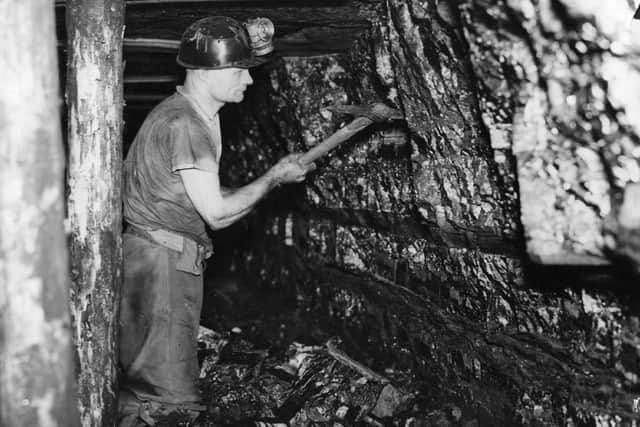
Jock was the lead miner. He had all the know-how and experience which Jim and I lacked. His job was primarily to dig out the clay. It had been laid down during the last ice age and had the consistency of stiff plasticine.
Jock cut out lumps of the clay. Jim lifted it and threw it towards me. I loaded it onto a tub. Jock’s other job was to drive the ‘shield’.
This was a long metal tube which protected us as we worked. In softer ground it could be used to push ahead of us but the clay was extremely stiff and needed to be dug out lump by lump with an air spade driven by pneumatic air.
The noise of men working on the roads using a similar tool is bad enough but in the confines of a six-foot diameter tunnel it was horrendous. As a result of being so far from the surface and there being no ventilation the air was fetid.
There was no real obvious danger but methane gas could accumulate. In the following winter a number of Donegal men died in a tunnel in Glasgow as a result of a gas explosion. Ventilation was then made compulsory.
We were a couple of hours into the shift. We dug for two hours. My job was to push the tub out to the shaft. The full tub was hoisted up by the crane and I returned with an empty tub.
When we had dug out two metres of clay, we used heavy concrete segments to make solid rings which formed the next section of the heading.
After a break we repeated the process. The final act of each shift was to blast liquid grout behind the rings to seal it to the surrounding earth.
This made it waterproof. I fed the grout machine with tons of concrete. As each bag was torn open the air was filled with concrete dust. This work would not have suited many people: twelve-hour shifts swapping each week from days to nights, long hours of hard work, ear-splitting noise, fetid air and concrete dust in hair nose and mouth but there was one compensation.
Jock was very much the leader. His address to me in the darkness was typical. His treatment of me was no worse than his manner with everyone. We had few visitors but the engineer arrived just once to check on progress.
Using traditional techniques like theodolites and more advanced laser beams, he checked on the direction of the tunnel and whether we were at the correct level. The tolerance was very strict not least because if the shield was offline in any way, getting it rectified was tortuous.
It would require difficult work in a confined space and costly delays. Jock had his own methods of calculation known only to himself. A huge row broke out between Jock and the engineer. After a torrent of expletives, the engineer left with his theodolite under his arm and his tail between his legs.
I spoke with Jim quietly afterwards. How did Jock get away with it treating an educated man and his apparent superior with zero respect for his expertise or position?
Jim explained: ‘Look Mick. Nobody matters except the three of us. We are the only ones able and prepared to do the work. Engineers, foremen, owners all rely on us. We do the graft and put up with the conditions. Compared to us they count for nothing. The job would not be done without us.’
In the years that followed I often thought of what Jim had said. As a teacher, I found that we as teachers were actually doing the job but our opinions counted for very little. Every sort of so-called superiors were given far more respect than us. I imagine it is the same in most walks of life.
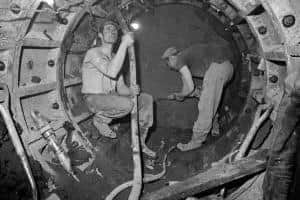
Jock, Jim and I formed one squad but we were the exception. Jock was from Aberdeen and Jim and myself were local. The other gangs were made up of a particular group of men.
One clue as to their origin was the graffiti on the side of the hut we used to have our break. It proclaimed, ‘Na Fianna Éireann’, the Irish warriors of myth whose leader was Fionn mac Cumhaill.
Did they see themselves as modern day warriors? They were the tunnel tigers! There has been a long tradition that people working on England’s tunnels are drawn from the Irish speaking areas of Ireland especially Donegal.
The wages for their work were good. Many fell victim to the ravages of alcohol. The more sensible or luckier ones could save enough to build a house back in the Gaeltacht when the work in the headings was beyond them. For me the work was only a student job but a well paid one. I made £96 for my last week’s wages. My first month’s salary teaching in Derry was £84.
Following Jock’s abrupt orders, I used the tub for balance and pushed my way towards the shaft.
In the Greek myth Orpheus is allowed to rescue his beloved wife Euridice from Hades but he must not look back. Tragically he does glance back and Euridice is lost to him forever. There was no beautiful Euridice following me, I had no need to turn around, I could hear the boys plodding behind me cursing as they stumbled in the darkness.
We had all worked out what the f**k had happened. The generator was temporarily banjaxed. There was no power for the lights or to drive the shield. It was the night shift. As there was no engineer on hand to fix it, the shift was over.
Jim and I took the conventional way out of the shaft, climbing the ladders at the side. In defiance of any considerations of common sense, Jock grabbed the dangling chain with one hand, stuck his foot in the hook at the end and was hauled to the surface by the crane like a Greek god or pantomime villain.
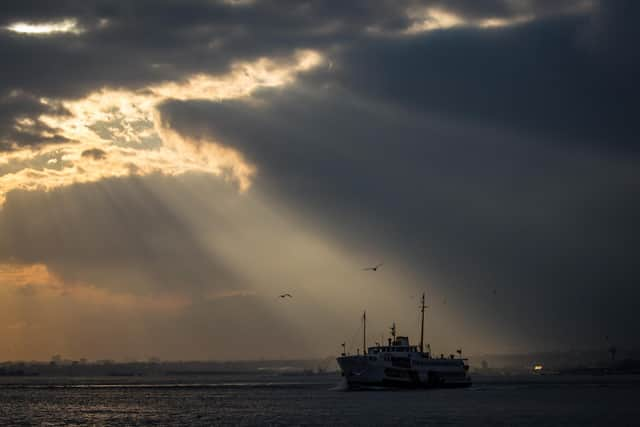
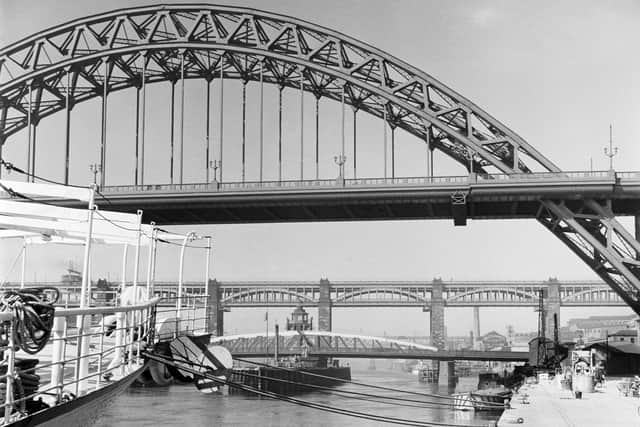
It was the early 1970s, health and safety regulations had not yet been invented. I headed home as quickly as possible. The site was about a mile from where I lived but I was on the wrong side of the River Tyne. I always used the ferry to get to and from work.
The ferry features in the film ‘Get Carter’. In the film Carter, played by Michael Caine, has a gun battle with other gangsters on the ferry. The river was every kind of assault on the senses. Raw sewage was visible flowing past. It was high summer the smell was overpowering.
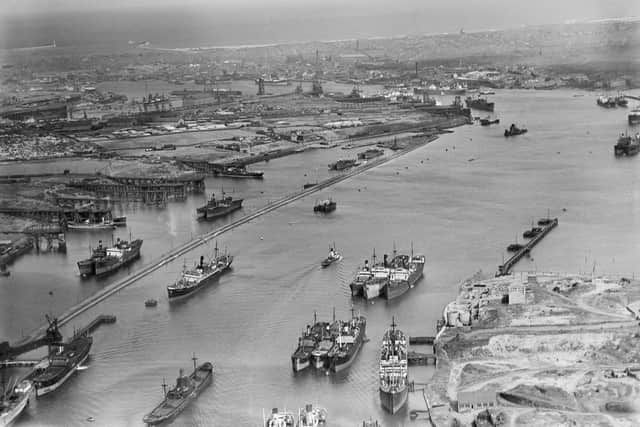
Less obvious was the industrial pollutants from the coal mines, shipyards and chemical works that had made the river an industrial powerhouse since the industrial revolution two hundred years in the making.
The tunnels we were working on were big sewer pipes which would move the sewage to a new sewage plant. The demise of the industries along the Tyne was accelerated by Margaret Thatcher’s de-industrial revolution.
Within a couple of decades this led to the complete closure of the industries along its banks. With no shipyard workers going back and forth, the ferry ceased its operation. Salmon were now free to swim up the river but at the cost of employment for thousands of workers.
My small contribution to environmental improvement was the furthest thing from my mind. It was a beautiful summer’s night. It was deadly quiet as the shipyards had stopped working but my only thought was to get home to my bed.
As I reached the jetty I could see the ferry had left and was already halfway across the river. I was just too late. It was last ferry of the day. I had no money with me to get a bus or a taxi.
I was facing a six-mile walk home via the bridge at Newcastle or the pedestrian tunnel down the river. I felt like Ben Gunn in Treasure Island, a marooned sailor without any hope of rescue. I was about to turn and begin the trek home. When without me shouting to the ferry, it stopped midstream and began to return.
The ferryman must have spotted me, knew my predicament and turned to rescue me. My heart lifted as it jugged its way back towards me. I was the recipient of an act of courtesy and kindness I will never forget. I stepped on board, paid my couple of pence and was home within minutes. There were no other passengers on the last ferry.