
Sylvia – A first love remembered
There are people who remain forever young in our memory.
Time may do its work on us. Decades accumulate. Children become adults, then parents and grandparents themselves. Familiar streets change; houses acquire new occupants; the people who populated our childhood begin, one by one, to disappear.
Yet somewhere in the private geography of memory, certain people remain exactly as they were when we first saw them.
For me, Sylvia Foster will always be fifteen. I first saw her in Derry at a fundraising event for my old football club, Derry Athletic. It was held in a little bar on Beechwood Avenue, with music and dancing – the sort of modest community occasion that seemed perfectly ordinary at the time but which, more than half a century later, has acquired the luminosity of something almost enchanted.
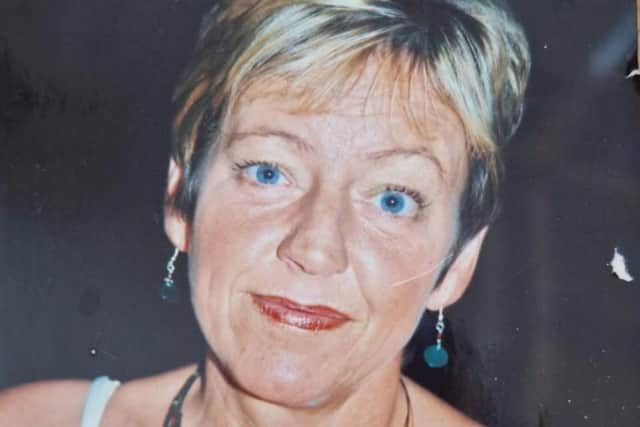

Sylvia was there with her older sister, Joan, and Joan’s husband, Shaunny McConnell. I noticed her immediately. There is no sophisticated way of describing what happens to a fifteen-year-old boy when he sees a girl and everyone else in the room suddenly becomes peripheral. Sylvia was beautiful, with extraordinary blue eyes and, to my teenage gaze, an almost overwhelming presence.
Joan allowed me to walk Sylvia home that night. It was a small permission, opening the door to one of the sweetest chapters of my adolescence.
We were both children of Creggan. I was born in 1956 in Leenan Gardens. Sylvia was born the same year and lived with her family in Creggan Heights. Joan and Shaunny lived in Dunree Gardens, a couple of streets above where I was born. One of my fondest memories is of Sylvia and me babysitting for them there. Nothing remarkable happened. We were simply two teenagers looking after someone else’s children, happy to be together and with no sense of how quickly the years ahead would pass.
My best friend, Shaunie McLaughlin, lived in Circular Road, which merged with Creggan Heights. Looking back, I am struck by how small the distances were. Within those few streets were contained our families, friendships, first loves and, eventually, some of our deepest sorrows.
But all of that belonged to a future we could not yet foresee. Sylvia and I were simply two young teenagers walking through Creggan, and I was smitten. In Derry we had less delicate ways of describing such a condition: you were dying about someone, or mad about them. Everybody knew I was mad about Sylvia. I remember my best friend Shaunie’s mother taking a tender, almost motherly delight, in my teenage blossoming and in the happiness that being with Sylvia brought me.
Our romance lasted perhaps nine months. I am not certain. Memory is precise about certain things and hopelessly vague about others. But I remember how Sylvia looked and the pride of walking beside her.
I vividly remember something she told me. Sylvia wanted to marry young and have her children while she was still young so that, when they grew up, they would be young together. She imagined herself almost as a sister as well as a mother. It mattered deeply to her.
At fifteen, I did not share that urgency; perhaps I could not even understand it. Eventually, we went our separate ways. There was heartache, certainly, but no bitterness or betrayal.
We had simply encountered, very young, one of the enduring truths of romantic life: two people can care deeply for one another and still be travelling towards different futures.
Around that time, Dr. Hook’s “Sylvia’s Mother” was everywhere. The young man in the song is desperately trying to speak to Sylvia before she leaves, while her mother tells him that Sylvia is moving on and the telephone operator keeps demanding more money. I could never hear it simply as a pop song. It became part of the soundtrack of that first heartbreak.
After we parted, Sylvia went out for a time with John Brady. John subsequently died in a bombing during those terrible years in Derry and is buried in the Republican plot in the City Cemetery. For decades, whenever I passed his grave and saw his name, I thought of Sylvia. Memory makes associations according to rules of its own.
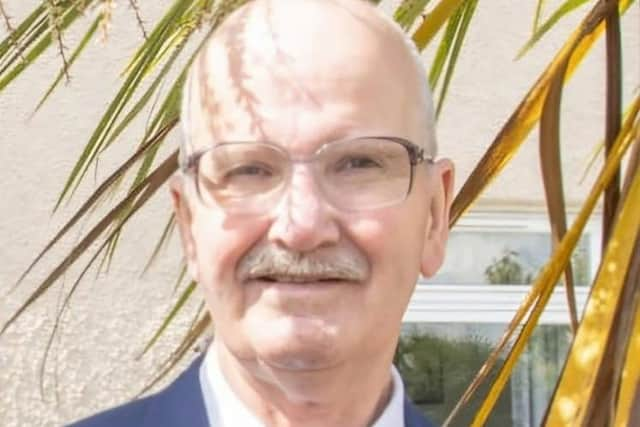
Then Sylvia met Bill Sheerin. They married, raised nine children, and became grandparents and great-grandparents. They also endured the immeasurable sorrow of losing two of their children.
Through the joys and sorrows of family life, they had each other, and Bill was an absolute gentleman.
Together, Sylvia and Bill built the family life she had imagined when she was barely more than a child. Bill was her life’s companion and great love. Their children, grandchildren and great-grandchildren are the enduring expression of the life they created together.
There is something deeply consoling in knowing that somebody you once cared for found the person with whom she could share a lifetime.
I saw Sylvia for the last time in 1997. My book Eyewitness Bloody Sunday had been published that January, marking the twenty-fifth anniversary of the massacre. For a short period afterwards, I experienced the phenomenon Andy Warhol famously described as fifteen minutes of fame: people around Derry recognised me who might otherwise have had no reason to know me.
One evening, while I was visiting my mother in Altnagelvin Hospital, I was approached by a man who clearly knew of my youthful courtship with Sylvia. “Don,” he said, “Dickie Foster (Sylvia’s father) is upstairs on Ward 7. I know he’d be delighted to see you.”
I told him that, after visiting my mother, I would pay him a visit, which I did. Mr Foster was in a single room. Mrs Foster was there, and so were Sylvia and Bill. More than a quarter of a century had passed since Sylvia and I had walked together through Creggan, yet there was not the slightest awkwardness in that room – only warmth.
Bill could not have been kinder. For ten or fifteen minutes, we reminisced and laughed, and the intervening years seemed to fold in upon themselves.
Then Sylvia looked across at me and, with a glow, announced, “Don, I’m a granny now.” I expressed delight. But her words brought me up short. We were both just entering our forties.
It is one thing to understand that the years are passing; it is another when the girl who remains fifteen in some private corner of your memory announces that she is a grandmother.
That was our last meeting, and today it seems an extraordinary gift. Sylvia was with the man with whom she had created the life she had dreamed about as a girl, and with the parents whose home had formed part of the landscape of our teenage romance.
There was affection in the room, but no sentimentality about what had been. Everything was as it should have been.
In August 2026, I returned to Derry for the fiftieth anniversary of the tragic death of my best friend, Shaunie McLaughlin. During the visit, I learned that Sylvia had recently died. The news was a shock. She had died on 26 May, after a short illness. She was sixty-nine, less than two months from her seventieth birthday. Bill had died on 1 November 2024, aged seventy-one. He had been gone just eighteen months when Sylvia followed him.
Her Facebook posts after Bill’s death carried the weight of his absence: photographs, memories and expressions of longing for the man who had accompanied her through almost all of her adult life.
They spoke, with aching clarity, of the depth of the bond they had shared. I could not leave Derry without visiting Sylvia’s grave.
At the cemetery office on Lone Moor Road, a wonderfully kind receptionist helped me locate where Sylvia and Bill were buried. They lay on the same row as my niece Joanne, the daughter of my late brother Liam and his wife Margaret – some twenty graves apart.
I walked along a row I already knew, and there they were: Bill and Sylvia. Standing at their grave, I thought of Beechwood Avenue and Joan allowing a fifteen-year-old boy to walk her little sister home. I thought of the streets of Creggan; of two teenagers babysitting in Dunree Gardens; of “Sylvia’s Mother” and its telephone operator demanding more money for another few minutes.
I thought of John Brady, of Shaunie, and of that room in Altnagelvin where Sylvia had looked across at me and announced, with such delight, “Don, I’m a granny now.”
What I felt at the grave was gratitude: gratitude that Sylvia and Bill had shared such a long life together; that the dream she had confided to me at fifteen had found its fulfilment in their family; and that, for one brief and beautiful season at the beginning of our lives, Sylvia and I had walked a little of the road together.
I silently thanked her for the walks, the laughter, and the innocence and excitement of first love – even for the heartbreak, which across the distance of more than half a century had acquired a tenderness of its own.
Perhaps this is one of the things age teaches us. Love does not have to last forever in order to matter forever. Some loves accompany us through life. Others accompany us only briefly and then quietly take their place within us. They ask for nothing and compete with no one. They simply become part of the story of who we are.
Then I walked back along the row, past the twenty graves separating Sylvia from Joanne, and thought again about Derry: the city of my childhood, my friendships and my first love; a city that gave us enormous joy, witnessed terrible sorrow and, through both, bound us more closely to one another.
I left Derry many years ago, but Derry never entirely left me. You can still hear it in my voice. I suspect you can hear it in my memories too.
There are people who remain young in our memory. Sylvia will always be fifteen, and beautiful, in mine.