
18 end-of-life street lighting columns to be replaced on historic Craigavon Bridge
Eighteen end-of-life street lighting columns on the upper deck of the Craigavon Bridge are to be replaced by the Department for Infrastructure.
The street lamps were installed in the second half of the 20th century but have now reached ‘the end of their operational lifespan of approximately 50 years’, according to planning documents.
"Their replacement is therefore required to ensure the continued safe and effective operation of the bridge,” a design statement prepared by WSP on behalf of the applicant advises.
DfI has applied for permission to Derry City & Strabane District Council to substitute the columns with sympathetic like-for-like replacements.
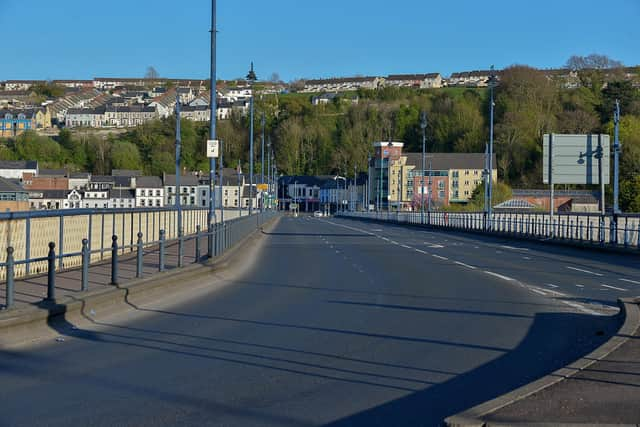

"Two distinct types of lighting infrastructure are present on the upper deck of the bridge. These comprise the historic decorative Art Deco lamp standards positioned adjacent to the bridge parapets and later operational steel lighting columns positioned adjacent to the carriageway kerb line.
"The operational lighting columns provide the principal source of illumination for vehicles and pedestrians using the bridge and are the subject of the Proposed Works,” the design and access statement adds.
The Art Deco lamps are no longer operational and date from when the bridge was constructed between 1931 and 1933 to designs by Mott, Hay and Anderson, according to WSP.
The larger twin-lantern steel lighting columns, which are due to be replaced, were installed in the 1960s and 1970s.
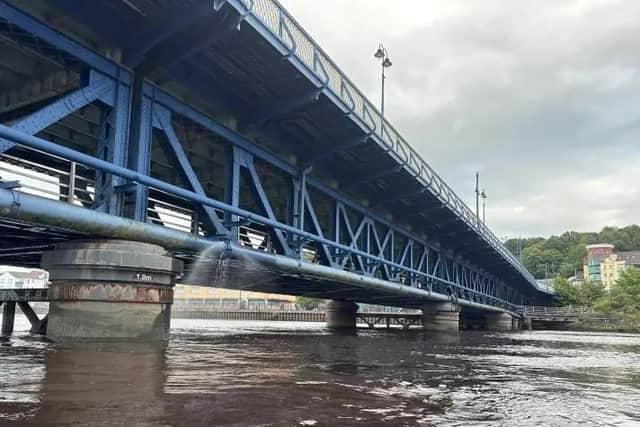
The design statement explains: “The proposed works comprise the replacement of the existing operational lighting columns and associated support assemblies on the upper deck of Craigavon Bridge, a Graded B+ listed building.
"The works are required because the existing lighting infrastructure has reached the end of its operational life and investigations have identified deterioration and concealed corrosion affecting the existing columns.”
The 384m span is a Grade B+ Listed Structure and was originally designed to accommodate both road and rail traffic.
After the closure of the Great Northern Railway in 1965 the lower deck was converted for use by motor vehicles.
It is the only example only if a double-deck bridge in the North and cost approximately £250,000 to construct in the early 1930s.
It was built immediately downstream of the old Carlisle Bridge – also a double-deck iron structure that was built in 1863 and carried road traffic on its upper deck and a railway line on its lower deck.
An old wooden bridge dating from 1790 that was further downstream again had earlier served as the main crossing for Derry citizens.
The design and access statement refers to the bridge’s ‘considerable historic significance as the third major bridge to span the River Foyle, succeeding the Wooden Bridge of 1790 and the Carlisle Bridge of 1863’.
"Its construction reflects the continued growth and development of Derry during the early twentieth century and the increasing importance of transport connections between the eastern and western sides of the city.
"The bridge is closely associated with the development of transportation infrastructure in the northwest of Ireland. Its innovative two-tier arrangement accommodated both road and rail traffic and facilitated movement between railway networks on either side of the River Foyle.
"Although the railway function ceased during the twentieth century and the lower deck was converted to road use in 1968, the bridge continues to fulfil its original function as a strategic transport crossing,” it states.