
Archbishop Eamon Martin speaks of St. Brigid as a champion of the poor, sick and vulnerable
Archbishop Eamon Martin has spoken of how St. Brigid was reputed as a champion of the poor, the sick and the vulnerable during her lifetime over 1,500 years ago.
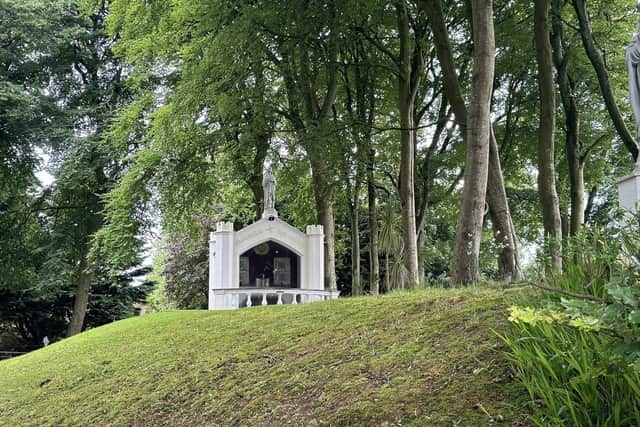
The Derry-born leader of the Catholic Church in Ireland made the observation during Mass at the shrine of St. Brigid at her birthplace at Faughart, County Louth, on her feast day on Sunday.
"Saint Brigid clearly wanted to model a life of mercy towards the poor, the sick, the vulnerable, those people who struggled with diseases or disabilities, the weak, the sinner, the lost. Like Jesus, she wanted to promote their dignity at all times, to welcome them, to be with them, to accompany them,” said Archbishop Martin.
‘Mary of the Gael’, he told worshippers, had learned this ‘beautiful quality from her Christian mother’
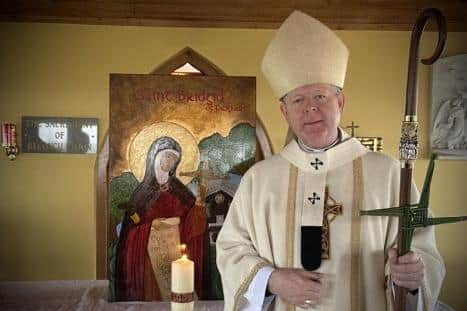

“Remember, St. Brigid lived at the very dawn of Christianity on this island; her mission was to call people away from empty paganism, from chasing after false and superficial gods and goddesses and instead to offer them Jesus, who is the Way, the Truth, and the Life.
"Apparently, her pagan father couldn’t stand Brigid’s complete generosity towards the poor and the vulnerable - he felt she was going to bankrupt him by her kindness and goodness!
"St. Brigid was driven by compassion and hospitality to those whom the world tends to forget, or brush aside; she wanted her convent to be a haven of mercy for the weak - not just the materially poor, but also the poor in spirit, those who were spiritually hungering for the real food that would sustain them in life: the Bread of Life, the Body of Christ, the Church of God,” he declared.
In his homily Archbishop outlined what he identified as threats to the ‘personality dignity of women’.
He explained: "Saint Brigid is often offered as a model for women in Ireland today. Saint Brigid is certainly an inspiring example of the indispensable contribution that women make to the daily life and mission of the Church, and society.
"Sadly, we live in a world where the personal dignity of women is too often threatened by violence, abuse, inequality, commercial surrogacy, pornography, and now by the manipulation of female images online, gender ideology, the false promise of abortion on demand and other forms of exploitation.
"The voice of women - Saint Brigid’s voice - and the specific vocation and charism of women, is needed more than ever today, especially in the Church, for we struggle at times to navigate the complex, contradictory and misleading messages surrounding contemporary issues which, left unchecked, risk the ‘dehumanising’ of human life and dignity.”
St. Brigid was born at Faughart in the middle of the fifth century.
She is said to have died in 525. St. Brigid is most famous for erecting her monastery at Kildare – ‘the church of the oak’.
Archbishop Martin stated: “The Church, and wider society, needs the particular insights and witness of women - inspired by Saint Brigid of the Beatitudes - in matters such the protection of human life; outreach to poor, vulnerable and marginalised people; the safeguarding of children, marriage and the family; quality education and spiritual formation in our schools and parishes; and best practice in care and support for those who are disabled, sick or dying.”