
Archbishop Martin calls for preservation of human faces and voices as AI advances
Archbishop Eamon Martin has called for the preservation of human faces and voices in the age of Artificial Intelligence.
He was speaking after Pope Leo XIV addressed the topic in his annual World Day of Social Communications message.
"We need to preserve human faces and voices! It is clear that the Holy Father has thought deeply about the use of AI in communications and media. He reminds us that, at a time when technology can imitate the human face, clone the human voice, simulate affection, produce convincing falsehoods, and shape what people see, think and feel, we must ask ourselves whether our communication is truly recognising, protecting and serving the human person,” said the Derry-born leader of the Catholic Church in Ireland.
He observed that a ‘person is not just an isolated individual’ but someone who ‘stands before us, someone to be recognised, someone whose dignity must be honoured’.
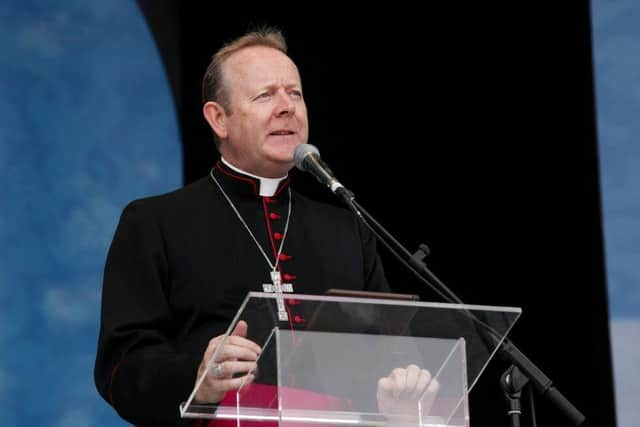

Archbishop Martin suggested that when using new technology people needed to ask the questions: ‘Are we listening to real voices? Are we protecting real faces? Are we speaking truthfully? Are we allowing technology to serve communion, or are we letting it replace encounter?’
The message builds on the themes of ‘Antiqua et Nova’, a doctrinal note on AI issued by the Dicastry for Culture and Education last year during Pope Francis’s papacy.
‘Antiqua et Nova’ observed: "AI could be used as an aid to human dignity if it helps people understand complex concepts or directs them to sound resources that support their search for the truth.
"However, AI also presents a serious risk of generating manipulated content and false information, which can easily mislead people due to its resemblance to the truth. Such misinformation might occur unintentionally, as in the case of AI ‘hallucination’, where a generative AI system yields results that appear real but are not.”

Marking the 60th World Day of Social Communications Archbishop Martin said: “A human person is not content. A human person is not data. A human person is not an image to be manipulated. A human person is not a voice to be silenced or copied. A human person is a child of God, with a face to be honoured and a voice to be heard.
"Christian communication should never be cold, manipulative, faceless or mere strategy. It must seek to carry something of the way Jesus communicated: truthfully, personally, mercifully, courageously.”
He recognised AI can assist communication, learning, creativity and access to knowledge but said this must not come at the expense of human dignity.
"The Church must always seek to preserve the faces of those who are easily hidden, edited out, mocked, exploited or forgotten: The face of the poor. The face of the refugee. The face of the abused. The face of the lonely young person.
"The face of the elderly person in a room with no visitors. The face of Christ in the suffering human person,” he said.
Archbishop Martin reflected on how Saint Carlo Acutis used technology positively to promote his faith and as ‘a path to encounter’.
But he noted: “Technology becomes dangerous when it becomes a substitute for real presence, real friendship and real communion. Technology is at its best when it helps us to see Christ more clearly, and to love one another more deeply.”