
Asian Hornet nest located and removed in Northern Ireland amid concerns over invasive bee killer
The first nest of the bee killing Asian Hornet has been located and removed in Northern Ireland as efforts ramp up across the island to stop the invasive pollinator predator species getting a foothold.
The Northern Ireland Environment Agency (NIEA) confirmed on Sunday that it had “successfully completed the safe and controlled removal of an Asian Hornet nest in Dundonald”.
The operation took place on Saturday, close to the location of the first reported sighting in the north eight days earlier.
The presence of Asian hornets in Ireland was confirmed this summer with a nest located in a sycamore tree in Cork city and a second also found in a beech tree in Cobh, County Cork. Both nests were subsequently removed.
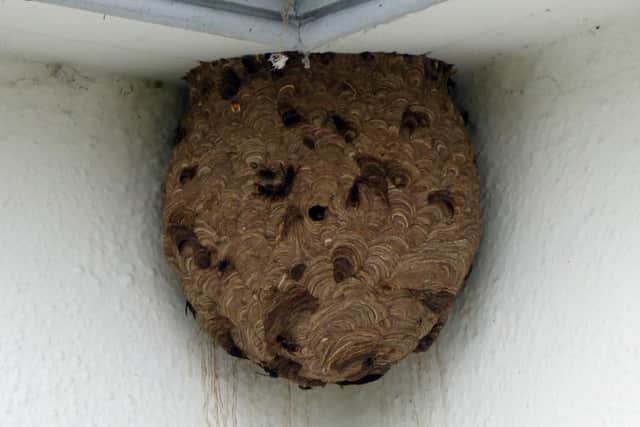

The nest found in Dundonald was the first such occurrence in the north and appears to have been build between two adjoining walls of a man made building.
The Department for Agriculture, Environment and Rural Affairs said that the Asian Hornet “poses a significant threat to honeybees, native insects, pollinators and local ecosystems, as well as crop production which relies on pollinators”. The operation on Saturday was led by NIEA officers from the Invasive Non-Native Species Team, using the services of a suitably trained pest control company, with advice provided by the UK Animal and Plant Health Agency (APHA) and on the ground support from an official from the National Biodiversity Data Centre in Waterford through the Shared Island Biosecurity and Invasive Species Initiative. “Surveillance will continue in the area to monitor any Asian Hornet activity,” a spokesperson for the Department said.
NIEA urges continued vigilance amongst the public and beekeeping community.
The public can report any suspect insects, ideally with a photograph, to DAERA via the Asian Hornet Watch app at https://www.brc.ac.uk/app/asian-hornet-watch or via the CEDaR invasive species online recording at http://www2.habitas.org.uk/records/ISI.
Suspected nests should not be disturbed but reported immediately.
The Asian hornet is a highly effective predator of honeybees, wasps and other important pollinators, such as hoverflies. The huge size of its colonies, consisting of up to 10,000 individuals per season, means that they can rapidly decimate bee numbers.
Due to its aggressive nature and feeding habits, it could have a serious impact on native insect biodiversity and on pollination more widely, the Department has warned.