
Asian hornet threat to bees, butterflies and of potential lethal stings raised with Derry & Strabane Council
Bee keepers have issued a stark warning over the potentially devastating impact of Asian hornets if they should return and multiply here as they have in other parts of Europe.
The predators, which feed on bees, butterflies and other pollinators have a sting that is ten times more potent than bees and in some cases Asian hornet stings have proved fatal to humans, Derry City & Strabane District Council’s Environment and Regeneration Committee has been told.
The Council has now said it will look into educating staff who work outdoors in grounds maintenance, parks, cemeteries, recycling centres and other areas in how to spot and report Asian hornets following the presentation by the Ulster Bee Keepers Association and Derry & District Bee Keepers Association at their February meeting.
Tony Doherty, chair Derry & District Bee Keepers Association, described how the local group was a collective of local people interested in wildlife, bees specifically, and including small honey producers. The Association, which was set up a decade ago, owns and maintains an apiary behind ChristChurch on Francis Street with "quite a few hives".

"Bee keeping has grown in popular interest over the last 10 years or so and there are many hives scattered around the city and Strabane and country areas. The Committee acts as a locus for all those interested in bee keeping, who want to set up a hive or just go along because they are interested,” Mr Doherty said, adding:
"We have a partnership with North West Regional College in relation to a new course which had its first year last year and had a sign up of over 30 individuals so it was a highly successful course and we recruited quite a number of people into the Association, and a number of bee keepers as well including myself. We have now stopped recruitment for the second year of the course due to it being over-subscribed."
He added that those involved had a deep interest in protecting the environment and had a "specific concern regarding the introduction of the Asian hornet to our shores - an invasive species which has caused untold damage to many countries in northern Europe in recent times."
Brian Grzymek, Vice Chair Ulster Bee Keepers Association described the Asian hornet as a "serious threat to bee keeping".
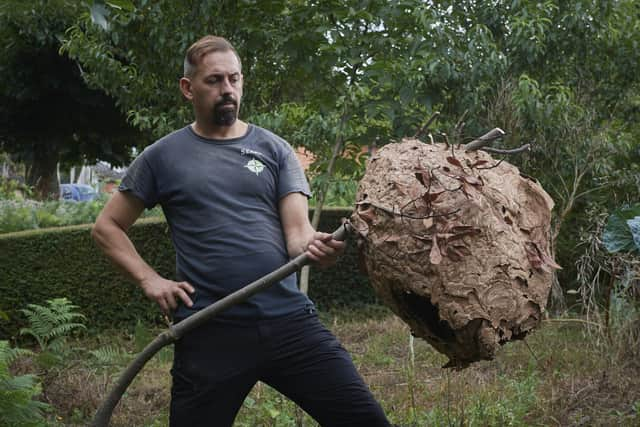
Mr Grzymek, who was accompanied at the Council meeting by chair of the Association Valentine Hodges, said both of them had spent a week last summer in Jersey dealing directly with Asian hornets.
"We have seen them in situ where they have become well established. In Jersey this year they killed 600 nests. It just shows how it can actually have a real impact and if you don’t act quickly to address the threat it can very quickly grow out of all proportion and become impossible to fix."
Asian hornets were first spotted in Ireland in the summer 2025 with nests found in Cork and Cobh and a further nest discovered in the north in Dundonald in October. Speaking to the latter Mr Grzymek said this came as somewhat of a surprise.
"We saw it coming, we hoped it wouldn't come for some time and what the UBKA have been doing for the last two years is writing to government ministers raising the need to be prepared to act in a timely and decisive manner should an Asian hornet appear.”

The UBKA has also been involved in establishing an all-island group specifically focused on Asian hornets, he added.
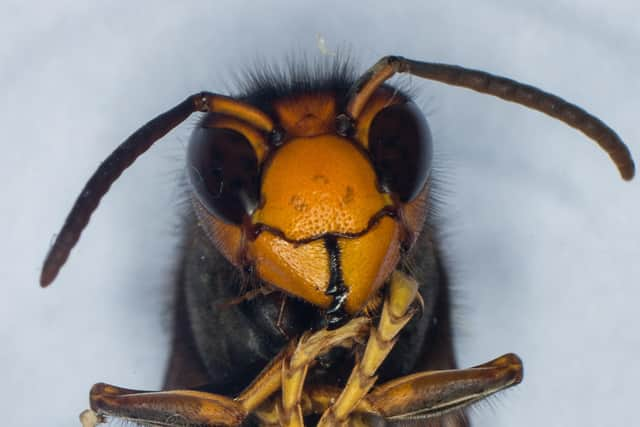
While Asian hornets are inoffensive in appearance, the Committee was told, a number of people are killed by them every year, usually when they stumble across a nest in undergrowth or brambles. Five or six people including a British tourist who stumbled upon a nest in undergrowth were killed by them last year in France alone.
The yellow-legged species first took hold in Europe when a single queen Asian hornet arrived in France a number of years ago, probably in a container or lorry from the Far East. No action was taken for a number of years, Mr Grzymek said, and as a consequence the Asian hornets are now well established in France, Spain, Portugal, and have begun arriving in north Africa and the Azores as well as parts of northern Italy - all descended from this single queen.
Over 160 nests were also found in Britain last summer and research has shown they are adept at hitch-hiking on human transportation like lorries, ferries and cars.
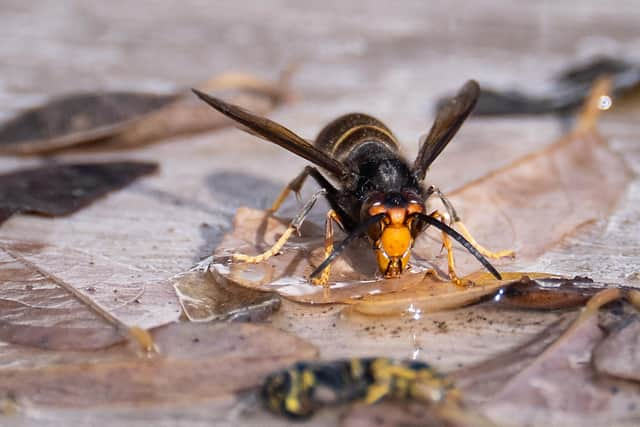
Highly adaptable, they prey of honey bees and other native pollinators and have a very direct impact not just on bee keepers and honey producers but also on farmers as they can decimate sections of the pollinator population.
"Around 40% of agriculture in the world relies on insect pollination and any apex predator such as Asian hornets which can in some cases decimate the pollinator population will have a real and lasting impact on rural affairs in Northern Ireland, Mr Grzymek said, adding: "If they become established the experience in Europe is that they are almost impossible to eradicate."
The primary nests are essentially the size of a tennis ball initially but they the hornets produce a secondary, much larger nest usually between May and July to house around 6,000 hornets that can produce hundreds of queens.
Mr Grzymek said the Asian hornets here were a "wake up call" and while they won't fly in, they can be carried in.
"It's important we have all all Ireland response and in fairness the governments are talking."
The group said raising local public awareness was crucial, including informing people on how to contact the NI Environmental Agency via the App if they think they come across an Asian hornet.
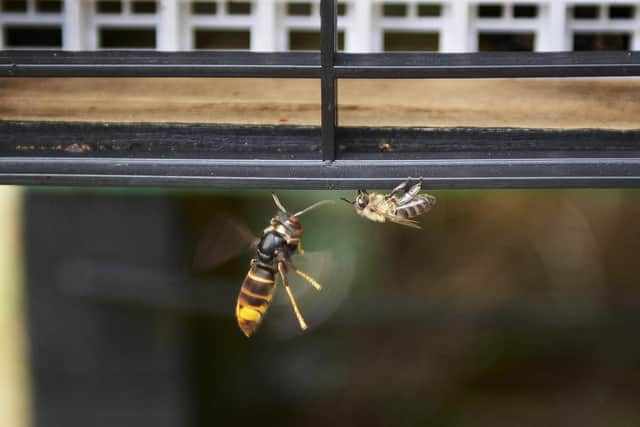
In the summer the hornets are more likely to be found in gardens, parks and cemeteries than in nests. "In most cases, it’s the public and not bee keepers who see it first," he added, urging the Council to educate staff, particularly those working with food waste or in outdoor Council facilities and set up a register of volunteer trackers and tracers.
"We all know it is like to be stung by a bee. It is not very pleasant but by and large five minutes later you are OK. Being stung by an Asian hornet you can end up on hospital so it is a real threat."
Avoiding hysteria he added was key as well, and Valentine Hodges said the introduction of monitoring stations like that used in Dundonald, which follows the flight path habits, and "not traps" was key to tracing Asian hornets back to their nests.
She also revealed that the Cork nest discovery started with a member of the public who found an Asian hornet trying to drink beer in a beer garden.
A contingency strategy is being updated and will be announced soon by the government, the Committee was told.
Every festival and outdoor event could have some sort of public awareness going on, Valentine Hodges added.
Sinn Féin Councillor Pat Murphy asked if the arrival of Asian hornets had impacted agriculture in Jersey and if they were pollinators themselves. He also asked if the monitoring stations could be put in place before any sightings.
Mr Grzymek said that as an apex predator nectar and pollen from flowers were not their primary food source and they would get their food primary from other insects and fruit.
Valentine Hodges meanwhile said that France had lost 50 million honey bee nests, and the committee was told they also prey on other pollinators like butterflies.
UUP Alderman Derek Hussey asked in the hornets attacked defensively or offensively and if the Association could provide training to staff?
Valentine Hodges responded: "They will defend their nests, and if you go close to the nests that is when you are going to be in trouble. That's what they've been finding, where the nests are people have been stung to death. Their venom is 10 times more powerful, however that's where they are most defensive but they will follow you for up to 30 metres. if somebody is getting stung at that nest, you go into help them, more hornets will come out and come out in real numbers."
Mr Grzymek said they were pressing government with colleagues in the south too to invest in training and public awareness. He added that NIEA, should this become more of a problem, may have a role in providing training.
Ald. Hussey asked if Council had ability to eradicate a wasp's nest and was told only if it was on Council lands.
Independent Councillor Gary Donnelly said the last thing bees needed here was Asian hornets "given all the troubles they are currently having".
"It's well known the native population has been under pressure down to a number of things: loss of habitat, disease, pesticides, climate change, but having read this it is alarming.
"There seems to be a number of increasing invasive species. Only last week it was the New Zealand flatworm and we have been told there are plenty of them about. I am concerned the resources will not be there to deal with this. I do think we do need to be getting our act together, getting awareness training and we need to be investing."
Mr Grzymek said one bright ray was the number of people getting involved in bee keeping having risen dramatically, and a lot of young people were getting involved. “There are more people working to support and make sure our bees thrive,” he said.
Mr Doherty said that it was anticipated more Asian hornets will be discovered this year. “I think we need to prepare as much as we can,” he said, and proposed the Council and Derry & District Bee Keepers Association work together around some basic education would be beneficial.
Sinn Féin Colr. Emma McGinley said she found the presentation ‘fascinating’, and suggested the Council’s media team could play a role in spreading awareness.
Council’s Director of Environment, Karen McPhillips said its officers will look at rolling out awareness training among staff, engaging the Council’s own biodiversity officer to work with the local beekeeping association on awareness training.
SDLP Councillor Martin Reilly highlighted the importance of protecting pollinators given their impact on food production and the economy. "We do need to protect our native bees from the invasive species of the Asian hornet," he said, concurring that social media may be a useful way of disseminating information.
DUP Alderman Keith Kerrigan said it was good to see a consensus within Council on this, and said whatever can be done to push awareness out was very welcome.
Mr Doherty said the Derry & Strabane area was well known for getting ahead of the posse, and said it was likely this was an issue they would be encountering in the future. “We may as well get used to it and be first off the blocks in terms of basic training of Council staff and cascading that wider throughout the community as well.”