
This was one of the comments made by Andrew Lynch when addressing an audience at Derry’s Gasyard Centre recently in the third in the series ‘Did Ye Hear About?’ myth-busting conversations.
Mr. Lynch, project co-ordinator with the Londonderry Bands Forum, said he was ‘jealous’ of the respect accorded traditional Irish musicians.
Those in Protestant and Unionist community, he said, often felt overlooked in this regard.
He made the point that learning to play an instrument like the flute takes a lot of time, effort, and money, with even the cheapest flute costing over £400.
“Contrary to what maybe some people in the nationalist community might think, these musicians don’t go out to provoke; they go out to perform, connect, and celebrate their culture.
"The idea that bands exist simply to annoy others is not only false - it ignores the dedication behind the music.”
In a wide-ranging and informative presentation, under the chair of former Derry Journal editor Pat McArt, Mr. Lynch explained that the Forum was established in 2010 to support and represent marching bands in the city.
He commented: "At the time, it was clear that bands needed a voice — one that could address issues affecting them directly, rather than being spoken for or targeted by politicians or the media.
"Today, we represent 24 bands across the Derry and Limavady areas — both urban and rural.”
He explained that band culture was traditional in the Protestant-Unionist community.
“Bands are deeply rooted in our history. Within our forum alone, seven of our bands are over 100 years old. That number will soon rise to ten. Three bands are already over 150 years old, including: Britannia Concert Band (formed in 1866, mixed-religion membership); Hamilton Flute Band (1856); Churchill Flute Band (1835 — the oldest marching band on the island of Ireland)”
There are around 660 marching bands in the North, with a combined membership of over 30,000 people. That makes it one of the largest voluntary arts movements in Europe.
The Forum also does a tremendous amount of outreach work with 31 workshops in 13 schools across the city in June reaching out to over 884 pupils.
Andrew left school at 16 with no qualifications, joined a band for no other reason than a friend was joining it, got hooked, learned music and found himself not only a tutor but returning to education and getting himself a degree.
“I am an example of how this work goes beyond music. For many young Protestant boys — who statistically struggle in education — music becomes a way to build self-confidence, improve focus and teamwork, and discover new ways to learn.
"It’s often our least academic pupils who become our best music readers. They find something they can relate to — something that gives them purpose.”
He pointed out how the world famous James Galway, started out in a flute band in Belfast.
Mr Lynch concluded: “Bands provide real opportunities and benefits to people from all walks of life.”
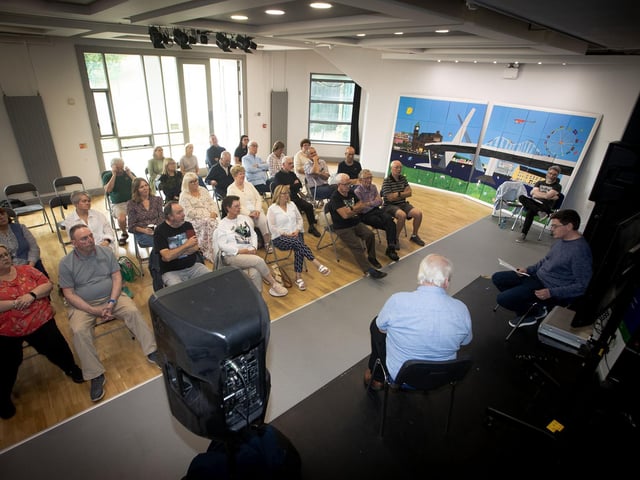
1. The audience listening intently to the Bands Forum's Andrew Lynch.
The audience listening intently to the Bands Forum's Andrew Lynch. Photo: JMcC
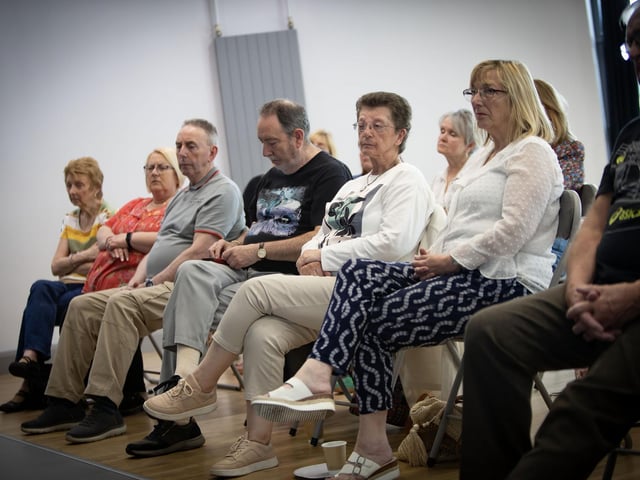
2. A section of the audience listening intently to Bands Forum's Andrew Lynch on Monday.
A section of the audience listening intently to Bands Forum's Andrew Lynch on Monday. Photo: JMcC
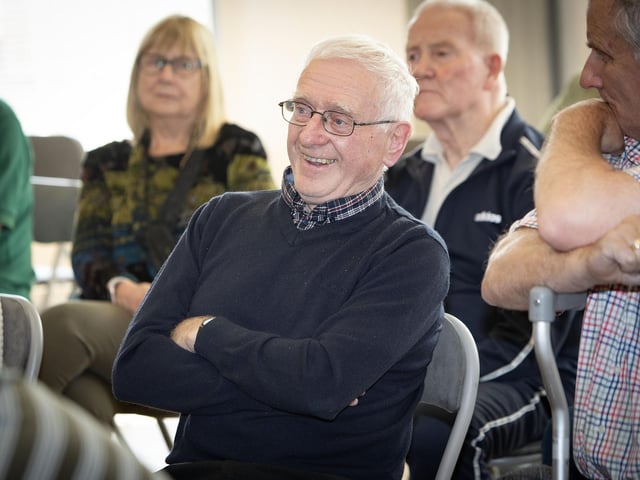
3. A member of the audience shares a joke with the Bands Forum's Andrew Lynch during Monday's event.
A member of the audience shares a joke with the Bands Forum's Andrew Lynch during Monday's event. Photo: JMcC
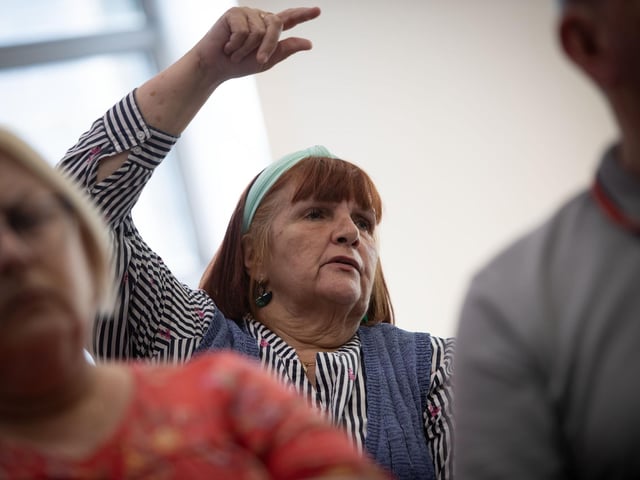
4. An audience member puts a point to Mr. Lynch on the Bands Forum during the event.
An audience member puts a point to Mr. Lynch on the Bands Forum during the event. Photo: JMcC