
Bloody Sunday survivor Mickey Bridge remembered as ‘a man who couldn’t be broken’
Bloody Sunday survivor Mickey Bridge was poignantly remembered by his daughter Roseann as a man who couldn't be broken’ as he was laid to rest in Derry on Thursday.
Mr. Bridge passed away at the age of 79 earlier this month.
At his Funeral Mass at the Holy Family Church in Ballymagraorty his daughter Roseann recited a poem in his memory acknowledging his ‘courage’, ‘resilience’ and refusal to be bowed,
“I see a man that couldn’t be broken,” the poem attested.
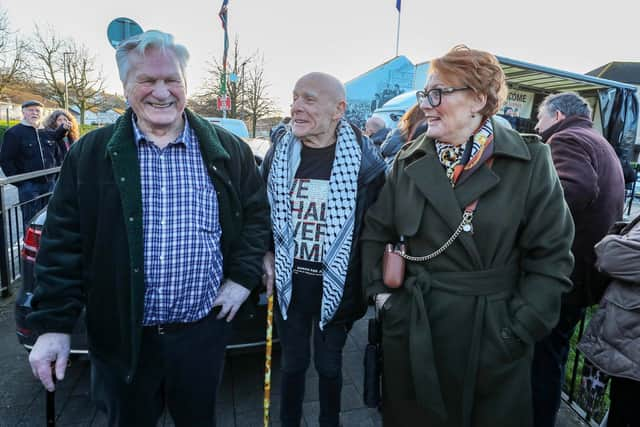

Mr. Bridge was 25 when he showed remarkable courage in confronting members of the British Parachute Regiment in the Rossville Flats car park following the murder of Jackie Duddy, aged 17, on Bloody Sunday.
He was shot in the thigh, most likely, by ‘Lieutenant N, the Commander of Mortar Platoon’, the Saville report concluded in 2010.
Fr. Joe Gormley, in his Funeral Homily, spoke of how Mr. Bridge had been born in the lee of the Derry Walls at Walker’s Square in December 1946.
One of ten children the family moved to Springtown Camp before settling in the new Creggan estate.
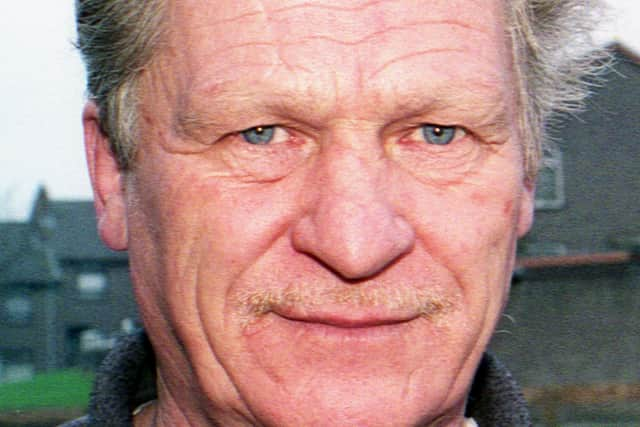
"There he grew up in an atmosphere where family was so important.
"It was a wonderful time. Yes, things were difficult maybe economically, but there was the whole sense of community there. Michael was reared in that environment, in the love and care of a family and the love and care of a community.
“As we know, however, the events later on in the late 1960s and early 1970s cut deep wounds into our communities. Michael himself experienced the wounds of the events of January 30, 1972,” said the Parish Priest.
Mr. Bridge was living in Tremone Gardens when the anti-interment march was gunned down in the Bogside.
Recovering from a gunshot wound he provided important testimony from his hospital bed about what had happened in the days thereafter.
He said he had heard shots and saw Fr. Edward Daly kneeling over Jackie Duddy, who was the first person to be shot dead by the British soldiers.
"As I went forward troops fired several shots. I think they were trying to shoot the priest," he told the 'Journal' in the days immediately after the massacre.
From Tremone the family moved to Benevenagh Gardens.
Michael, Fr. Gormley said, was not going to be defined by what had happened to him ‘even though he carried the wounds’.
"God in his providence brought Jane McKeegan to the Embassy one night and there God began a friendship and a love that eventually led them to be married in 1977,” the congregation was told.
The couple wed and settled in Ballymagroarty where they raised their children Jane, Edward, Miriam and Roseann.
“Michael, everybody knew him as Mickey, was someone who was quick-witted. He was someone who was good at taking the hand out of you but it was always done in jest and always done out of love.
"Over the years Michael focused on his family and particularly on his grandchildren in recent years and today we know the pain of his loss hasn't really hit home yet,” said Fr. Gormley.
Following the service Mickey MacConnell’s ‘Only Our Rivers Run Free’ was played as Mr. Bridge’s remains were taken from the chapel for interment in the City cemetery.