
Department responds to Derry MLA criticism over 'inaction' on mould and damp
The Department for Communities has said it is implementing a series of measures towards improving ‘the quality and safety of our homes’ after criticism was levelled by a Derry MLA over what he called ‘inaction’ on tackling damp and mould across social housing, private rented properties and temporary accommodation.
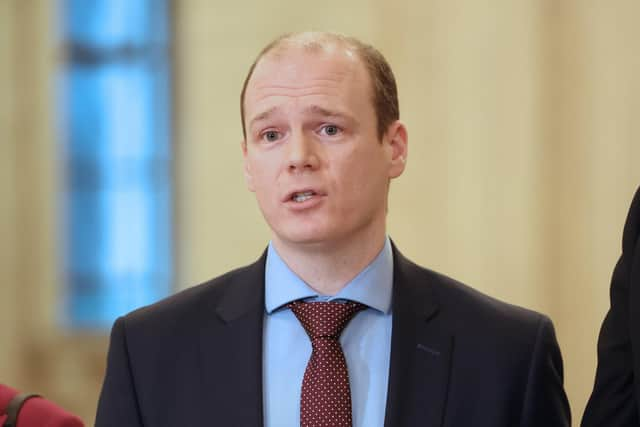
SDLP Opposition Communities Spokesperson Mark H Durkan MLA called for a new approach and better protections for people across sectors and said new measures being introduced in parts of Britain should be replicated here.
Under Awaab’s Law, currently being progressed in England and Wales, social landlords will be required to address emergency hazards including damp and mould issues, within a specific timeframe, but Mr Durkan said tenants in the north of Ireland currently have no such protection.
The MLA for Foyle said: “It’s unacceptable that the Communities Minister keeps referring my questions on Awaab's Law to a response which he provided to me in March 2024. Since then there has been no progress and no intention to extend this life saving legislation in Northern Ireland.


“Awaab’s Law is named in memory of two-year-old Awaab Ishak, who tragically lost his life in England due to prolonged exposure to mould in his home. Work is underway in other jurisdictions to deliver legally enforceable protections that would ensure damp and mould repairs are actioned.
“In the last 12 months alone, almost 14,500 reports of damp and mould have been made to the Housing Executive. That shocking figure doesn’t even include housing associations or private landlords, so the true scale is likely much greater.
“What is even more concerning is the situation in temporary accommodation. Single-let temporary properties are inspected at the point of acquisition but there is no routine, ongoing inspection regime to ensure standards are maintained. Responsibility for maintenance rests largely with private providers with the Housing Executive acting as intermediary.”
Mr Durkan said he has witnessed photographs of ‘shocking damp, mould and water ingress’ in temporary accommodation allocated to a young mother and her new-born baby.
" I recognised the property because I had complained about it a year earlier on behalf of another constituent. That family was moved out but the defects weren’t remedied. Instead, another vulnerable tenant was simply moved in. That is a disgrace," he said.
“Temporary accommodation is provision for homeless families, among the most vulnerable in our communities. Problems persist from one tenancy to the next because there is no statutory duty to regularly inspect and enforce minimum standards.
“Damp and mould carry serious health risks, particularly for children and older people. The cost of inaction could cost lives. Other regions are acting to protect tenants, so why is the Executive not doing the same? The response, or lack thereof, to date is not good enough. The SDLP Opposition will continue to push to see these protections implemented.”
Responding to those issues, a Department for Communities spokesperson told the Journal that Communities Minister Gordon Lyons was “fully committed to improving the quality and safety of our homes and is taking action to ensure that everyone, regardless of the tenure or house type they live in, has a good quality, safe and warm home”.
“For social housing," the spokesperson said, “the Department has clear guidance on damp and mould in place for all Housing Associations and is in the process of consulting on a new Decent Homes Standard which proposes additional protection for social housing tenants. Some of these proposals were intended to incorporate some of the additional protections from Awaab’s Law into this existing standard.
"Regarding Housing Executive stock, the NIHE has a projected spend of £42.71m on energy efficiency or thermal improvement works to its properties this year and has a planned spend of £41.75m in 2026/27. One of the Ministers main priorities is ensuring that the NIHE has the borrowing powers necessary to continue to invest in improving the quality of its stock and he continues to raise this crucial issue with the UK Government.
“For the private rented sector, the Minister is also progressing a wider programme of reform to improve quality and strengthen standards. Improving energy efficiency is a key priority in this programme, and work is already under way to develop new minimum standards for the sector.”
The Department said that providers of temporary accommodation are responsible for the repair and maintenance of their properties, but added that in cases where repairs are not actioned, the Housing Executive will “cease to use the property, either permanently or until such times the necessary repairs have been completed”.
"The Housing Executive’s Strategic Action Plan for Temporary Accommodation contains a commitment to develop a temporary accommodation standards framework, and this work is expected to conclude by March 2027.
“Most recently,” they add, “the Minister also published the Warm Healthy Homes Strategy, which includes a strategic action to launch an ambitious, long-term Warm Healthy Homes Fund which will seek to deliver increased investment over its first five years. This will focus on taking a whole house approach to retrofit, delivering energy efficiency measures to those households on the lowest incomes, including in the private rented sector.
“All of this work sits alongside existing legislation which is in place for the minimum standard of fitness for all housing in Northern Ireland, requiring homes to be ‘free from dampness prejudicial to the health of occupants’.
"Environmental Health Officers within local councils already have powers to address damp and serious disrepair by enforcing the statutory minimum fitness standard across all housing tenures. The Warm Healthy Homes Strategy also includes a strategic action to establish improved fitness standards for all tenures by 2030.”