Derry woman 'lucky to be alive' after seven cardiac arrests
Eglinton woman Aoife Boyle says she is ‘happy to be here’ after suffering seven cardiac arrests in just 11 days.
Aoife, who is just 22, suffers from Mixed Connective Tissue Disorder (MCTD) but had no heart issues prior to taking her first cardiac arrest when out with friends.
Aoife said: “On New Year’s Day, I went out to meet my friends in the Blackbird for 3pm. Myself, Jill and Aideen all went in together to meet our two friends who were already there. The three of us were standing and Colin got up to get a drink. As he moved past, I remember reaching for Jill’s arm and she said I was shaking and the next thing I was on the ground. I went into a seizure and I remember coming round and a brown-haired girl standing over the top of me shouting to get me in the recovery position and then I went into another seizure and my lips went blue. Aideen’s a nurse, so she started doing CPR and kept going until the ambulances came. There were three ambulances parked outside and they had to leave two of them there so all the paramedics could work with me until we got to Altnagelvin.
"Once we got to the hospital, my brother Patrick was standing waiting for me. My mammy was going away for the night so she had just checked in when Patrick called her to tell her to come quick. My friends then rang mammy and Aideen said ‘Tanya just get here’.
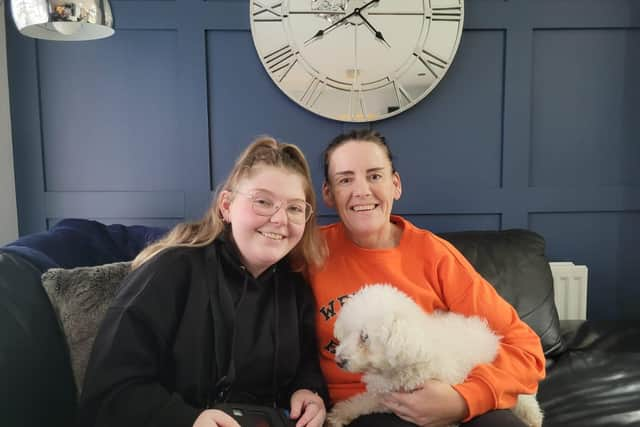

"I went into another cardiac arrest as I was coming out of the ambulance and Patrick had seen it. So, when mammy got to the hospital, Jill and Aideen were crying and Patrick was sheet white. They wouldn’t let mammy in for an hour and a half and I took another one in Resus. I was in the Blackbird for three and I was in Resus by 3.30pm.
"I was having good and bad days for the few months before with MCTD but that day I felt was a good day and that I was able to go for lunch.”
“If Aoife hadn’t have went out for lunch that day, she would have been dead,” said Tanya. “And that’s what’s so scary. Even taking seven cardiac arrests, she was in hospital for them all and that was a Godsend. There was nurses and medical staff looking out for her and that was great. After she was moved to Ward 22, I was video calling her on the Saturday when two of my sisters and my niece were with her and she took another cardiac arrest. They were traumatised. All I heard was screaming and I was shouting ‘Aoife’ but one of my sisters took the phone and told me she was away into another one. I just booted out the door and told rob to just drive fast. I said ‘please tell me she isn’t dead’ and my sister Patricia never spoke.
"I went running to the room and they wouldn’t let me in. The nurse told me I would have to wait and that they were working with her."
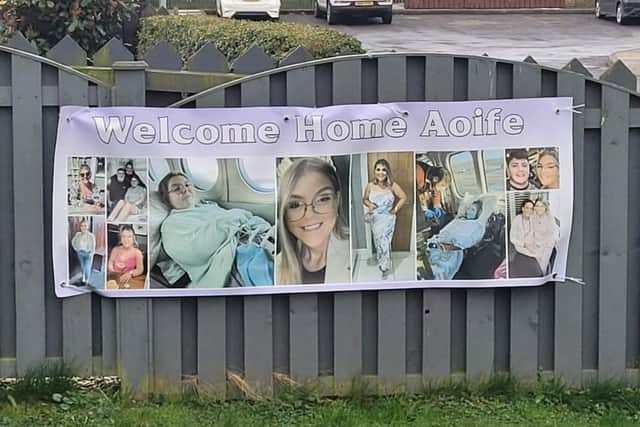
"I remember waking from every cardiac arrest,” said Aoife. “And the first thing I always asked was ‘where’s mammy?’ Every time they had to do CPR, I would wake up and then they had to put me out so they could shock me and restart my heart.”
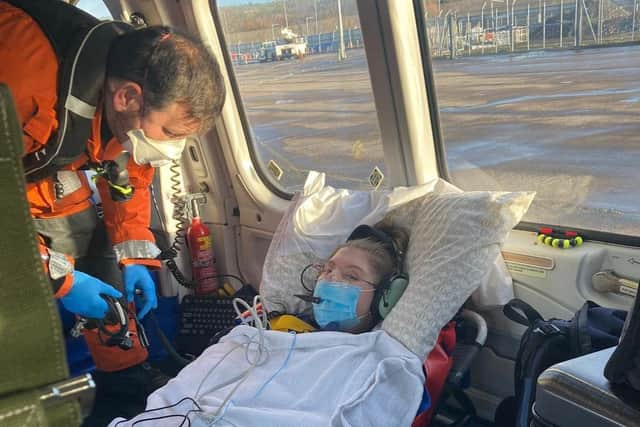
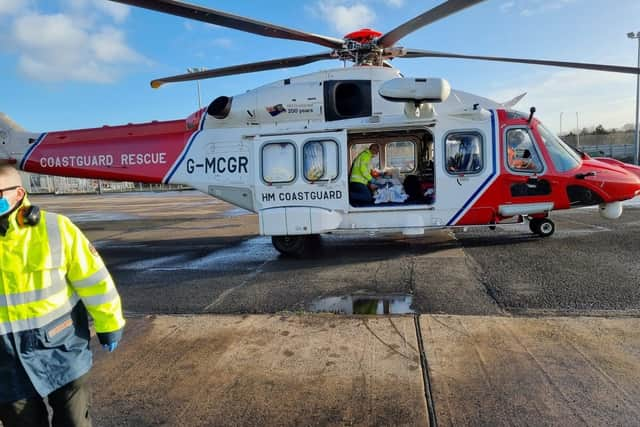
Aoife was moved to CCU in Altnagelvin, where she took two more cardiac arrests. They then rushed her to the Royal in Belfast, where she stayed for two days and had two more cardiac arrests. They said her heart was working at 10 percent function so they sent her to Newcastle hospital. Aoife was to travel by air ambulance with her mum but a positive Covid test meant Aoife had to travel alone with the Scottish Coast Guard, who are equipped to take Covid-positive patients, while Tanya had to travel on a domestic flight due to lack of space.
Anxiety levels were high for both Aoife and her mum as they were afraid something would happen and the other would be far away. After some reassurance, Tanya made her way to the airport and, ten minutes before boarding, got a call to say that Aoife couldn’t travel due to poor weather conditions.
"I found myself in the airport, all alone,” said Tanya. “And had to figure out how to get out of there and get back to the hospital to Aoife. I got a taxi back to the hospital and it was a good job because Aoife took another cardiac arrest that night.”
“They hooked me up to all these machines in Newcastle,” said Aoife. “There was things coming out of my neck and five lines from the central line. My heart rate was still sitting really high, even with infusions and everything else. I saw Dr McGowan, the consultant, and I gradually got better over the next two weeks.”
At one stage, Aoife was taking 36 tablets a day to try to manage her condition. “She told me she would have taken 100 tablets, as long as it made her better,” said Tanya.
“They did heart MRIs, ECGs, scans, tests, muscle biopsies, everything and I was gradually getting better,” said Aoife. “With the medication, there was days that I was really, really sick but the doctors told me that was normal. Thank God, I had no cardiac arrests in Newcastle. There was a few rhythms that went up but went straight back down again. I got a heart MRI done and the doctor told me that my heart went from 10 percent to 45 percent. They couldn’t understand why it went up so much in such a short space of time but he was happy. They said there was a lot of fluid and a lot of inflammation around the heart. I lost almost two stone in just fluid.”
Aoife was sent back to the hospital in Belfast by Air Ambulance, where they continued to monitor her and administer medication. After a lot of deliberation, she was allowed home with a defibrillator vest, which monitors her heart rate and sounds a loud alarm when it goes too high and shocks her when she’s unconscious. Aoife can stop the shock from happening if she is awake. Aoife will return to Belfast for an MRI to see what the next steps will be in her treatment.