
Derry’s Seamus Kennedy pens tribute to grandfather and Irish pioneer Brian O’Keeney who ‘lit the way for the Gaelic language’
This article contains affiliate links. We may earn a small commission on items purchased through this article, but that does not affect our editorial judgement.
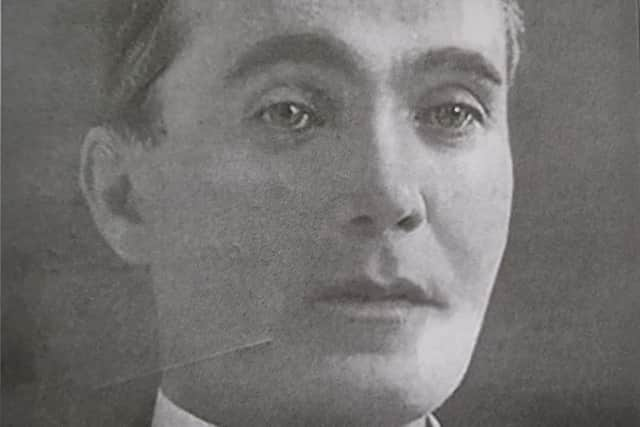
Brian O’Keeney was born in 1876 in Glendoan on the road that rises out of Ardara up towards the Croaghs in the Bluestacks.
From humble beginnings in south Donegal, Brian would go on to become one of the most influential figures in the Gaelic revival movement in Ulster and far beyond from the 1890s right through until his death in 1943.
An Irish language pioneer, a poet, a playwright, an actor, a singer, a political and cultural activist, O’Keeney was the definition of the fear ildánach (renaissance man).
A regular columnist for the Derry Journal, he was correspondent with many other publications, including An Claidheamh Soluis, the newspaper of the Gaelic League whose editors included Padraig Pearse and Eoin MacNeill.

When he died on March 16, 1943, the ‘Journal’ published the last iteration of his long-running ‘Are You Learning Irish?’ column the next day, St. Patrick’s Day.
"With last Monday’s instalment Brian O’Keeney, the noted Gaelic teacher, author, playwright and poet, completed ten years of this Students’ Column.
"The next day this great and distinguished Gael passed to his reward. No feature in the ‘Journal’ was more popular or more deeply appreciated.
"Again and again we have received tributes to its value from both teachers and students. Very many of those who began their study of Gaelic with the first conversation series ten years ago are today fluent speakers and writers of the language,” this paper noted before announcing the republication of the ten year series as a fitting tribute.
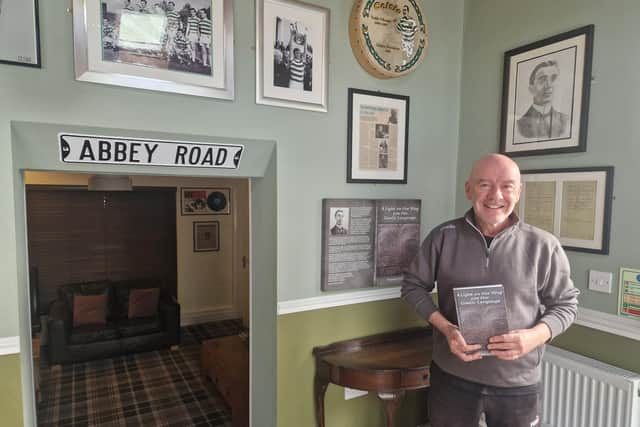
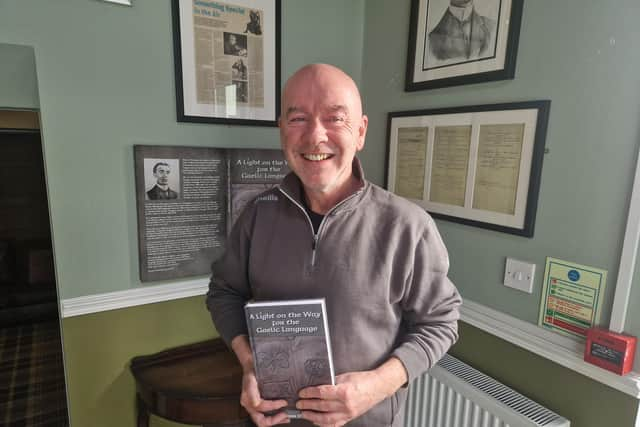
Seamus Kennedy, the proprietor of the far-famed Abbey Bed & Breakfast in the heart of the Bogside, is O’Keeney’s grandson.
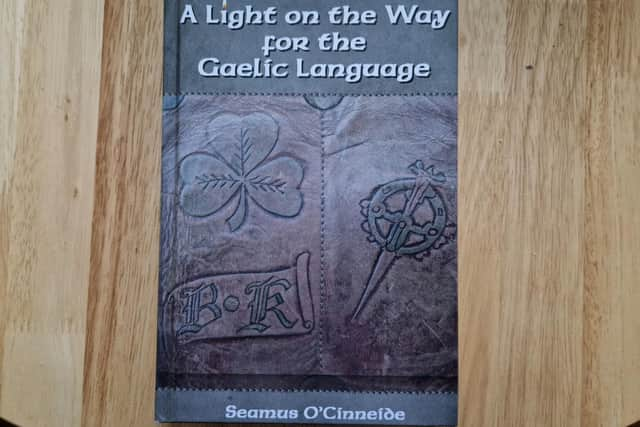
And the Donegal man has now put pen to paper and produced a handsome new tome in honour of his illustrious forebear.
A Light on the Way for the Gaelic Language is the product of ten years of painstaking research and Seamus hopes it will serve to increase awareness about an unsung hero of the Irish language movement of the early 20th century.
"My grandfather Brian O'Keeney was born in Ardara in 1876 and died in 1943. He was one of the pioneers in the Gaelic League and the revival movement as a travelling teacher all over Ulster.
"I have been able to identify him with the movement from 1900 but I know he was a scholar before that. He was also an actor in plays from 1896. He took part in dramas all around Donegal. Some of those were as Gaelige as well.
"He started the Gaelic league in Strabane and numerous Gaelic League branches around that area - in Castlederg and in Lifford,” Seamus explains.
His travels took him all over Ulster and into Co. Louth, a county naturally associated with the province in Irish language terms, as he worked as an organiser with Conradh na Gaeilge.
Seamus explains how his grandfather worked alongside Pádraig Pearse and Eoin MacNeill on Fr. M. Mullin’s seminal linguistic guide, The Phonetic Key to Ulster Irish in 1903.
"There are a couple of letters from him to Pádraig Pearse in the National Library in Dublin. Along with Pearse and Fr. Mullin in Killygordon they did the phonetic key for Ulster Irish.
"There was a lot of disagreement at that time about the different dialects of Ulster and Munster.
"Seamus Craig, from Derry, worked on it too. He was originally from Glenties but his family had a draper’s shop in William Street.
"So too did Seaghán Ward [Mac A’Bháird] who would have been my great -grandmother Bridget Ward’s cousin. He was a professor.
"Pearse was very heavily involved in that,” he explains.
O’Keeney rubbed shoulders with some of the greatest cultural and political figures of the revolutionary period both in Ireland and in Irish America. These included the man who would become the first President of Ireland.
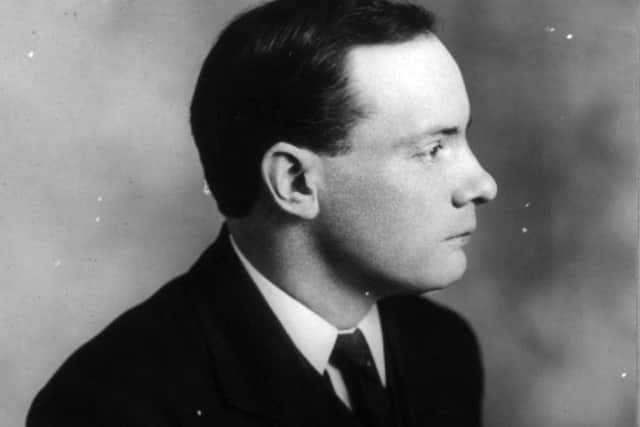
"My grandfather went to America in 1903 and Douglas Hyde went there in 1905-1906. My grandfather was on stage with Douglas Hyde and wrote a poem addressed to him, ‘Welcome to America’,” Seamus tells us.
Another associate was John Devoy, the celebrated Fenian who published The Gaelic American, the staunchly republican New York City weekly.
Long prior to his activities in the United States, Devoy had been instrumental in masterminding the escape of six Fenians from Fremantle Prison in Australia aboard the Catalpa merchant bark in 1875.
“He shared a stage with John Devoy. John Devoy was a massive figure at the time. The Catalpa rescue alone was a huge story. A lot of my grandfather's ideals and thinking was printed in The Gaelic American which was owned by John Devoy so I got a lot of stuff out of that,” he says.
O’Keeney arrived in Strabane around the turn of the century where he became friends with the family of Brian O’Nolan or Flann O’Brien as the literary genius would later become famous.
“When he first came to Strabane in 1901 one of this first students was Agnes Gormley [Flann’s mother]. In 1902 my grandfather organised a Feis in Strabane. Agnes Gormley sang at that Feis. A year later when the big Feis came up in 1903 my grandfather was the organiser and Flann O’Brien’s father Michael O'Nolan was secretary for the whole project.
"That became known as Ulster's greatest Feis. I'm quite sure that it was through Irish classes that Flann O'Brien's parents met in Strabane.
"That whole family spoke Irish. In fact, their wedding in 1906 in Murlog [near Lifford] was completely as Gaeilge, which was very rare at the time.
"My aunt spoke fondly of my grandfather's great friendship with Myles na gCopaleen as she would have called Flann O'Brien at the time.”
Back in 1997 Seamus was rummaging through the attic of his old home while visiting his mother Eibhlinn Ros Ní Chiannaigh in South Donegal. He found an dusty photograph of his granda Brian.
On St. Patrick’s Day in 2016 he looked at the picture and decided Brian O’Keeney’s was a story that needed to be told. Thus commenced a ten year labour of love that has now yielded a very personal history.
"If I didn't do this, this man would be forgotten forever. It's 83 years since he died so I'm quite glad that his story is out there now because he was an unbelievable figure in his lifetime
"They were an extraordinary family. They probably would have been labelled as a poor family and you would wonder why with all the things that he did that they would end up in such poverty. He was just a complete linguist.”
A Light on the Way for the Gaelic Language is Seamus Kennedy’s latest publication following the release of his memoir Grace Will Lead Me Home.
It is available to purchase on Amazon at https://www.amazon.co.uk/LIGHT-WAY-GAELIC-LANGUAGE-understand/dp/B0FZGW541Q