
Donegal ‘genius’ Dinny McLaughlin was central to renaissance of music, dance, language and culture, mourners told
Dinny McLaughlin ‘Whiteharra’ had the ‘mind of a genius’ and the ‘fingers of a surgeon’ and was central to a renaissance of music, dance, language and culture in Inishowen, mourners were told at his funeral on Friday.
Fr. Francis Bradley described the influential musician who passed away at the age of 89 on Tuesday as a ‘tradition-bearer’ capable of bringing ‘a whole culture to life through what they say and do, through the stories they tell, and the traditions they plant’.
At his Funeral Mass in Cockhill, Fr. Bradley said he was ‘a man with the mind of a genius, the heart of a lion, the eye of a sniper, the ear of a fox, the fingers of a surgeon, the feet of a ballerina, and, yes, the soul of a priest’.
“Ní bheidh a leithéid ann arís – There will never be his likes again,” he said.
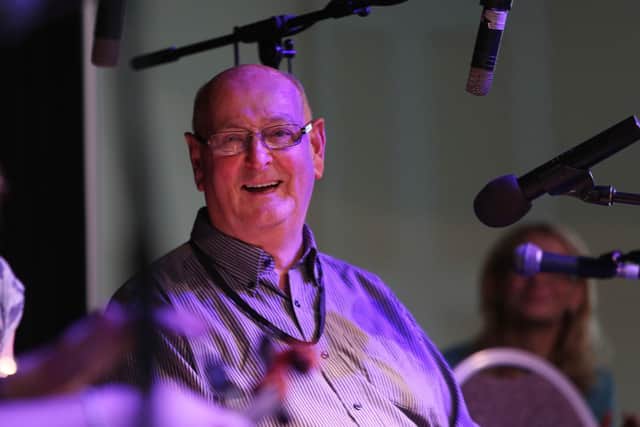

Before the commencement of the service an ensemble of former pupils played a medley of tunes from his repertoire.
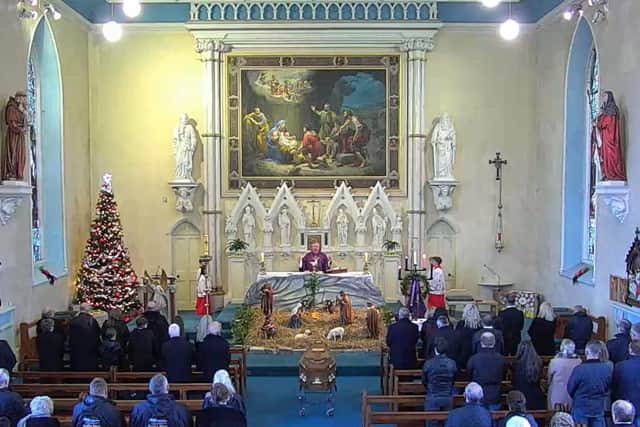
After his casket was borne into the church his family brought personal effects symbolising Dinny’s life to the altar: his ‘beloved fiddle’ named ‘Aisling’; his dancing shoes for 'he was light on his feet'; the bible of traditional song Abair Amhrán; and his rosary beads because he was 'a man of great faith'.
Fr. Bradley spoke of how Dinny had been born on Low Sunday, April 28, 1935, in the house where he lived all his life in Shandrum between Buncrana and Drumfries.
The youngest of six children born to James and Mary McLaughlin née McCarron he had been, he used to joke, 'the shakings of the poke'.
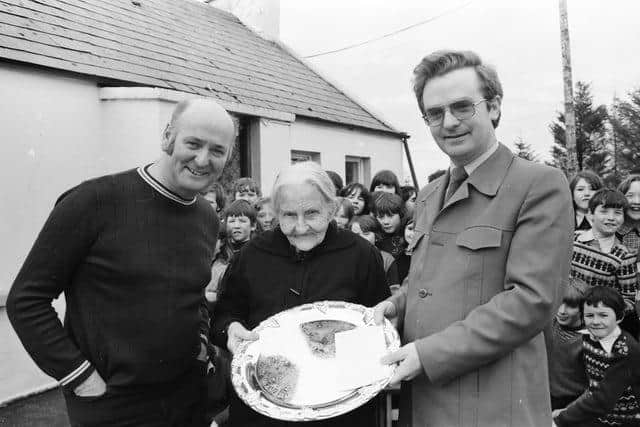
“While money was scarce and luxuries few Dinny's quick eye and keen ear meant he gathered the lore and the melodies he saw and heard in his day,” said Fr. Bradley.
Dinny’s musical genius became apparent early when an old school teacher, Master Rodden, challenged his class to learn Amhrán na bhFiann.
The first of his classmates to master the national anthem ‘he was the one who got out to play that day but he realised on his way home that he had let his guard down for now the Master knew what he was capable of’.
As a boy growing up on the high moor above Buncrana Dinny was influenced by another legendary Inishowen-fiddle player.
"It would be Pat Mulhern across the moor in Fallask who would plant in Dinny the melodic seeds that still flourish to this day. Little wonder that, having listened to Pat Mulhern play he desperately wanted a fiddle from the age of six.
"In the céilidhing that went on in the houses and the gatherings that took place from time-to-time in place-to-place Dinny picked so much of what he then, in his turn, taught to other generations.”
Fr. Bradley ventured that Dinny and Pat were what the Scots Gaelic poet Somhairle MacGill-Eain once called ‘tradition-bearers’.
He told the congregation: "A tradition-bearer is someone who carries with them, or more specifically within them, the knowledge and understanding of what makes them a people.

"Mostly living among their own, through language, music, song, dance and the multitude of other things which give expression to a tradition or culture, they bring about a sense of identity and belonging. They are a dangerous group, for their effects are far-reaching.
“They span space and time. They can bring a sense of confidence and contentment wherever they go.
"They may be few and far between but they are, in short, invaluable. They are cultural mercenaries, bringing a whole culture to life through what they say and do, through the stories they tell, and the traditions they plant.”
He went on to observe that ‘through Dinny “Whiteharra” and Pat Mulhern a whole revival of music and dance, language and culture took place in this part of Inishowen’.
"Trí theanga, ceoil, amhránaíocht agus damhsa [through language, music, song and dance], such a lovely tradition that we know and love so much began to flourish again,” mourners were told.
Much of that tradition featured throughout Dinny’s Requiem Mass with former pupils and friends celebrating his life through his music.
This included a rendition of Dinny’s beautiful lullaby Carraig Chaoin, which he had composed for the christening of Donal (poet) McLaughlin’s son, Caoimhín. It was sung in Irish and English with is touching refrain - ‘Crown of Ireland, edge of the world. Where northern lights shine, and dreams unfurl. Wherever I wander, wherever I roam, there's no place like Inishowen.’
Fr. Bradley spoke of how Dinny had nurtured generations as a teacher of music and dance.
“The St Oran's School of Dancing, Buncrana and Carndonagh, St. Mary's School of Dancing, Castlefinn, Comhaltas Craobh na hÍnse, fiddle, whistle, flute, piano, guitar, pipes, harp, accordion, melodion, concertina, feiseanna, fleadhanna, sessions and more, all meetings and moments and memories of this man who became the Pied Piper of Shandrum.”
Throughout the course of his nine decades Dinny left a huge legacy as Fr. Bradley acknowledged:
"In our heart of hearts we know the truth of the phrase ar scáth a chéile a mhaireann na daoine [people live in each other’s shadow], that as a people we live in the shelter of one another.
"There were many who took shelter in the lee of Dinny ‘Whiteharra’, many whose gifts and talents he nurtured and developed and many of these people are here today for they have never forgotten his goodness to them and his talent as a teacher.”
Dinny’s sister Annie Devlin was joined by a wide circle of family and friends in Cockhill chapel on Friday while his other sister Bridie McGonigle was unable to attend.
Dinny never married but 'he had a wife Aisling, his beloved fiddle’ Fr. Bradley said, remarking how he had been the custodian of an incredible ‘cargo of tradition for 89 years’.