
Editorial: Why Pride matters
I’ve heard it said a few times: We don’t have a Pride for straight people so why should they? The answer is quite simple – because 'they' i.e. people who happen to be born LGBTQ+ have usually experienced a very different world to the one straight people encounter, one in which homophobia and associated discrimination and danger can and does lurk everywhere from the playground to the home, on the street and in the workplace.
Anyone who thinks homophobia is something from the past should speak to someone who is LGBTQIA+ and ask their opinion on the matter. It will be hard not to walk away with the impression that it is still rife.
A social media post linking to an article about what is on at this year’s Foyle Pride on our FB page this week attracted over 180 comments, most of them homophobic, many of them vile. So much so that I had to switch off comments under the post and remove many of them. The same thing has happened numerous times when covering events featuring people of ethnic or religious minority background.
Some of it is right wing network pile-ons, many of them keyboard warriors hiding behind a fake identity. But some of it is not. And that is deeply troubling.
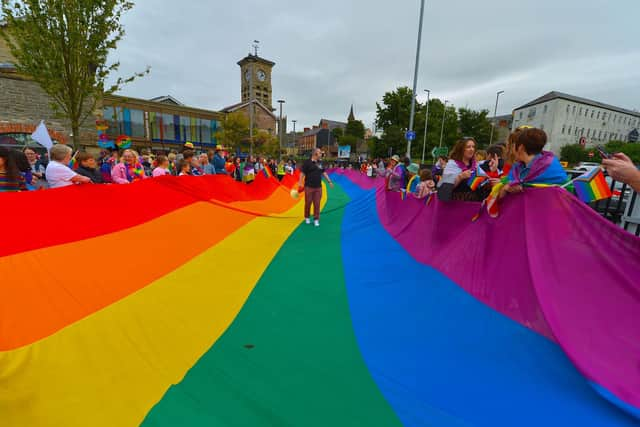

You don’t have to go too far to hear homophobic rhetoric. There is still a level of tolerance for it.
Derogatory terms are used as insults routinely everywhere from street corners and pubs to TV shows.
We need Pride for those of us who happen to be LGBTQ+ to be seen and heard and to stand up for those who cannot be visible; who cannot speak. We need Pride because in many countries today people are still jailed and even murdered for simply being who they are. We need Pride because, as reported in The Guardian last year, the risk of suicide and self-harm for people who are LGBTQIA+ is more than double that of their heterosexual peers. We need Pride because there are still people who want to attack or ‘convert’ you. We need Pride so that those who wish to express solidarity can do so. We need Pride so people know it’s OK to be you, to be proud of yourself, and so that people don’t feel so alone.