
Ex-IDF soldier and Israeli human rights advocate tells Derry it has ‘vital role’ in confronting genocide
An Israeli human rights advocate and ex IDF tank commander has told the Journal that people in Derry and across the world have a vital role to play in confronting Israel’s genocide against Palestinians.
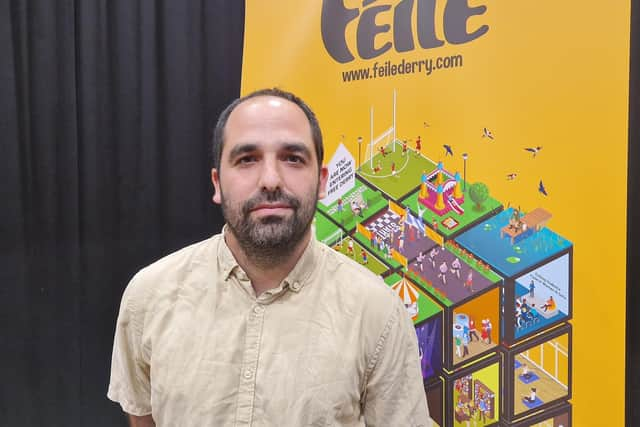
Ori Givati, Director of International Relations at B’Tselem, was invited by Trócaire to speak as part of Derry’s Féile at An Cultúrlann, where he outlined Israel’s assaults against Palestinians across the territories it controls, with a particular focus on the situation in the West Bank.
Speaking to the Journal ahead of his talk, Ori said everyone has a role in confronting genocide. He said: “The reason it is so important to come here and do this work is that everyone has a role in the face of genocide. We, as part of the society that is committing it, have a special responsibility to do everything we can to stop it, but we also need every single person who is willing to take action to take that action.
“There isn’t a recipe for how to fight a country that is committing genocide. The international community has significant power to help in that struggle, but it is currently not using that power.

“Israel has been allowed to commit this genocide in Gaza since October 2023, basically uninterrupted and without any repercussions.”
Ori spoke about B’Tselem’s work, saying it is designed to bring rigorous research and systematic analysis of Israel’s conduct against Palestinians to as wide an audience as possible, the global public, the Israeli public, and anyone who can take part in the struggle. He said everyone carries a certain responsibility when it comes to confronting genocide.
Ori said Derry’s long-standing support for Palestine is a powerful source of motivation for his work as B’Tselem’s Director of International Relations.
He said: “It’s one of those things that is extremely motivating and encouraging. This is a very difficult struggle against genocide, but what we are seeing globally, all around the world, is more and more people becoming aware and active from the bottom up.
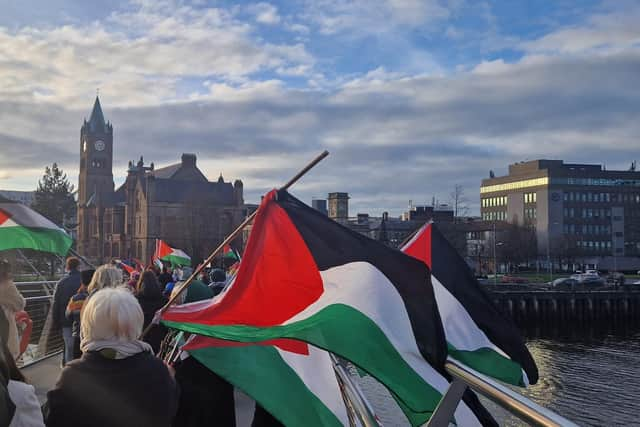
“We are definitely seeing more and more people understand what is going on, and understand that all of us have a responsibility to stand against this genocidal regime and to stop what it is committing. It is crucial for us to bring the voices of Palestinians forward, and that is a central focus of our work. We have researchers in the West Bank and researchers in Gaza, gathering daily testimonies, documentation, videos and investigations to bring these voices to the global public, including here in Derry, to ensure this struggle is informed, aware and operating from a place of knowledge and understanding of how this regime works.
“We understand Hebrew, we know what the leaders are saying, we know how they operate, we know how the system works, and our role is to bring that understanding to everybody who wants to participate in this very complicated and difficult struggle.”
As someone who grew up in Israeli society and completed mandatory service in the Israeli Defence Forces, Ori said there was no single moment during his service when he realised the extent of the Israeli government’s actions. Instead, he described it as “a long process.”
“It is a very long process. Growing up inside Israeli society is a very powerful type of upbringing,” said Ori. “It took time for me to understand what Israel is actually doing. There were many moments, there isn’t one particular moment when I understood everything.
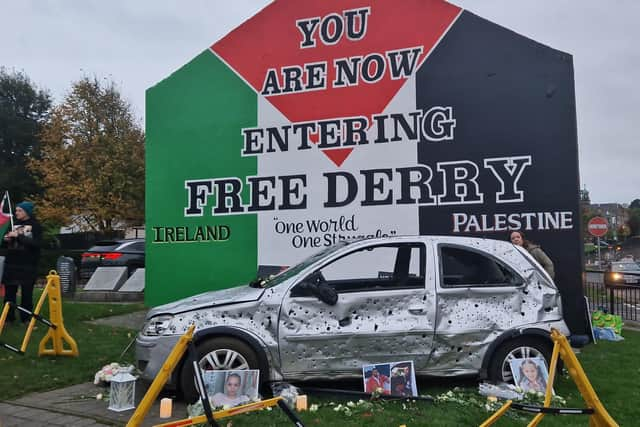
“The second you are in the West Bank, the second you see Palestinian communities being impacted by settler militias, or you see Israel’s military conduct in the refugee camps, when we are seeing the killings in the West Bank, when we are seeing all of that, it becomes clearer and clearer, pretty quickly, what is really happening. And it is very different from what I grew up to believe in.”
Ori, who comes from a Jewish background, said he wanted to make it clear that criticism of the Israeli government is not antisemitism.
He said: “It is devastating to see how antisemitism is being weaponised against anyone who criticises Israeli conduct. Antisemitism is very real, and it is rising globally, and we are seeing the results of that, including in the UK. To fight it, we have to understand what antisemitism actually is. Antisemitism is not criticism of Israel; it is not criticising Israel’s horrific conduct against Palestinians. Antisemitism is hating Jews because they are Jews, and that is what we need to fight.
“We fall into this trap of saying that any criticism of Israel is antisemitism, and it is actually harming the very important struggle against real, terrible antisemitism. As someone who is Jewish, I am saying clearly: we need to stay focused on the real struggle against antisemitism and not allow its weaponisation.”
Ori said everyone has a role to play in confronting the genocide in Palestine, adding that public pressure, through protests and at the ballot box, can influence political leaders and institutions.
He said: “I think we are seeing very clearly in recent years what anyone, any person, can do. We are seeing protests, and we are seeing new political leaders elected across the world who are putting very clear resistance to genocide in their platforms. Supporting these processes is crucial. It is always frustrating to see political developments happen much, much later than social developments at ground level.
“Every single protest is another brick in the structure we are trying to build. I wish it were faster, but it is something people are able to do.
“We understand very clearly that the international community has a lot of power that is not being used at the moment, power that could help, but is not being used at all. Pushing towards that is a very significant thing that every person in Derry, and around the world, can contribute to.”