
'How many more sons and daughters must we lose' - Derry HURT founder
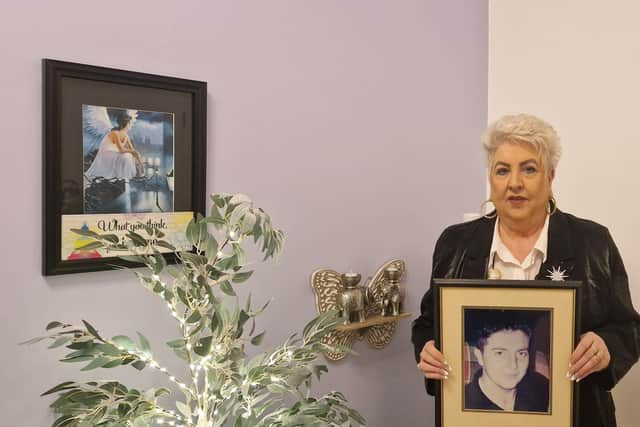
HURT (Have Your Tomorrows) founder Sadie O’Reilly, who lost her son Tony to addiction back in 1999, in this article calls on the government to take urgent action as the use of Nitazenes, Ketamine and other potentially lethal drugs continues to rise across the city and region.
Every day in Derry, families are quietly fighting a battle that many outside our community never truly see. Addiction is not confined to headlines or statistics — it is unfolding in our homes, our schools, our streets and our emergency rooms. At HURT, we see the damage first- hand. We sit with parents who cannot sleep through fear. We support young people whose lives are already being shaped by substances that should never have touched them. We walk alongside families who are grieving.
My son Tony died as a result of addiction. He was not a statistic. He was a son, a brother, a young man with potential, humour, kindness and dreams. Addiction took those things away from him — and it took him from us. The pain of receiving his death certificate, long after his passing because I could not bear to open it, is something no parent should ever have to endure. His sister Vivienne carries that loss every day. Our family will carry it for the rest of our lives.
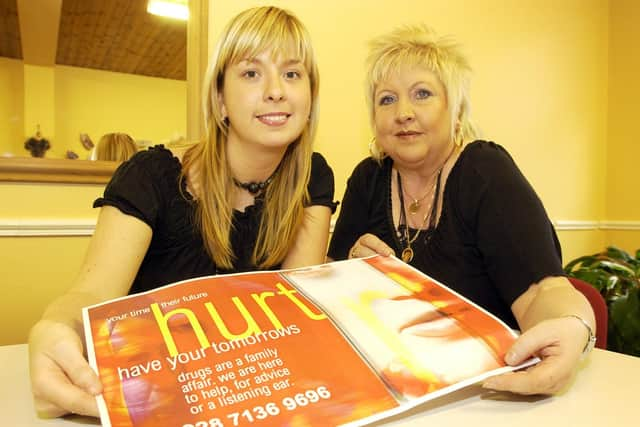
HURT was born out of that loss. It exists because no family should have to walk this road alone. Yet across Derry, too many families still are.

The most prevalent substances currently impacting our community include cannabis, cocaine, benzodiazepines, pregabalin and increasingly ketamine. While cannabis is often portrayed as harmless, we regularly see young people struggling with anxiety, paranoia, school disengagement and deteriorating mental health linked to its use. Cocaine drives debt, criminal behaviour, family breakdown and serious health risks. Benzodiazepines and pregabalin suppress breathing and are extremely dangerous when mixed with alcohol or other drugs — a combination that continues to contribute to tragic outcomes.
What is especially worrying is the rise in ketamine use among young people. We are seeing teenagers and young adults coming into our service with bladder damage, memory problems, emotional numbness, dependency and declining mental health. Many believe ketamine is safer than other drugs. It is not. The damage can be permanent. These are young lives being altered before they have even had a chance to begin.
Behind every substance is a person. Behind every person is a family — terrified, exhausted and often ashamed to ask for help.
A new drug that is in the town I personal have heard of 5 overdoses involving this drug, Nitazens.
Nitazenes are a class of synthetic opioids — powerful chemicals that act on the same opioid receptors in the brain as heroin or fentanyl but are often much stronger. Some forms can be many times more potent than fentanyl. They were originally developed in the mid-20th century in laboratory research and have no approved medical use.
Health and law enforcement sources in Northern Ireland confirm that nitazenes have been identified locally and linked to fatal overdoses. A senior coroner described them as “particularly dangerous” and warned they increase the risk of unexpected overdose, especially when mixed with heroin or other substances.
There have been reports of them being found where heroin has been supplied, meaning users may ingest nitazenes without knowing it. Official toxicology and coroners have seen an increase in deaths linked to these drugs in Northern Ireland over recent reporting periods.
Nitazenes are significantly more potent than many opioids (some reported up to 20 times stronger than fentanyl, though potency varies by specific compound). Because potency can be unpredictable and batches vary, even experienced opioid users can overdose after taking a dose they think is similar to heroin or other opioids.
Like other illicit substances, nitazenes can be sourced through online markets, darknet suppliers and crypto markets, often paid for with cryptocurrency, and then distributed in disguised forms (sometimes disguised as benign substances or packaged unpredictably).
Because nitazenes act on opioid receptors, overdose symptoms include slowed breathing, unconsciousness, and death, similar to other opioids but often at much lower doses. Naloxone (Narcan) — an opioid overdose reversal medication — can be effective but multiple doses are often needed with potent synthetic opioids like nitazenes.
Public health advice emphasises testing unknown substances (where drug checking services exist), not using alone, and ensuring quick access to naloxone and emergency services if someone becomes unwell.
Drugs do not arrive in Derry by accident. They are supplied through organised criminal networks, moved into communities and distributed locally, often exploiting vulnerable people. Some substances enter the street market through diverted prescriptions or online supply routes. Alongside addiction comes intimidation, debt, violence, fear and community erosion. Streets already struggling with deprivation are left carrying the heaviest burden.
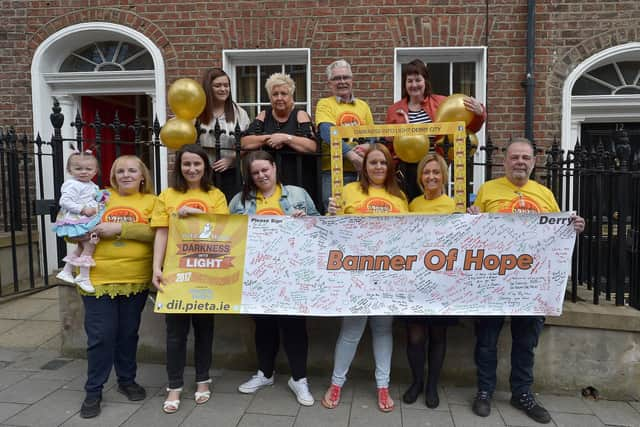
The impact stretches far beyond the individual. Children grow up in unstable homes. Schools manage behavioural and emotional fallout. Health services are stretched. Communities lose their sense of safety and hope. Addiction does not just destroy individuals — it weakens the very fabric of society.
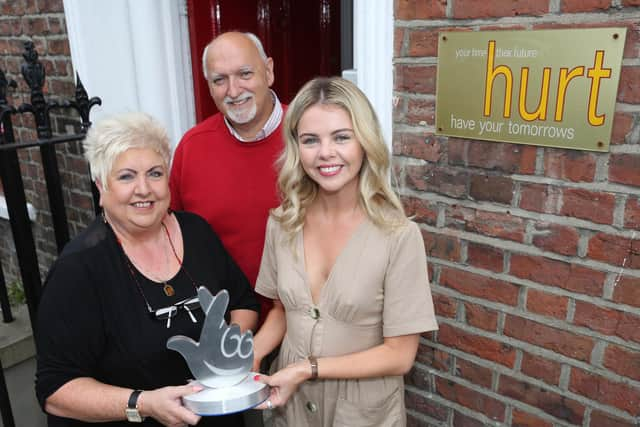
What makes this even harder to accept is this: For 24 years, HURT has failed to receive sustainable government funding. We have survived through determination, fundraising, community goodwill and sheer refusal to give up — while the demand for our services has continued to rise. Our premises had to expand because the number of people needing support doubled. Families are crying out for help. Young people are presenting earlier, with more complex needs. Yet frontline community services remain underfunded, overstretched and constantly fighting for survival.
People are dying. Families are breaking. Communities are suffering. And still we are expected to cope without adequate support. Our community deserves better than short-term fixes, pilot schemes and sympathetic words with no delivery behind them. We need long-term investment in treatment, family support, youth prevention, education and recovery services. We need coordinated leadership across health, justice, education and communities. We need policies that address poverty, trauma, mental health and social exclusion — the conditions that allow addiction to take root.
This is not about politics. This is about lives.
I buried my son because addiction was allowed to destroy him. I now work every day to prevent another parent standing where I stood. But charities, volunteers and grieving families cannot carry this crisis alone. Compassion must be matched with commitment. Responsibility must be matched with funding. Promises must become action.
HURT will continue to stand with every family that walks through our doors. We will continue to fight for those who feel forgotten. But we should not have to do this unsupported while our community pays the price. We also need support from our community that we have been support for the last 24 years, So again, to those in power: How many more sons and daughters must we lose before meaningful action is taken?