
Irish customs authority says non-EU goods routed via Northern Ireland in bid to avoid new customs charges can be seized
The Customs authorities in Ireland have said that any goods bought from outside the EU and delivered Northern Ireland, with the intention of them then being brought into the Republic of Ireland, ‘for the purposes of avoiding the correct customs procedures,’ can be detained and seized.
New changes to Customs rules for goods valued at €150 or less purchased from outside the European Union (EU), including Great Britain, will come into force across the EU, including the Republic of Ireland, from July 1.
Currently, there is no Customs Duty on eCommerce packages entering the EU where the goods (excluding delivery charges etc.) are valued at €150 or less.
However, from July 1, a new Customs Duty of €3 for each item in a parcel will apply to goods bought online from non-EU countries. Identical items – for example, two of the same pens - will be considered one item and there will be a €3 Customs Duty charge, plus VAT, due.
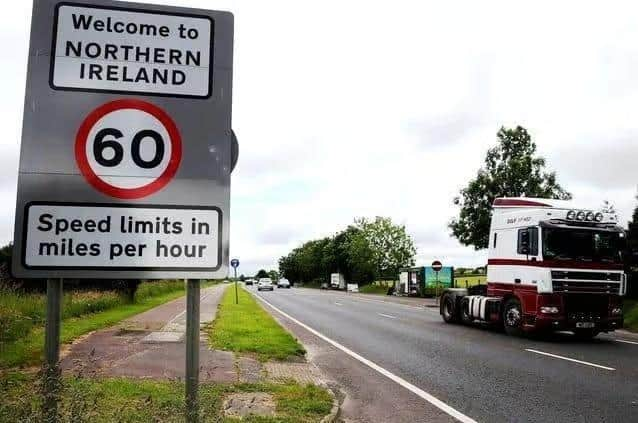

As Northern Ireland is not subject to the new customs duty, the Journal contacted Customs and Revenue to clarify if goods purchased from non-EU countries by someone from the Republic of Ireland, which are delivered to a Northern Ireland address and then taken over the border to the ROI, would be subject to enforcement.
For example, this could include a person from Donegal purchasing from a site in China, but having the goods delivered to an address in Derry, with the intention of then bringing those goods back into Donegal.
A spokesperson said this is not permitted and Customs in both Ireland and the UK ‘will use their available powers to tackle such non-compliance and both authorities work closely together.’
They said: “Importing goods from outside the EU to Ireland via Northern Ireland for the purposes of avoiding the correct customs procedures is not permitted and the UK Border Force can seize, detain, or inspect goods moving from GB to NI that are destined for an individual in Ireland.
"These checks are risk-based and intelligence-led to prevent commercial traders from exploiting consumer parcel routes as a method to move items into the EU Single Market. In addition, if the goods are in Ireland and were illegally imported, Revenue can also detain the goods pending further investigations and the goods may ultimately be seized.
“The Customs authorities in Ireland and in the UK take any non-compliance around the movement of goods very seriously and will use their available powers to tackle such non-compliance and both authorities work closely together.”
The Journal also queried regarding goods from UK companies, who have a base in Northern Ireland and whether these would also be subject of enforcement.
The spokesperson said those entering NI from the UK under the UK Carrier Scheme (UKC) will not be required to pay duties, but those moving outside of the UKC are treated as standard international imports.
"The UK Carrier Scheme (UKC) is designed to streamline parcel shipping between Great Britain (GB) and Northern Ireland (NI).
"The Scheme allows authorised postal operators and express couriers to move consumer parcels without full international customs declarations, tariffs, or physical checks. In exchange, carriers must comply with strict data-sharing and operational requirements. To ensure ongoing compliance, parcel operators must adhere to specific authorisation criteria and data collection mandates.
"As a result, goods entering NI from GB, under the UKC will not be required to pay duties as a result of the removal of the EU customs de minimis. This aspect was discussed on 26 February 2026 under House of Lords questions."
They continued: “ Parcels moved outside of an authorised UK Carrier Scheme (UKC) are treated as standard international imports. They require full customs formalities to be completed and would be liable for the fixed €3 customs duty charge from the 1 July 2026 which will be collected by UK authorities.
“Under the Windsor Framework, there are no Customs declarations, tariffs, Customs checks or controls on the trade in goods between Ireland, Northern Ireland and the EU. Therefore, there is no impact on all-island trade as a result of the removal of the €150 Customs Duty de minimis threshold or the introduction of the fixed €3 customs duty.”
Revenue has said that consumers from the Republic of Ireland ordering goods from non-EU countries, including Great Britain, will pay the €3 Customs Duty per item in one of two ways, depending on the terms and conditions of the business they are buying from:
"Charged at checkout: Some websites will be set up to collect the duty at the point of sale. In this case, the €3 duty will be shown to you and will indicate that the total price you pay at checkout will be the final price, with no extra charges on delivery.
“Charged on delivery: Other websites may not collect the duty at checkout. If this is the case, the delivery company (for example, your postal service or courier) will require you to pay the €3 duty per item before your goods can be delivered.”
Revenue urged shoppers to, ‘before completing a purchase, check the website’s terms and conditions to understand how the business selling the goods apply Customs charges.’
The Customs Duty is also non-refundable and VAT charges will vary by website.
There is no Customs Duty if your goods are based in Ireland or another EU country at the time the goods are ordered.
For further information, see www.revenue.ie
For information on goods entering NI from GB, see the House of Lords questions at hansard.parliament.uk