
‘Johnny Rotten’ chats the Sex Pistols, PiL, music, life and his Derry connection
“I’ve got a brother outside Londonderry. I think they run a caravan site at the moment.”
It’s not necessarily the answer to expect from the enfant terrible of punk when he’s asked if he knows the city.
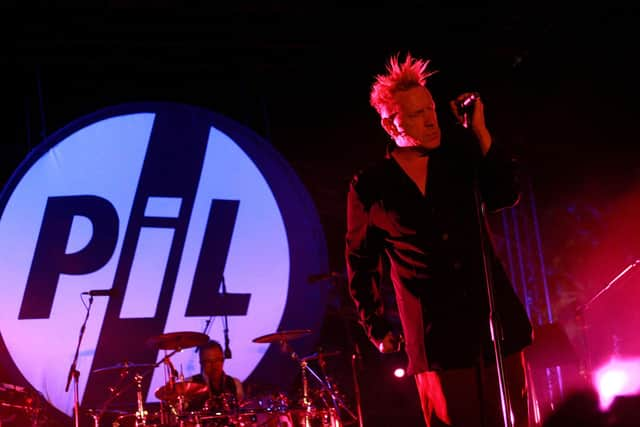
“He keeps asking me to go out there and visit. I played in Londonderry with PiL [Public Image Limited]. That was a very, very great gig, a good meeting of minds.
“You hear all the stories and all the fears and phobias of not being able to get gigs in Ireland for so long, both North and South, because promoters just wouldn’t respond properly and that kind of changed the atmosphere totally.
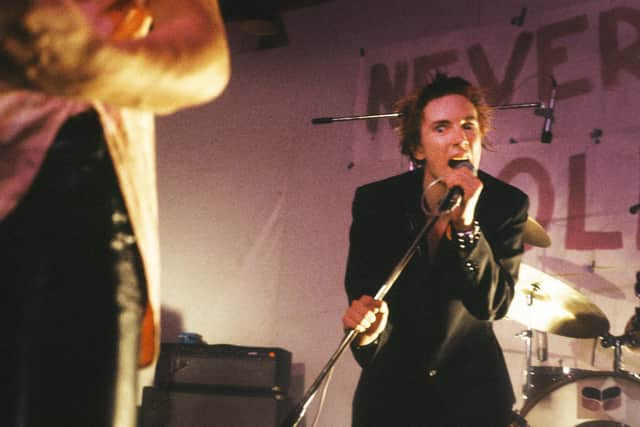

“This is John. I ain’t playing to no f**king religion. Let’s get that straight. I’m one of the folk.”
The face that launched a thousand bands in the 1970s is speaking ahead of a visit to the city this weekend.
John Lydon a.k.a ‘Johnny Rotten’ is bringing his ‘I Could Be Wrong, I Could Be Right’ spoken word tour to the Millennium Forum on Sunday. PiL recently played Belfast alongside Stiff Little Fingers, Sham 69, Terri Hooley and Derry’s own Cherym. With over 90 dates between May and November he must be in decent nick?
“Yeah, of course I am. I view myself as only 69 years young.
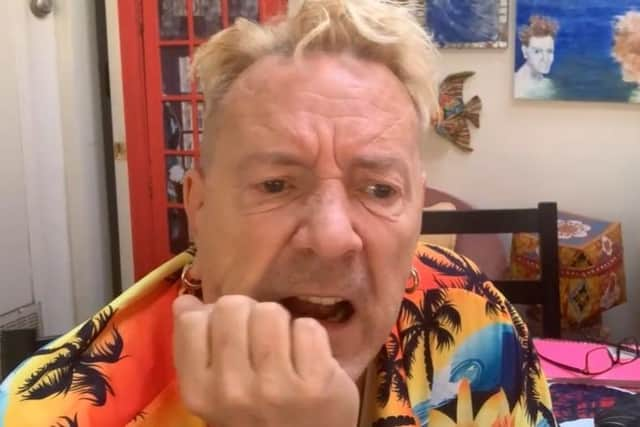
“If your body is telling you not to do it then you don’t do it but mentally and physically I’m well up there and well f**king hard. So, you know, by all means, ‘go forth and multiply, Johnny’.”
It’s been a difficult two years. He recently marked his late wife Nora Forster’s second anniversary. She died on April 6, 2023 having developed Alzheimer’s years earlier. The grief is raw but, he avers, he can’t ‘wallow in past tragedies’ forever.
“I felt Nora just talking to me saying ‘get the f**k off your arses’ and, bingo, I now carry her with me in my head for the rest of my life and I’m really happy that I can do that. I was her full-time carer because we were that close. She was my best friend, you know.”
During her final years Lydon wrote the sonic love letter ‘Hawaii’ with its poignant lines, ‘all journeys end, some begin again, we’re here, you and me’.
“It took three years really to coin the words properly and along came Irish television, you know, ‘would you like to play it on TV?’ Jumped at it.
“Had no prospects or career consideration for the Eurovision Song Contest. Who does in their right mind? But the opportunity to record that and bring it back to her and show her was an amazing gift.”
Lydon will be forever associated with the Sex Pistols who burned into popular consciousness and defined punk in an exhilarating three years from 1975 to 1978.
“As a band we had no real prospects of any of this catching on. It became overwhelming. I’ve got to say too that the negativity of the media actually played into our hands. They did a marvellous hatchet job on us and it just guaranteed intrigue and interest.”
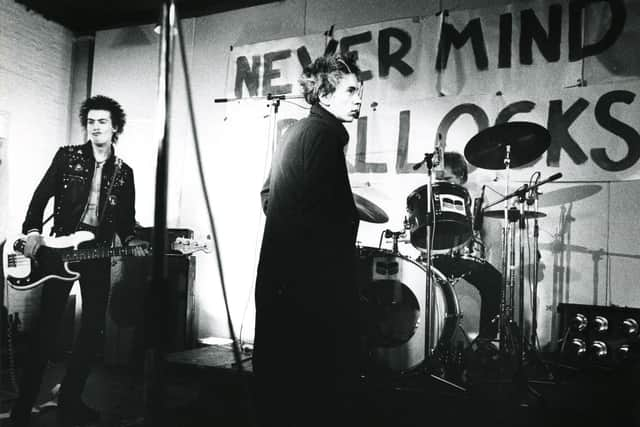
His erstwhile bandmates had been in the midst of a 50th anniversary tour with Frank Carter standing in as ‘Rotten’ until this week they announced they were cancelling a string of forthcoming US dates due to guitarist Steve Jones suffering a broken wrist. Has it felt a bit like Hamlet without the prince?
“It’s basically karaoke with different singers trying to imitate ‘Johnny Rotten’s’ lifestyle. You are never going to get it right. It was Billy Idol last year. It’s poor old Frank this year. And it won’t be me next year.”
Looking back to the inchoate punk movement Lydon says, “I was oblivious of trying to be or sound like anybody else. I was taking everything from personal experience and still am to this day.”
Ever the musical magpie, a disparate stew of influences went into his formation as an artist.
“In my early childhood there was a lot of ska, a lot of traditional Irish, a lot of pop music.
“Dusty Springfield springs into my mind...there was a big Cypriot culture, a lot of Greek and a lot of Turks, and a lot of British pop. I loved the ‘Mod’ movement but even before that I loved rock n’ roll.”
His mother Eileen (née Barry), and John senior were immigrants from Garryvoe in East Cork and Tuam in Galway respectively. Inevitably there were Dubliners and Clancy Brothers records in their collection.
“Everything. But they would be mixed in with The Kinks. One of my all-time favourite records, ‘You Really Got Me.’ It would be a free-for all.”
Another record that had a profound and lasting impact was Captain Beefheart’s counterculture classic, ‘Trout Mask Replica’.
“I can’t listen without dying with laughter and feeling the joy in what they are doing. They are quite literally taking classic themes and mucking them up…it’s a total surprise every time you put it on. That’s the most perfect album you could ever want.”
After the year zero of punk that changed music forever, by the late 1970s ‘there was too much corporate in many of the bands and it was very quickly turning into a very, very traditional punk outfit look which annoyed the hell out of me’.
He left the Sex Pistols and formed PiL with friends Keith Levene (ex-Clash), Jah Wobble (John Wardle) and Jim Walker.
“It was quite natural for me to want to bring in all these other elements and luckily when I formed PiL I found a bunch of pretty good friends...The ‘Pistols did what they did and that was great but ‘next level, please’.”
With 11 studio albums PiL have left a considerable mark with cult classics such as ‘Death Disco’, ‘Rise’ and ‘This Is Not a Love Song’. But is their output overshadowed by the ‘Pistols?
“There are those negatives out there who will just keep digging into my initial first step on the ladder, let’s put it that way, and they just can’t seem to think beyond that…that’s too bad for them.”
‘Rise’ – one of PiL’s best known tracks – drew directly from Lydon’s Irish background, deriving from the seanfhocal – ‘go n-éirí an bóthar leat’.
“Irish folk use it all the time. Time to leave the pub, ‘may the road rise with you’. That’s part of growing up. That’s everyday language. I got it from my parents and frequenting the pubs at a very early age too.”
His parents were both gaelgeoirí ach níl gaeilge aige.
“Both mum and dad, who spoke different ‘Gaelics’, would not teach me one word.”
This was born, he says, of their negative experiences of the Ireland of the 1940s and 1950s. They left due to ‘poverty and the Catholic Church being so overwhelmingly oppressive’.
“Both of them grew up as ‘Gaelic’ speakers, obviously from entirely different worlds, Galway and Cork. But they had to learn English very quick because that is what the school teachers insisted on and it was beaten into them and the sheer cruelty of it. The little bits and snippets they’d tell me of their childhood, it was frightening.”
Though an Irish citizen he had an ambivalent relationship with this aspect of his identity when younger.
“You get called a ‘Paddy’ in England and you get called English in Ireland and I live in America and I can switch between all three at will and I find it’s all the same.”
Growing up in the lee of the old Highbury he became internationalist in outlook.
“There was a lot of Jamaicans, there were actually Germans and Italians who came over after WW2...it was very, varied, and, of course, there was lots of English, we just called ourselves ‘Arsenal-land’ because that was the football ground around the corner and that solved all those issues...poverty can be a uniting thing.”
He has, however, been ‘embedding myself back into Irish culture’ and maintains his connections. Sadly, he lost a dear uncle, John Barry, in February.
“He was a local legend and my favourite uncle ever. I loved that man. My mum taught me how to read and write when I was very young, before school. He paid attention to that and bought me my first Parker pen, between five and six. I’ve never forgotten it. Absolutely. Because I’m a constant writer.”
Thus, in the early 1960s, were planted seeds that would bear unexpected fruit some 15 years later.
“I’ve always wanted to be a writer. I’ve been an avid reader all my life. I love to learn. I’ve got a curious nature...all of that played really excellently into being the front man and the songwriter of the Sex Pistols.”
Local contemporaries, of course, were Derry’s legendary ‘Undertones, the best punk-pop band of all-time.
“Feargal [Sharkey] turned up at one of my [recent] talk shows. It was f**king wonderful to say hello to him.”
Did he like their stuff?
“Some of it. His voice kind of irritated me at that time. It was a little too perfect really. His voice for me at that time. I wasn’t ready for it. But he’s a wonderful human being.”
When it’s pointed out Feargal was a champion singer at the Derry Feis, he observes: “That might be my foible, that he sounded well-trained. I couldn’t focus on the content I was just irritated by the sheer beauty of it.”
Beyond his output with the Sex Pistols and PiL, he collaborated with Neil Barnes and Paul Daley on ‘Open Up’, the break-out hit from Leftfield’s seminal Leftism album.
“Dance is in my background from Tamla to disco. These are all things that I grew up with as much as anything else. They are great lads and they are experimenting off, yes, in the world of dance, but they have got other ideas floating in. There are alien textures.”
The spoken word shows last year were cathartic as he navigated his grief and he is looking forward to the dates in Derry and Donegal.
“Purely, I’ll go up and talk about what comes into my mind and share stories with people. It was amazing and the audience gave me so much empathy.”
Back in the Sex Pistols days there seemed an intensity that set Lydon apart. It’s a focus that is still there.
“Because I mean it,” he says. “I absolutely mean it. Every single word has been well thought and well placed. It absolutely summarises my emotions at that exact period of time when I wrote it.…It’s also because I’ve got really bad eyesight from meningitis when I was young. It put me in a coma and took four years to get my memories back but my eyesight never recovered fully so for me it takes a long time to focus and that gets misinterpreted into the ‘Rotten’ stare.”
John Lydon is at the Millennium Forum on September 7.