
New report on exodus of PUL community from Derry’s Westbank calls for political and civic recognition of displacement
A new report on the ‘Exodus’ has suggested political and civic recognition should be made of the migration of thousands of members of the Protestant, Unionist and Loyalist community from the West Bank from the early 1970s.
‘Where Have All the Prods Gone? Conflict and Displacement: The PUL Exodus and Its Impact in Londonderry’ called for acknowledgement that the phenomenon was an integral part of the recent history of the city.
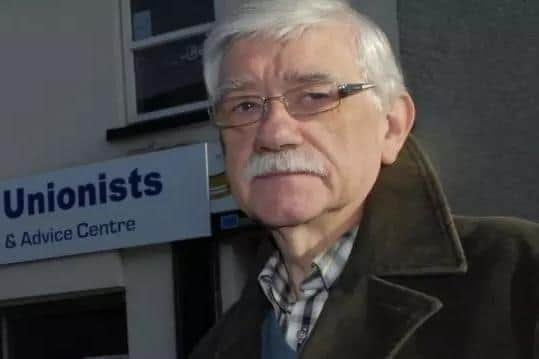
The report – authored by the well-known unionist commentator Terry Wright – examines in forensic detail the large scale movement of Protestants, Unionists and Loyalists from the cityside of Derry after the onset of the Troubles
Mr. Wright cites State files which estimated the PUL community declined from 18,000 to 3,000 between 1971 and 1991.

The study examines the impact of the displacement ‘on PUL psychology, community development and good relations since’ and points to the increased residential segregation that ensued in its wake and which was ‘reflected in falling church attendance, declining school enrolment, the closure or relocation of churches and schools, changing shopping and employment patterns and the weakening of long-established neighbourhood relationships’.
Testimony was gathered from 116 participants, including 53 individual PUL interviews, 21 Catholic, Nationalist and Republican (CNR) interviews and eight focus groups—seven PUL and one CNR.
"The evidence demonstrates that there was no single event or cause behind the Exodus. Rather, it was a prolonged and incremental movement shaped by interconnected ‘push and pull’ factors.
"These included, during the periods when violence was at its most intense, direct threats and intimidation, sectarian physical and verbal abuse, attacks on homes, churches, schools and mainly Protestant businesses, the targeting and killing of members of the security forces and local businesspeople, the impact of bombings and shootings, deteriorating community security and a growing fear of what might happen next.

"Housing redevelopment, poor housing conditions, employment, education and the availability of new homes on the Waterside and in outlying areas also influenced movement,” Mr. Wright attests.
The report concludes that the latter factors ‘cannot be wholly separated from the conflict environment, which deepened feelings of vulnerability and made many families believe that leaving was their safest or only realistic option’.
The research notes that many CNR participants remembered ‘good local relationships with Protestant neighbours and did not welcome the intimidation or violence that contributed to their departure’.
"Some felt powerless to intervene, while others had little awareness at the time of the scale or long-term impact of the movement because their communities were also experiencing violence, discrimination, internment, Bloody Sunday and other forms of trauma,” the report states.
Mr. Wright argues that the exodus has not received sufficient civic or public acknowledgement.
"For many PUL participants, denial or minimisation of the experience has compounded feelings of trauma, marginalisation and unequal recognition when compared with other legacy experiences of the Troubles. At the same time, the research identifies a willingness within both PUL and CNR communities to acknowledge that the displacement occurred, that it was regrettable and that it resulted from complex but identifiable circumstances and factors,” he states.
The new research is the fruit of a successful application for PEACEPLUS (2021-2027) funding by the North- West Cultural Partnership (NWCP), which partnered with the Siege Museum Ltd, Cathedral Youth Club and Blue Eagle Productions to launch the Exodus Project in June 2025.
The new research document was commissioned as part of the wider project and completed by Wright Thinking NI, working with the partnership Steering Group and Dr Niall Gilmartin, (Ulster University), author, with Brendan Ciarán, (Trinity College, Dublin) of ‘Refugees and Force Displacement in Northern Ireland’s Troubles; Untold Journeys’
In a foreword NWCP Chief Executive Brian Dougherty reflects: “From as far back as I can remember, my experience and that of my friends, was largely one of realisation that we lived in an overtly nationalist city, hostile to those of the wrong uniform or to those with differing cultural or political beliefs.
"This regularly manifested itself in verbal and physical violence simply, for example, by going to the ‘wrong’ school and naturally curtailed our movements growing up - not to mention our attitude and political thinking since. I wasn’t a direct product of the Exodus, in the sense that I, or any of my family were forced from anywhere – but it I was acutely aware of its impact and how it was engrained in the psyche of the PUL community – one of a sense of marginalisation and peripherality that wasn’t only geographic.”
Mr. Dougherty calls for greater acknowledgement of what happened at the civic level, one of the key recommendations of the report.
"It is essential that these reflections are disseminated, and it is essential that the Exodus is recognised by political and civic society, by policy and decision-makers, by our schools, Universities and museums as integral to the historical narrative of the city. Hopefully this report will contribute to this,” he offers.
In his conclusion Mr. Wright observes: “There is a small number who feel that it is already too late for acknowledgment of what was visited upon the PUL community. A sizeable majority however takes the view that it will not change the past but may make for a better future.
"They see a role for locally elected civic representatives in endorsing the necessity for political and civic recognition; to carry the task forward in consultation with different sectors and civic forums which have a genuine interest in discussing and pursuing effective strategies sensitively to limit any risk of re-traumatisation, creatively and meaningfully.
“CNR interviewees who display reticence when considering acknowledgment emphasise that not all of the CNR community was involved in actions which led to neighbours moving and cannot be held responsible for those who were. However, there is openness to discussion as to how this can be delivered at civic level.”