
Strabane Astronomer Annie Maunder - Our Space 98
Annie Russell was born in 1868, daughter of Rev William and Hester Russell of Strabane Presbyterian Church.
Educated at home, then in Belfast, at Cambridge University she got honours in Mathematics. But women then could not receive degrees.
In 1891 she joined Greenwich Royal Observatory under Edward Maunder, photographing the sun and analysing the photos. She was refused a Royal Astronomical Society fellowship because women were not admitted.
In 1895 she married Edward Maunder - and as a married woman, civil service regulations obliged Annie to resign her post.
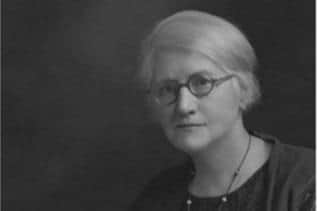

Joining the new British Astronomical Association, she published articles widely.
Obligated to remain an amateur astronomer, she continued important research. She accompanied her husband to photograph solar eclipses with her own-design camera in Norway (1896), India (1898), Algiers (1900), and Mauritius (1901).
In 1904 the couple developed a ground-breaking chart known as the ‘Butterfly Diagram’ mapping sunspot movements over the sun's 11-year cycle.
So when you look at our November sky, remember Strabane’s Annie Russell and how she helped us understand the sun and our space in space.
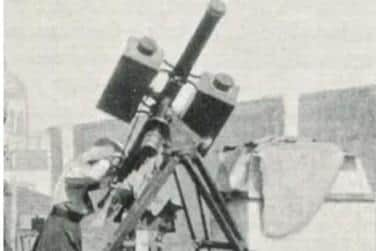
She is commemorated in: -The 1890s ‘Maunder Minimum’ 17th-18th century period of solar quiet she identified - The 1904 Maunder Butterfly diagram -The 1970 Maunder Crater on the moon - The 1973 Maunder Crater on Mars - The 2018 Blue Plaque at her Strabane childhood home - The 2018 Royal Observatory’s Annie Maunder Astrographic Telescope - The 2022 Blue Plaque at the family home in Lewisham - The 2022 NuSat 23 (“Annie”) micro-satellite - The 2023 Asteroid (50726) Anniemaunder.