
'The memories don't fade': Paul Mc Cauley's father speaks 20 years on from murderous sectarian attack
The father of Paul Mc Cauley has spoken of how there is never a day passes when he doesn't think about his son as the 20th anniversary of the savage sectarian attack which left him in a vegetative state and ultimately claimed his life approaches, writes Brendan McDaid.
July 16th is a date forever etched on the mind of Jim Mc Cauley, his family and all those who knew Paul.
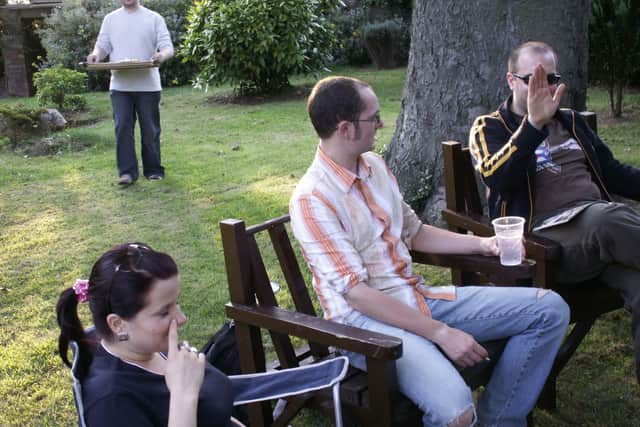
For it was in the early hours of that day 20 years ago in 2006, while Paul and some friends were attending a barbecue in a field adjacent to their friend's home in the Waterside, that a Loyalist mob descended on them and carried out a brutal attack, leaving Paul for dead and some of his friends with severe injuries.
The unprovoked and deadly UDA assault sparked outrage across the city and beyond, but the devastation felt by Paul's family was compounded by a culture of silence in some areas of the city where his killers and others were being shielded by prominent people and paramilitaries.
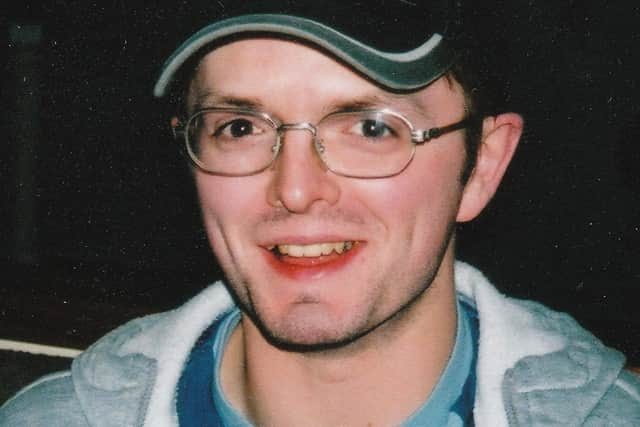

The attack changed life utterly for Paul's family, especially his parents who over the course of the next decade tended to Paul's medical needs and advocated for him, while also working on the legal side of the case towards finding and bringing to justice those who had tried to murder him. There was also the media appeals, and all while trying to deal with the trauma of what had happened to their son.
Paul passed away on June 6, 2015, nine years on from the horrific attack.
Of great sadness to Jim is that his wife, Paul's devoted mother Cathy didn't live to see the outcome of the trial of his attacker, having died from cancer 14 months after her beloved son's death.
"The memories don't fade," Jim says as he reflects on the attack on his son two decades on.
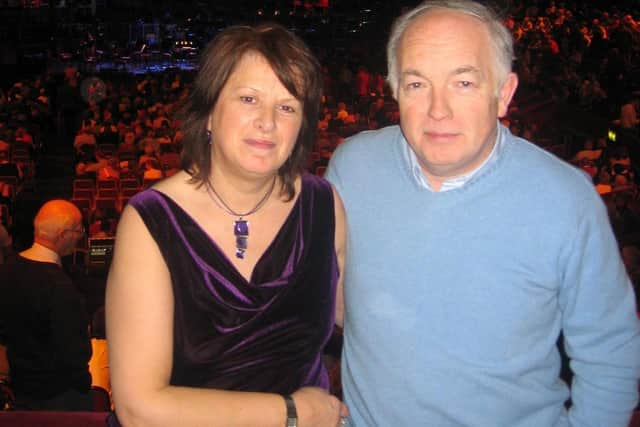
"When it comes around to regular anniversaries it increases the focus on the loss. It is hard to believe it is 20 years because there is never a day passes without thinking about him. And I think as you get older and you'd like more of your family around, your eldest son is no longer here.
"The milestones along the way were our 40th wedding anniversary, other family events and we went without Paul. He was always there in conversation."
Following the attack life for Paul's parents changed and changed utterly.
"There were a lot of changes. I often refer to them as the Paul years, the nine years that he was in a vegetative state. Cathy and I had taken responsibility to spend most of the time with Paul and the rest of the family would support us as we needed. They had their lives and careers to go on with and we felt the attack on Paul shouldn't cut across that. Cathy and I were both semi retired so we were in a reasonable position to spend quite a bit of time with Paul.
"We spent a lot of time with Paul. He had gone from Altnagelvin to the Royal to Musgrave Park and then the Regional Brain Injury Unit and then back to Altnagelvin, Spruce House. It was the fact that he was on his own with no communication, and we understood that staff couldn't spend all day with him, so Cathy and I worked a general rota - Cathy would stay with Paul in the afternoons and I would stay with him at night. It got to the stage that we joked we didn't speak to each other. Basically, we rubbed shoulders in the hall.
"It takes its toll because you have to sacrifice a certain amount, but like anybody else in that situation the focus is on the patient and sadly in our case the patient was in a horrendous state.
"Cathy had a nursing background and looked after the medical end and I looked after the legal end. Initially the media output was mine but Cathy gained in confidence and contributed to the Spotlight documentaries and an RTE interview that the Pat Finucane Centre had organised in Dublin, O'Connell Street, 'In Our Shoes' which got good attention there. That was quite emotive not only to see Paul's shoes in the midst of so many others killed during the Troubles."
One thing that hurt deeply and took a toll, Jim Mc Cauley said, was that there was always hope. "And we worked towards that hope, even checking the coma scale - there were clear simple steps that would confirm Paul's advancement towards improvement but we never got beyond stage 1 on the coma scale. Despite whatever we tried, despite efforts at times from Paul, they were never consistent enough to graduate or show improvement on the scale. Strangely for the nine years we lived in hope. And there was also a feeling of guilt - should we wish Paul to be in that condition if there is no improvement?
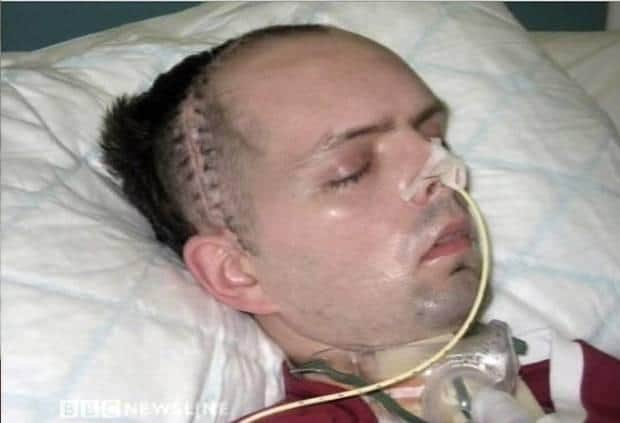
"We felt at times he knew we were there, and on a couple of times when his daughter was there we saw a tear run down his cheek. His daughter was seven years old when he was attacked."
There was no manual, nowhere to turn really for advice for Paul's parents. "This was one of the frustrations because when you sought advice the response was always the same: all brain injuries are different," Jim said. "There is no guidance. There's no set pattern. There was guidance on his care and doing exercises with him but there was no prognosis of where he might be."
Jim Mc Cauley has many precious memories of his son before the attack and there was, and is, a lot to be proud of.
"Paul was one of the earlier members of Foyle Search and Rescue and his Foyle Search and Rescue jacket was one of the items we placed in his coffin at the funeral, along with a photograph of his daughter and a fiction book, Lord of the Rings. That was the three items placed in his coffin. He was really into his Sci-Fi. He was also into astronomy and his computers and music, he would have attended a couple of music concerts, twice at U2. He had a more eclectic choice than I understood," Jim recalls with a smile.
"I used to read Sci-Fi to him, it wasn't my genre, Isaac Asimov, Arthur C Clarke and a couple of others... we were trying to get short stories because we thought he might be able to retain them or make sense of them, you just didn't know where he was.
"He had got a post on the Civil Service and had been working in Waterside House and then had moved to the outbuildings of Stormont and he settled in the Department of Finance in James House in the Gasworks site in Belfast. He had just taken out a flat in Belfast, and that was his first move away. It was a new chapter and he would come down at the weekends to visit his daughter and that is how he was at the barbecue.
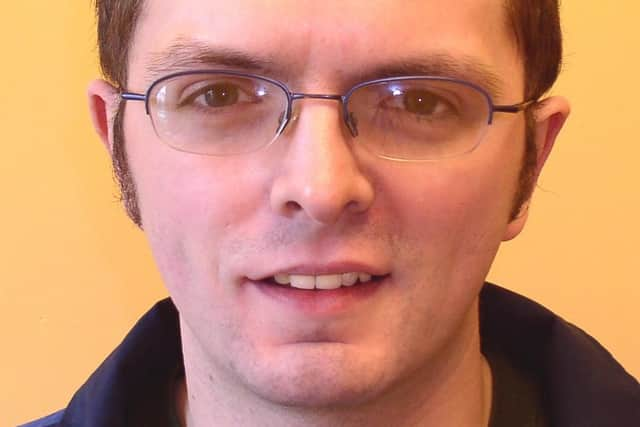
"There was calmness about him. He was in the middle of his Open University Science Degree. Before he got the flat in Belfast he would be travelling up and down to Belfast days and he would park in Altnagelvin for free and take his university notes and do his studying on the bus.
"At the time of the attack he was exactly half my age. He was 29 I was 58."
Friends, family and even the police officers and detectives who have worked on or continue to work on his case have never forgotten Paul.
"It's amazing the anniversaries are remembered by a number of the police officers involved, which initially surprised me, and his friends in the Civil Service, so his memory is not just with the family but also those he worked with and a number of the police officers. It was obviously a significant case for police."
Reflecting on the police investigation, Jim said police have had a very difficult journey because of the silence in the communities "and that silence was enforced according to the police".
"Police on several occasions made the point that that didn't stop somebody from lifting the phone and ringing the confidential phone number (0800 555111) to give the information because they, like the family, knew there was a considerable number of people in both communities - Irish Street and the Fountain - well aware of what happened on that night and who was informed.
"There was a substantial achievement by the police eventually in bringing two people to trial for the murder of Paul. We know that there is two other people still retaining police interest. And in the case of Matthew Gillon the murder charge remains on file.
"Last year on the 10th anniversary of his death I had an unexpected visit from one of the police officers who I recognised and who was involved in the original inquiry, checking details with me. I assumed that there was still an interest in the case, whether somebody had come to their attention in relation to the original crime."
The Troubles years are often defined as a 30 years definitive period in the latter half of the 20th century. What happened to Paul and many others shows however demonstrates how the Troubles did not end with the ceasefires, agreements and decommissioning in the 1990s.
"There wasn't been a clean guillotine cut to it," Mr Mc Cauley said. "We still have the sectarian overflow from it. That is part of it, and community support for the violence within them. The paramilitary presence is obviously here. And those who attacked Paul were clearly labelled as being UDA by both the police and the Independent Monitoring Commission.
"It was always a defined paramilitary attack. It was never reflective of the background religion. When Paul was attacked, there had been a number of attacks in and around the Fountain area. and police had highlighted this as well when they making an appeal in the immediate aftermath of the attack on Paul. These attacks lessened substantially in the months following Paul's attack but then they started to creep up and have never really faded. Lessened, but not faded."
Indeed Mr Mc Cauley points out how the Derry Journal in July 2006 - the month Paul was attacked- was highlighting a catalogue of sectarian assaults and attacks by Loyalist gangs in the city.
There were serious gang attacks at Wapping Lane, Foyle Street, Maggie Murphy's Lane in the Waterside, John Street / Bayview Terrace while a Polish national was stabbed in the leg and warned to move out of the Fountain Estate after answering a knock at his front door and being confronted by a gang. In yet another incident a man had his ear partially severed and sustained head injuries when attacked by a group of men wielding a golf club on Ferryquay Street with the culprits running off into the Fountain Estate.
There were numerous other serious attacks throughout the previous month on both sides of the river.
It would be December 2018 before the sentencing of the two men convicted in relation to Paul's murder concluded. Piper John McClements (formerly known as Daryl John Proctor) from The Fountain was ordered to serve a minimum term of three years in jail for murder. He had earlier been sentenced to 12 years and served six of those in custody for grevious bodily harm in relation to the attack. Paul's DNA was found on his shoes.
Matthew Brian Gillon, of Bond Street, was sentenced to 10 years, five of those in prison, for manslaughter. He was also convicted of assaults on two of Paul's friends who had also attended the barbecue that summer's night.
The second C2 investigation spearheaded by DCI Michael Harvey concluded there was four people who attacked Paul.
Both of those convicted in relation to the murder have since been released on license, Proctor for life and Gillon for five years. The cases against two others identified as suspects in the attack on Paul did not proceed for different reasons.
In terms of the investigation into Paul's murder, the files remain open.
While Paul was still alive, Mr Mc Cauley began researching and monitoring sentencing for perpetrators of attacks in which someone was on the ground and had their head kicked, jumped or stamped on, as happened to Paul. That research revealed a shocking pattern of extremely lenient sentences compared with others such as bladed attacks were only very minor injuries were sustained. Mr Mc Cauley raised the matter in person back in 2011 in Stormont during a meeting with then Justice Minister David Ford.
"I had given him several cases where attacks to the head were exceptionally leniently dealt with. Sentencing was also exceptionally light compared to Britain or the Republic My argument was attacks to the head, particularly with the feet, should be on par with attacks with a knife. He responded and confirmed he had discussed it at a legal meeting to rationalise and get transparency."
Mr Mc Cauley feels this sentencing issue is one which needs judicial review and the issuing of revised sentencing guidelines.
Mr Mc Cauley recalls how one of the two big hurts that confirmed his son, his eldest boy, wasn't returning was clearing out the flat in Belfast which he had just set up.
"That was quite painful. And then later on selling his car. Those were two really heartbreaking times.
"We kept his Foyle Search Rescue jumper, his sci-fi books are still in his room, which is relatively unchanged. There are gifts and cards that have a special memory because Paul bought them to either myself or Cathy. There are things you don't walk from."
Police have urged those with information to break their silence.
Detective Superintendent Millar said: “Since the brutal attack on Paul, coming up on 20 years ago on 16 July, it's unimaginable to think of what his family, his friends, and all those who knew and loved him, have had to live with.
“More than a decade has passed since Paul’s death.
“With the passage of time, and with allegiances and loyalties possibly having changed, we urge anyone with any information about what was such a vicious attack to call police.
"It is never too late to do the right thing, and you can still come forward and speak to police.
"It could be something you may have held onto over the years for whatever reason, or a piece of information you now remember.
"It could be that now you feel the time is right to come forward and tell police.
"Even the smallest piece of information could be significant."
You can call police on 101.
Information can also be given, with 100% anonymity, to the independent charity Crimestoppers. Calls to Crimestoppers are never recorded, there’s no caller line display or 1471 facility, and computer IP addresses can never be traced.
Contact Crimestoppers on 0800 555 111 or online at www.crimestoppers-uk.org