
WHSCT officials say CCTV is not a ‘silver bullet’ and ‘simply unacceptable’ in some environments
Senior officials at the Western Trust have said CCTV should not be overly relied upon to protect adults at risk and it would be ‘simply unacceptable’ in some care environments.
Stephen McLaughlin, assistant director of social work, learning development, governance and adult safeguarding, told MLAs the Trust believed CCTV was useful and recognised its importance to families and loved ones.
But he referred to potential privacy issues arising from its use in various circumstances.
"It is not a silver bullet, and it will bring challenges, including dignity and privacy issues. CCTV should not be overly relied on to protect adults at risk.
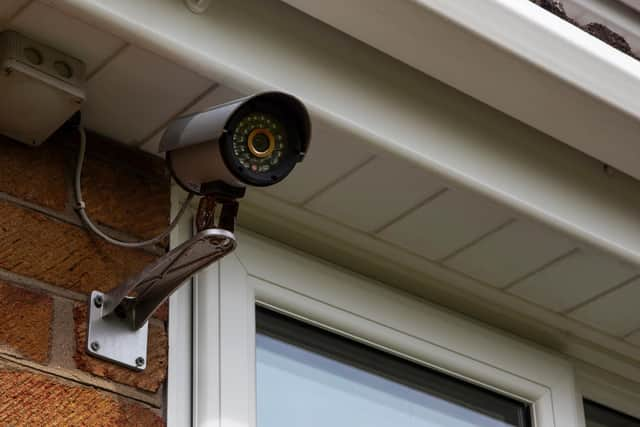

"Unfortunately, to date, it has been used more in order to prosecute after the harm has taken place. We need to work proactively with service providers to ensure that we have a culture of high-quality care in which harm is an exception that is reported and dealt with effectively and quickly,” said Mr. McLaughlin.
The WHSCT director was among a delegation who recently provided their views on the Assembly’s Adult Protection Bill at a briefing of the Health Committee.
“The oversight of quality of care by families, care managers and the regulator will be of greater value in protection than CCTV. CCTV is simply unacceptable in some environments, such as supported living arrangements where the adult service user is the tenant,” he said.
Gavin Hamilton, chief social work information officer at WHSCT, said he anticipated the deployment of CCTV will create challenges for staff.
"We already face recruitment difficulties in that sector. They are quite low-paid jobs. We do not want to create any more challenges in that arena.
"We anticipate that there will be challenges for staff when the CCTV is for them.
"We do not believe that CCTV is the thing that keeps people safe. We believe that our people keep people safe and that a safe culture keeps people safe. We do not believe that the focus on CCTV is all that helpful in those situations, and it will have an impact on our staff,” Mr. Hamilton told the committee.
The Trust are not opposed to CCTV as it can bring comfort to families and make people feel more comfortable in facilities, he said.
“Our worry is that it is seen as a silver bullet and a panacea and the thing that will keep people safe. We do not believe that CCTV should be the first thing that we look at to keep people safe,” he cautioned.
Mr. McLaughlin said the Trust recognised CCTV can provide protection for staff, observing: “If you have done nothing wrong, there is nothing to worry about. It is about balancing that against the rights, dignity and privacy of those who are being cared for. Yes, if you have done nothing wrong, it will not be on CCTV.”
The committee were warned that when people want to carry out abuse ‘they will find somewhere to abuse’.
"We are not expecting CCTV to be in private rooms such as a bedroom or bathroom, so whilst, on the one hand, there is a deterrent, on the other hand, if someone wants to abuse, there will be opportunities to continue to do that. There is something about the public perception and the narrative around CCTV. It is a balancing act,” said Mr. Hamilton.