
Young woman from Donegal forced to travel almost 2,000 miles to get endometriosis diagnosis after years of pain
A young woman from Donegal who had to travel nearly 2,000 miles to finally get treatment for endometriosis is among many women with the condition who feel they have been ‘ignored, dismissed and talked down’, a TD has claimed.
The woman had been experiencing symptoms of the extremely painful condition where cells similar to those in the lining of the womb grow elsewhere in the body since she was 15 years of age, Sinn Féin TD Pearse Doherty told the Dáil this week.
Raising her case Deputy Doherty said: “The neglect and failure need to end. Endometriosis affects so many women. Like others, I have attended meetings in different parts of the country. I have heard some harrowing stories.
"There is also a constant theme that no matter where it is in the country, these women feel they have been abandoned by the State, and they have.”
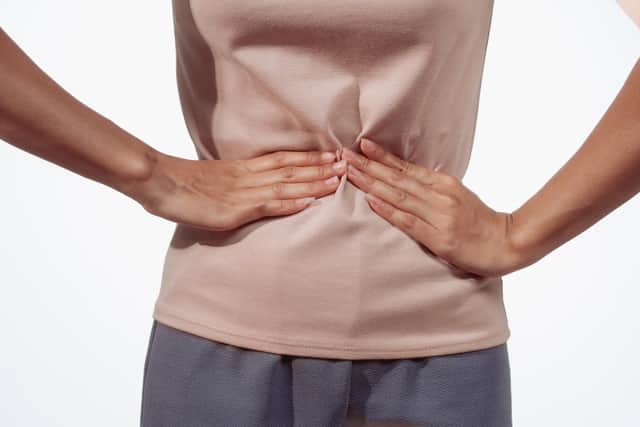

After years trying to get a diagnosis both publicly and privately whilst suffering chronic pain and desperate for help, the young woman was forced to travel to Eastern Europe to get the health care she needed.
“She spoke to other people with the same challenges and decided to travel to Romania in 2024, where she finally got the answers she deserved.
"A specialist MRI diagnosed her with endometriosis,” said Deputy Doherty.
The woman, he told the Dáil, had spent thousand of Euros on private treatment prior to receiving her diagnosis, which took nine years. She was also prescribed anti-depressants during that time, he said.
“After she got that diagnosis in Romania and after undergoing counselling due to the lasting effects of this journey on her, she had surgery in Greece where the endometriosis was removed from multiple sites and she was also diagnosed with adenomyosis.
"For a decade, that young woman suffered with chronic pelvic pain, chronic fatigue, underlying issues, bowel issues, back pain and countless other symptoms, and nobody believed her.
"That story is not just hers; it is that of far too many women across this State. This needs to be treated like the emergency it is. Too many times, women are being failed and not believed and have to travel abroad. It has to come to an end,” said the Donegal TD.
Deputy Doherty said there were many examples of woman who had been ‘failed by the system in this State’ and had to travel to Europe for diagnosis and treatment.
In relation to another woman who had to travel outside the State for private treatment, he said: “She got her diagnosis. She was told there were cysts on her ovaries. She cried but not because she needed emergency surgery or because she had cysts on her ovaries.
"She cried because, for the first time, somebody believed that she had endometriosis and there was a plan in place for her afterwards. This has to come to an end.
"I said at the start the neglect and failure have to end. We need to start listening and believing our sisters, mothers, aunties, nieces and daughters. The care they deserve has to be put in place.”
The Donegal TD was speaking in support of a Sinn Féin motion calling for improved endometriosis care and treatment.
Health Minister Jennifer Carroll MacNeill, responding to contributions from a variety of TDs, said: “It is wonderful to see so many different parties and so many different voices, male and female, articulate the female health experience.
"Every single person knows that it has been overlooked. Every single person knows that experience of telling a story and not being listened to or believed. I completely respect those experiences and I have no interest whatsoever in engaging in politics around something as important and serious as this.
"What I am interested in is service delivery and the quickest possible way of ameliorating, fixing and making good the sheer lack of service delivery for women's health that has gone on for so long.”
She pointed to ‘important advancements in the last five years’.
"There is an important programme in place now, which is a different way of listening to and respecting women. I cannot make up for previous experience but what I can say is that, as the first female Minister for Health for a long time, I have a very strong commitment to delivering services that are going to make a difference in people's lives,” she said.
She observed that endometriosis is one of the most common gynaecological conditions and expressed puzzlement as ‘how this was under-recognised for so long...when there are so many women presenting with such consistent symptoms’.
"Since 2021, we have invested over €5 million to expand specialist endometriosis services to provide treatment for women with moderate and complex endometriosis.
"There is an additional €2 million this year to continue to do that. So far, that investment has allowed us to recruit 24.6 whole-time equivalent staff, or 24 people and one part-time person.
"We have the funding. Specialist services are expanding further with the HSE recruitment process to recruit another 18.6 people, or 18 people and a part-time person, with the funding provided this year. We are more than halfway through that recruitment programme and there is no question about that. That is for some of the specialist services,” said the minister.
Endometriosis is found in areas around the womb, such as the ovaries, fallopian tubes and lining of the pelvis.
It also sometimes affects organs, such as the bladder and bowel. Rarely, endometriosis is found in areas outside the pelvis, such as in the chest.