
Anti-Poverty Strategy met with lukewarm response from some Derry campaigners
A new draft Anti-Poverty Strategy – the first in the North – published by the Communities Minister Gordon Lyons this week has received a lukewarm response from some Derry poverty campaigners and politicians.
Mr. Lyons said the draft document set out a long-term, deliverable cross-government approach to tackling poverty.
Speaking in the NI Assembly on Tuesday the Minister said: “When I took up office, I made it clear that tackling poverty is a key priority as part of my focus on improving lives and transforming communities.
“I am pleased to bring forward a new approach that has secured Executive backing and will deliver real change through joined-up working across government.

“The draft Anti-Poverty Strategy is designed to tackle the root causes of poverty as well as delivering a range of interventions to effectively support those people experiencing poverty and provide pathways out of poverty.
“I thank my Executive colleagues who have worked to develop a Strategy which can and will make a difference to people’s lives. The Strategy is the culmination of considerable hard work, collaboration and co-design.
"Ministers and officials across the Executive departments have worked together on the draft in a real spirit of co-operation and collective ownership.”
In response to the announcement Foyle MLA Mark H. Durkan said: “I am tempted to ask, ‘Is this it?’.”
He asked: “After almost two decades that have seen poverty levels spiral, after a so-called co-design process that has seen the expertise, empathy and input of the sector left on the cutting-room floor and after a court case that found the Executive to be in breach of their duty to publish an anti-poverty strategy, does the Minister agree that this underwhelming document calls into question not just the Executive's ability to tackle poverty but their appetite and ambition to do so?”
Mr. Lyons replied: “No, absolutely not, and the Member is wrong in every point that he has made. We waited for the document for 17 years, and, after 17 months in office, I have been able to bring it forward.
"Let me address one of the issues that the Member raised. He said that the co-design group's input is on the cutting-room floor: that is absolute nonsense.
"The co-design group raised period poverty as an issue, and we have tackled that in the document. The co-design group identified the need to address fuel poverty, which we will do as part of the strategy.
"The co-design group identified the need to make school attendance cost-neutral, and Paul Givan is taking forward work to do just that: the RAISE programme will raise achievement to reduce educational disadvantage, and legislation is being worked on to ensure affordable school uniforms.
"The co-design group asked that mitigation payments be extended: the Executive agreed and extended that package. The co-design group asked us to continue to pressure the UK Government on the pensions triple lock: we agreed.
"The co-design group highlighted the need for a childcare strategy: we agreed. The co-design group raised issues of low pay and workers' rights, and the Department for the Economy is addressing that issue.
"The co-design group highlighted housing as an issue, and the Member knows only too well the work that I am doing and will continue to do in that area. The co-design group asked that we maximise and improve access to benefits. We are doing all those things and much more.”
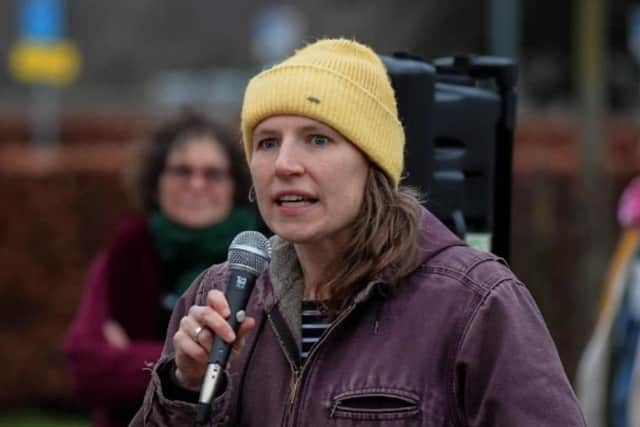
The strategy was also criticised by the Derry-based NI Anti-Poverty Network (NIAPN) Development Coordinator Becca Bor.
She stated: “After nineteen years of waiting for the publication of a draft strategy, we are hugely disappointed by the fact that this is not a strategy.
"Both the NI Audit Office and the Assembly’s Public Accounts Committee have been clear that a strategy must have certain characteristics.
"These include: specific poverty reduction targets, strategic outcomes supported by specific actions and interventions, and a ringfenced budget to deliver the strategy.
"The Minister says that targets and specific actions will come with Action Plans – but every expert, every oversight group, is clear that a Strategy requires measurable outcomes.
"This is another missed opportunity to take specific measurable actions to tackle poverty here. Instead, we have a recycling of existing interventions and plans which will not eradicate poverty.”
Ms. Bor said it was hard to see how the NIAPN can make a formal response to a document that ‘contains no elements of a Strategy.
"Our initial response must be to ask the Minister to go back to the drawing board and produce a Strategy that meets the basic requirements laid out by oversight bodies such as the NI Audit Office and the Public Accounts Committee,” she stated.
Mr. Lyons indicated the cross-government strategic delivery model includes a new Anti-Poverty Strategy Board that, he said, will drive forward measures and actions on the ground and monitor delivery against targets over the next 10 years.
“Poverty is not a problem the Executive can solve in isolation. It will require government, public bodies, voluntary and community organisations, communities, families and individuals all working together to make a meaningful and lasting change to our society.
“I am opening a public consultation today to give an opportunity for everyone to have their say.
“I encourage all interested people to participate and share new ideas and innovative approaches to further strengthen this vital work forward,” said the minister.
An extended 14-week consultation process opened on Tuesday. For more information please visit the Department for Communities website: https://www.communities-ni.gov.uk/consultations/consultation-ni-executive-anti-poverty-strategy