
Salmon cages could devastate wild Foyle fish population, Derry angler warns
A Derry angler has warned that if new fisheries legislation opens the door for salmon cages it could have a devastating impact on already depleted Atlantic salmon stocks in the River Foyle and its tributaries.
David Nelson, from the Foyle Association of Salmon and Trout Anglers (FASTA), said Stormont’s proposed new Fisheries, Aquaculture and Water Environment Bill must not be allowed to pave the way for industrial salmon farming in our estuaries.
The Newbuildings-native was part of a FASTA delegation that outlined its strong concerns to the Stormont Agriculture, Environment and Rural Affairs over the potential implications of the bill.
"We have concerns about offshore salmon cage farms: as a group, we strongly object to the Bill's opening the door to that business model.
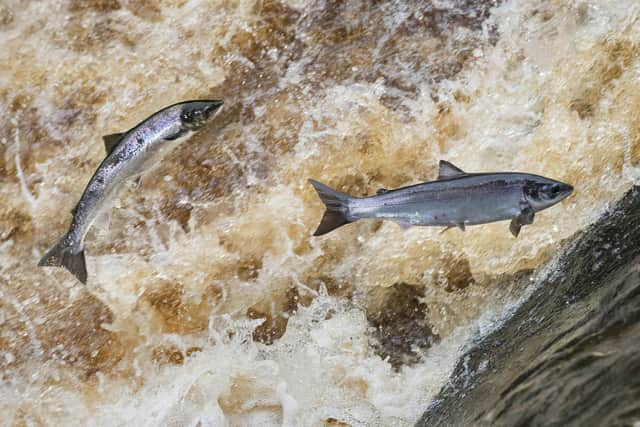

"We demand that, if something were to occur on the blind side, there would be robust application processes and a proper, proportionate balance struck between real gain and real community loss relating to salmon farming. The Scottish model is an example of significant failure and threats to the ecosystem,” the FASTA secretaty warned.
Brendan Winters, an angler from Sion Mills and FASTA member, warned sea lice emanating from industrial farms could ravage wild Atlantic salmon.
“If the go-ahead is given for salmon cages to be reintroduced in our estuaries, or close to where the estuaries go into the sea, the worry is that parasites, sea lice and other pathogens that may result from the industrialised process of fish farming will have an effect on migrating salmon smolts going outwards and fish returning to our rivers.
"The biggest threat to our outgoing smolts, which are very small, is the fact that they are very susceptible to infection. They can be infected by large amounts of sea lice, and that has caused a huge increase in mortality,” he said.
Mr. Winters spoke of population collapse amongst the native Atlantic salmon.
"Over the past 40 years, we have seen a huge decline in the percentage of salmon smolts that return to our rivers. It has gone from 30 per cent to as little as 2 per cent.
"There has been a correlation drawn between that and cages in our estuaries. Anything that promotes the possibility of reintroducing more salmon cages on our coastline would be detrimental to the salmon population. We would not want to see such a thing happen,” he told the committee.
The delegation also raised concerns about the impact of pollution incidents and damage to salmon and trout spawning beds in local rivers.
FASTA member Colin Duncan warned the committee that ‘we have to protect the spawning beds of the Atlantic salmon before it becomes an extinct species’.
Mr. Nelson said any new legislation must be fit for purpose for the future.
"By ‘the future’, we mean decades, given the Fisheries Act that was passed in the 1950s. These matters have been entirely overlooked, so any new legislative improvements have to be thought through and future-proofed to take account of where we are going with threats to the environment,” he said.