
Derry academic Élise Féron says conference highlights universality of forced disappearances
Derry academic Professor Élise Féron has spoken of how universal the phenomenon of forced disappearances is after global experts gathered in the city for a major conference on the subject.
Professor Féron, Director of the International Conflict Research Institute (INCORE) and Co-Editor-in-Chief of the Journal of Disappearance Studies, said: "Disappearances occur in every region of the world, yet they often remain hidden from public view. Behind every disappearance is a family, a community and a continuing search for truth and justice.”
She was speaking as INCORE, in partnership with the Journal of Disappearance Studies, hosted a three-day conference in Derry that brought together leading international experts working at the intersection of human rights, transitional justice, memory, activism and conflict transformation.
The conference opened on August 30, the 15th anniversary of the International Day of the Victims of Enforced Disappearances, a United Nations observance dedicated to recognising the suffering of victims and families affected by enforced disappearance around the world.
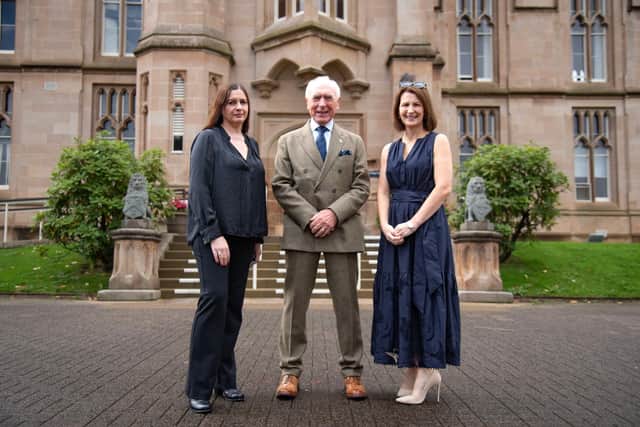

Researchers, human rights practitioners, forensic specialists, policymakers, artists and families affected by disappearance from across the world gathered at UU’s Derry campus at Magee to examine the global phenomenon of enforced disappearance.
Prof. Féron said: "This conference brings together people working in very different contexts but facing remarkably similar questions. How do societies respond to disappearance? How can families be supported in their search for answers? And what roles do research, policy, activism and the arts play in preserving memory and advancing accountability?
"By bringing these international perspectives together in Northern Ireland, we hope to strengthen global understanding of disappearance and contribute to collective efforts to support victims and their families."
Participants explored experiences of disappearance across multiple international contexts, examining issues ranging from state violence and armed conflict to migration, forensic investigations, victims' rights and collective efforts to secure truth and accountability.

While global in scope, the conference also reflected on Ireland’s own experiences of loss, truth recovery and accountability through a panel with families of the disappeared and contributions addressing the legacy of the Magdalene Laundries.
The conference programme included contributions from scholars and practitioners working on disappearances in Mexico, Argentina, El Salvador, Syria, Bangladesh, Zimbabwe, Bosnia and Herzegovina, Kashmir, Turkey and across Europe.
Topics included forensic approaches to locating the disappeared, the psychological and social impacts on families, legal responses, grassroots activism, border-related disappearances and emerging technologies.
Alongside the conference, participants engaged with artistic responses to disappearance, including the launch of the Conflict Textiles exhibition Disappeared and a performance of REWIND by Ephemeral Ensemble, inspired by testimonies from Latin American refugees and migrants and the work of forensic anthropologists.
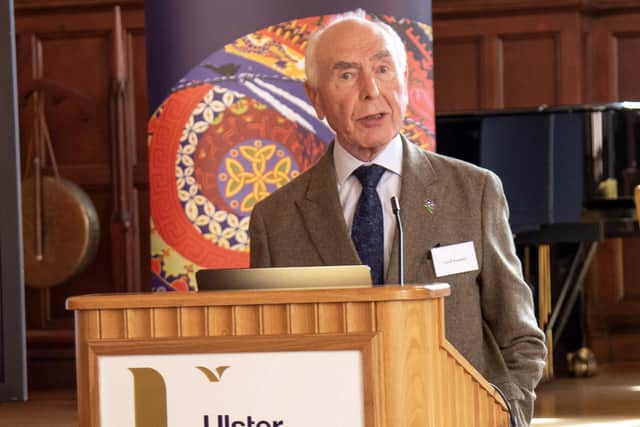
Founded in 1993 as an associated centre of the UN University, INCORE has spent more than three decades developing research and practical approaches to peacebuilding, conflict transformation and dealing with the legacy of violence in the North and internationally.
The conference was held in association with the Journal of Disappearance Studies, launched in 2025 by Bristol University Press.
The journal provides the first dedicated interdisciplinary platform for examining disappearance as a global social, political, cultural and human rights issue.