
12% drop in Derry A&E attendances as impact of minor injuries unit tells in annual figures
The new minor injuries unit at Altnagelvin is easing pressure on A&E
These are among the conclusions to be drawn from the latest annual statistics on activity and waiting times at emergency care departments.
The newly published Department of Health report shows there was a significant reduction in the number of people attending the Altnagelvin A&E last year with 60,194 attendances in 2024/25 - 8,014 fewer (12 per cent) than the 68,208 recorded in 2023/24.
A factor is likely to have been the large number of people (14,030) attending the highly successful new minor injuries unit at the Derry hospital which became fully operational last year. This is the first report to include a full of year data from the MIU.
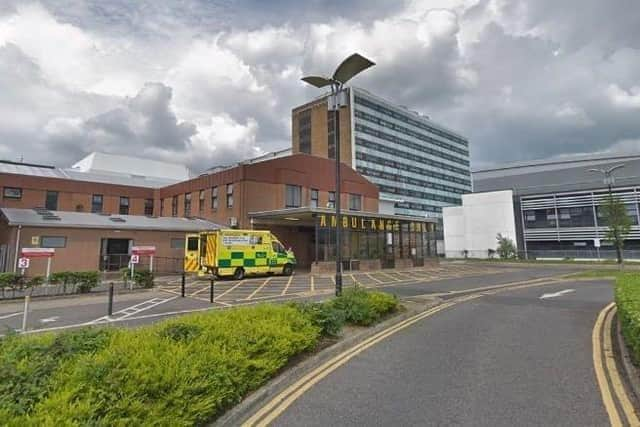

Of the 60,194 attendances at the Altnagelvin A&E 56,566 (94 per cent) were new; 3,058 (5.1 per cent) were unplanned reviews; and 570 (0.9 per cent) were planned reviews.
Of the 14,030 Altnagelvin MIU attendances 10,331 (73.6 per cent) were new; 326 (2.3 per cent) were unplanned reviews; and 3,373 (24 per cent) were planned reviews.
Figures were also provided for the waiting times for new and unplanned review attendances at the Altnagelvin A&E with 17,908 (30 per cent) seen within 4 hours; 27,556 (46.2 per cent) waiting between 4 and 12 hours; and 14,135 (23.7 per cent) waiting for more than 12 hours.
The impact of the Altnagelvin MIU on waiting times is highlighted again with 10,442 (98 per cent) being seen within 4 hours; only 194 (1.8 per cent) waiting between 4 and 12 hours; and only 15 (0.1 per cent) waiting more than 12 hours.
The percentage of patients seen within fours in the Altnagelvin A&E, however, has dropped again for the fifth year in succession: 2020/21 (56.2 per cent); 2021/22 (41.5 per cent); 2022/23 (32.7 per cent); 2023/24 (31 per cent); and 2024/25 (30 per cent).
And the number of people spending more than 12 hours in the Derry emergency department after a new or unplanned visit has increased from 4,464 in 2020/21 to 14,135 in 2024/25.
Just over half of patients (54.2 per cent) presenting at the Derry A&E commenced treatment within two hours of triage. In the minor injuries unit it was 90.5 per cent.
The median waiting time from arrival to triage was 20 minutes at the local emergency department and 12 minutes at the minor injuries unit.
According to the report 95 percent of patients at the Altnagelvin A&E were triaged by a medical professional within 1 hours 22 minutes of arrival. At the MIU the figure was 57 minutes.
The median waiting time from triage to treatment at the A&E was 1 hour 44 minutes. At the MIU it was 23 minutes.
The data show 95 percent of patients at the A&E received treatment within 7 hours 38 minutes. Again, at the Altnagelvin MIU it was much shorter at 2 hours 44 minutes.
And the median time spent in the A&E by those admitted to hospital was 18 hours 8 minutes. The equivalent figure for the MIU was 2 hours 41 minutes.
In 2024/25 95 percent of patients who were ultimately admitted to hospital spent less than 80 hours and 54 minutes (around three and a half days) in the Altnagelvin A&E. At the Altnagelvin MIU it was 25 hours 51 minutes.
The median time spent in the A&E by those not admitted was 5 hours 23 minutes; at the MIU it was 1 hour 1 minute.
Of this cohort 95 per cent were seen within 23 hours 57 minutes at the A&E or three hours and two minutes at the MIU.
The percentage of people being referred to the Altnagelvin A&E by their GPs has also been increasing. In 2020/21 the percentage was 9.5 per cent but las year it was 15.5 per cent.
And the percentage of people leaving A&E before being treated has also increased over the past five years from 3.9 per cent in 2020/21 to 8.6 per cent in 2024/25.
Reattendances within seven days are down from 4.9 per cent in 2020/21 to 4.4 per cent last year.
Across the North as whole the report shows that the number of new attendances in 2024/25 was highest in the South Eastern HSC Trust (153,700) and lowest in the Western HSC Trust (123,779).
Belfast HSC Trust (26 per cent) reported the highest percentage of ED attendances leaving before their treatment was complete whilst Western HSC Trust had the lowest (5.7 per cent).
During 2024/25, the Western HSC Trust reported the highest percentage of attendances treated and discharged, or admitted within 4 hours (51.1 per cent), whilst the Belfast HSC Trust reported the lowest (34.1 per cent).
The Southern Trust reported the highest percentage of attendances who commenced their treatment within 2 hours of being triaged (69 per cent), 68.4 per cent in the Western Trust, 62 per cent in the South Eastern Trust, 52.4 per cent in the Belfast Trust, and 50.4 per cent in the Northern Trust.
The median waiting time from arrival at an ED to triage in 2024/25 ranged from 7 minutes in the Southern HSC Trust to 15 minutes in the Belfast and Western HSC Trusts.
During 2024/25, 95 percent commenced treatment within 6 hours 32 minutes of triage in the Western HSC Trust, compared with 10 hours 6 minutes in the Belfast HSC Trust. During 2024/25, 95 percent of patients were admitted to hospital within 47 hours 18 minutes in the Belfast HSC Trust, compared with 74 hours 17 minutes in the Western HSC Trust.
Of the 232,147 Northern Ireland Ambulance Service (NIAS) calls received in 2024/25, 15.9 per cent (36,821) were received in the Western Local Commissioning Group.
Of the 173,695 emergency incidents reported by NIAS in 2024/25, 17.5 per cent (30,417) were in the Western LCG.